
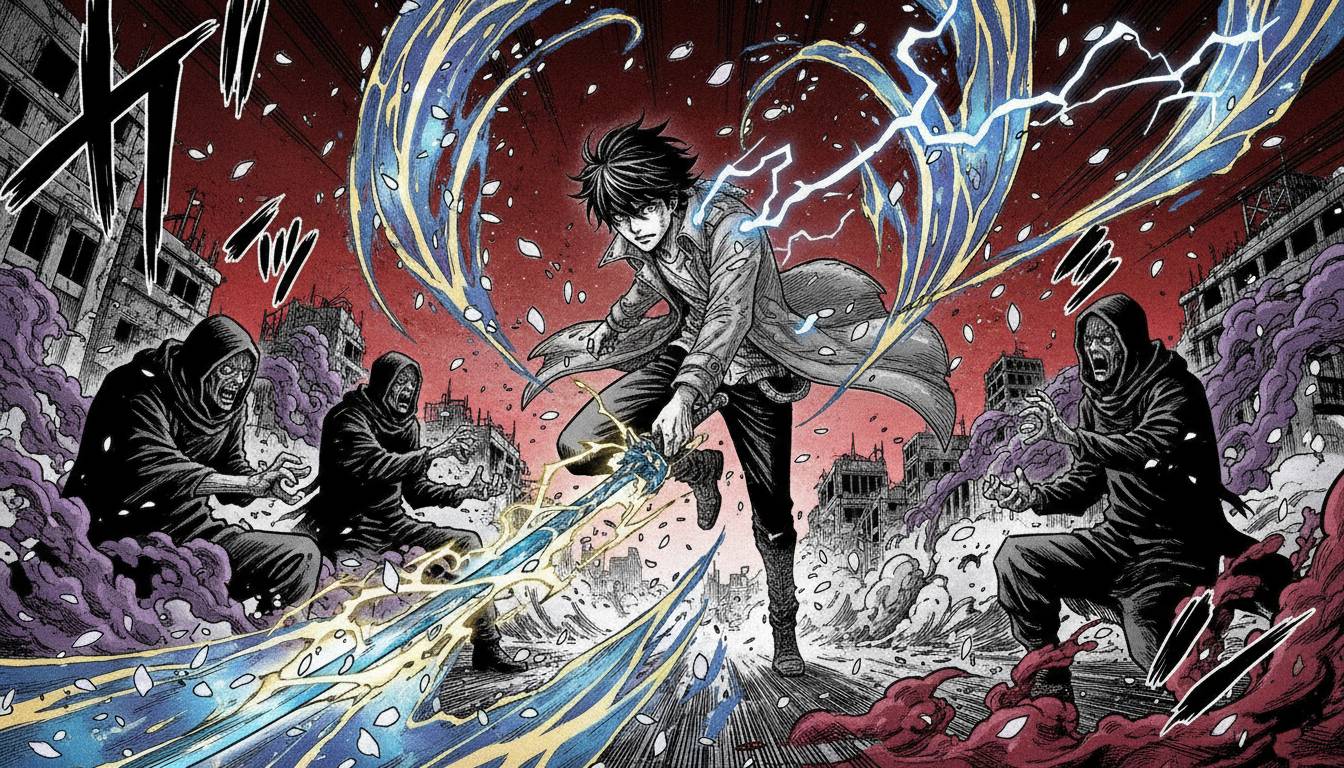

When Kagurabachi debuted in Weekly Shonen Jump in September 2023, it was not greeted like a conventional breakout manga. Instead, it became an internet joke almost overnight, with social media users ironically hailing it as the next great masterpiece before most readers had even finished the first chapter. What looked like a fleeting meme, however, has turned into one of the clearest success stories in modern manga. By 2025, Kagurabachi had moved well beyond ironic hype and established itself as one of Shonen Jump’s most closely watched titles, backed by strong circulation milestones and growing editorial attention.
From Viral Joke to Serious Attention
The early online life of Kagurabachi was unusual even by manga standards. Soon after launch, the series was swept into a wave of exaggerated praise on social platforms, where users treated it as an instant classic in a knowingly over-the-top way. That meme culture gave the series visibility far beyond the normal reach of a brand-new Shonen Jump title, especially among English-speaking readers who often discover manga through clips, screenshots, and fan discourse rather than magazine rankings alone.
What made the story notable is that the attention did not collapse once the joke faded. Instead, readers stayed. As more chapters arrived, discussion shifted from irony to craft: paneling, action choreography, pacing, and the series’ darker revenge-driven tone. In a magazine known for launching major action franchises, that transition matters. Many new series attract curiosity; far fewer convert that curiosity into sustained readership.
Kagurabachi, created by Takeru Hokazono, began serialization on September 19, 2023, in Shueisha’s Weekly Shonen Jump. The series follows Chihiro Rokuhira, a young swordsman driven by revenge after a brutal attack tied to enchanted blades forged by his father. The premise is straightforward enough for battle-shonen readers, but its execution has helped it stand out in a crowded field.
Why Kagurabachi Works as a Shonen Jump Hit
Part of the answer lies in timing. Shonen Jump has been navigating a generational transition as some of its biggest modern pillars have ended or moved toward conclusion. In that environment, every promising new action series receives extra scrutiny from readers, publishers, and retailers. Kagurabachi arrived at a moment when audiences were actively searching for the magazine’s next defining title. Commentary around the series increasingly framed it as part of that next wave.
The manga’s appeal also reflects its tonal difference. While it still fits the broad battle-shonen mold, Kagurabachi leans into a colder, more cinematic style than many of its peers. Hokazono has discussed wanting a quiet, dark protagonist and a revenge story that does not simply glorify vengeance. In an interview cited by multiple outlets, he pointed to influences such as Quentin Tarantino and David Fincher, suggesting a deliberate effort to bring a sharper edge to the series’ atmosphere.
That creative identity has helped the manga separate itself from titles that rely mainly on familiar tournament arcs or broad comic energy. Readers who initially arrived for the meme found a series with a clear visual language and a protagonist whose restraint often makes the violence hit harder. The result is a title that feels accessible to mainstream Jump readers while also carrying a slightly different texture from the magazine’s more traditional crowd-pleasers.
The Numbers Behind the Breakout
The strongest evidence that Kagurabachi is no longer just an internet phenomenon is commercial. By July 2024, the manga had passed 350,000 copies in circulation, according to compiled public reporting. That figure rose to more than 600,000 by August 2024, exceeded 1 million by October 2024, reached 1.3 million by December 2024, and climbed past 2.2 million copies in circulation, including digital editions, by the release of Volume 7 on May 2, 2025.
Those milestones matter because circulation growth is one of the clearest public indicators of publisher confidence and market demand. Shueisha also marked the series’ momentum with visible promotional efforts, including a large-scale chapter poster display in Shibuya tied to the 2.2 million milestone. That kind of campaign is not routine treatment for an unproven property. It signals that the publisher sees Kagurabachi as a title worth elevating in a competitive lineup.
Several key data points illustrate the pace of its rise:
- Serialization began on September 19, 2023.
- The series passed 1 million copies in circulation by October 2024.
- It reached 1.3 million by December 2024.
- It surpassed 2.2 million by May 2, 2025, with seven volumes in release.
For a relatively new manga, that trajectory places it firmly in breakout territory.
Why the Meme Helped Rather Than Hurt
In many entertainment categories, meme fame can be corrosive. It creates awareness without loyalty and often reduces a work to a punchline. Kagurabachi benefited from a rarer outcome: the meme acted as a discovery engine. It pushed readers toward the series at a scale that most debut manga never receive, especially outside Japan. Once there, the work itself did enough to retain them.
That pattern says something broader about how manga now breaks in the global market. Discovery no longer depends only on magazine placement, bookstore visibility, or anime adaptation. A title can now build momentum through online culture first and then convert that attention into measurable sales. Kagurabachi may become a case study in how irony-driven fandom can evolve into genuine support when the underlying product is strong enough.
It also shows how international readership shapes perception earlier than before. Through platforms such as MANGA Plus and English-language coverage from publishers and anime media, new series can become global conversation pieces almost immediately after launch. Even when the first wave is chaotic or unserious, it can still create a runway for long-term growth.
What It Means for Shonen Jump
For Shonen Jump, the rise of Kagurabachi is significant beyond one title’s success. The magazine has long depended on a pipeline of new hits to replace aging franchises, and the pressure to identify future anchors has only increased as major series conclude. A manga that can generate online buzz, sustain reader engagement, and post strong circulation growth is exactly the kind of property publishers want in that environment.
There is still a difference between being a breakout manga and becoming a long-term franchise on the level of Jump’s biggest brands. That next step usually depends on sustained print performance, editorial consistency, merchandise potential, and, eventually, adaptation strategy. Public discussion around Kagurabachi has increasingly included speculation about its future as a broader media property, though the core fact remains simpler: it has already secured a place among the magazine’s most important newer series.
The broader implication is that Shonen Jump’s next era may not be built only by conventional launches. It may also be shaped by titles that understand, or at least survive, the internet’s unpredictable attention economy.
Conclusion
Kagurabachi went from meme to must-read because it did the hardest thing a viral title can do: it proved the joke was not the whole story. What began as ironic online exaggeration became real commercial momentum, critical interest, and growing importance inside Weekly Shonen Jump. With more than 2.2 million copies in circulation by May 2025 and a reputation that now rests on substance rather than novelty, the series has become one of manga’s clearest examples of internet hype turning into durable success.
Frequently Asked Questions
What is Kagurabachi about?
Kagurabachi is a dark action manga by Takeru Hokazono centered on Chihiro Rokuhira, a young swordsman seeking revenge after a tragedy connected to enchanted blades forged by his father.
Why was Kagurabachi considered a meme at first?
The manga became a meme because social media users jokingly praised it as an all-time masterpiece immediately after launch, creating ironic hype before the series had time to develop. That attention later turned into genuine readership.
When did Kagurabachi start serialization?
The series began serialization in Weekly Shonen Jump on September 19, 2023.
How successful is Kagurabachi commercially?
By May 2, 2025, Kagurabachi had surpassed 2.2 million copies in circulation, including digital editions, with seven volumes released.
Why is Kagurabachi important to Shonen Jump?
It is widely seen as one of the magazine’s strongest newer action series at a time when Shonen Jump is looking for the next generation of flagship titles. Its growth suggests it could play a major role in that transition.