
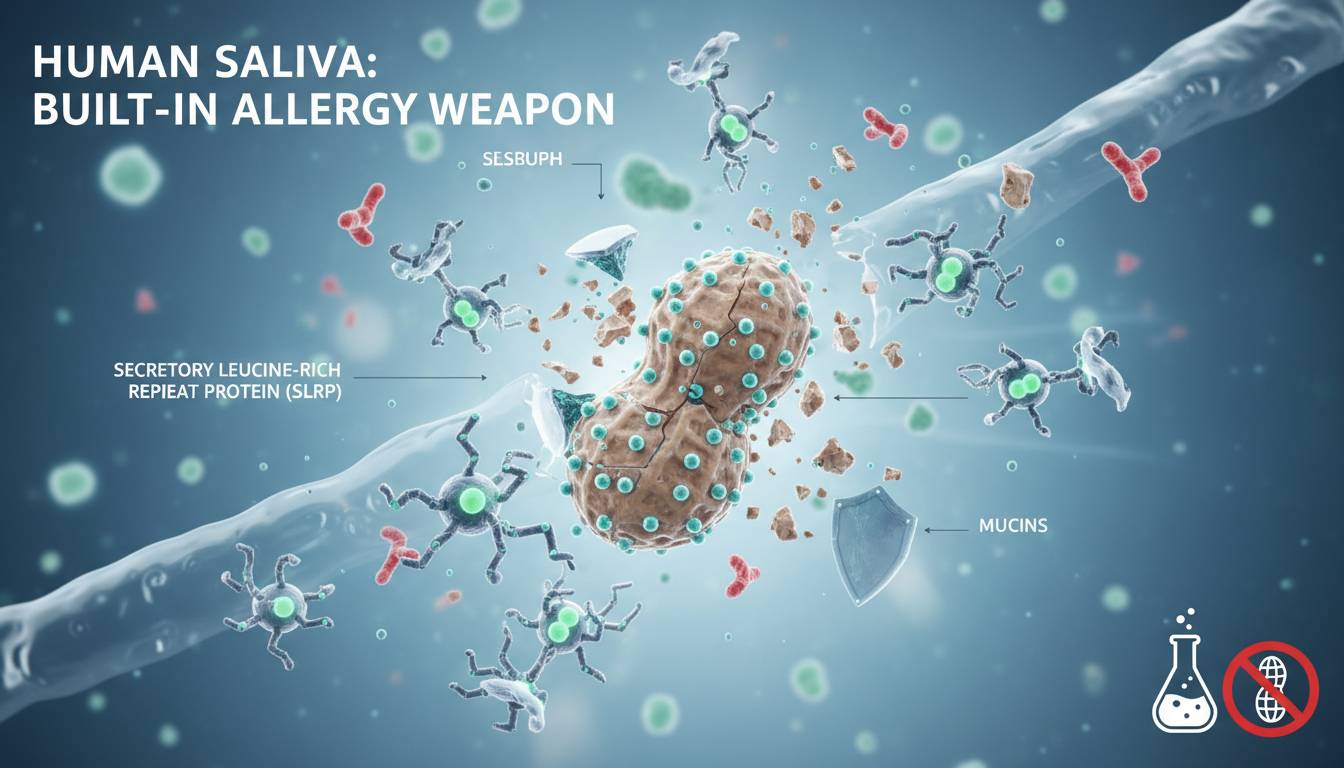

A new study is drawing attention to an unexpected line of defense against peanut allergy: the human mouth. Researchers report that certain bacteria found in saliva can break down peanut allergens and reduce the severity of allergic reactions in animal models, opening a new avenue in food allergy research. The findings do not mean saliva itself is a treatment, and they do not suggest that people with peanut allergies are safe to experiment with exposure. But the work adds to growing evidence that the oral microbiome may play a larger role in allergy risk and severity than previously understood.
A new clue in peanut allergy research
The latest findings come from a 2026 study published in Cell Host & Microbe, highlighted by Nature on March 6, 2026. According to the report, scientists found that bacteria in human saliva and the small intestine can metabolize peanut compounds that trigger allergic reactions. In mouse experiments, animals colonized with Rothia bacteria experienced less severe reactions to peanuts than mice that were not colonized.
That is why the phrase “Scientists Find a Built-In Weapon Against Peanut Allergies: Human Spit” is attracting attention. The “weapon” is not saliva alone, but the microbes living in it. The study suggests these microbes may alter peanut allergens before they trigger the immune cascade that can lead to anaphylaxis.
Peanut allergy remains one of the most serious food allergies because even small exposures can cause rapid, potentially life-threatening symptoms. The immune response is typically driven by IgE antibodies and mast cells, which release inflammatory mediators such as histamine when they encounter peanut allergens. The new research focuses on whether oral microbes can interrupt that process earlier, before the reaction escalates.
How human spit may help neutralize peanut allergens
The core idea behind the study is biological but straightforward. Peanut proteins enter the mouth first, where they encounter saliva, oral tissues, and microbes. Researchers found that some saliva-associated bacteria can degrade immunodominant peanut allergens, potentially changing how the immune system sees them.
According to the Nature research highlight, the bacteria identified in saliva and the small intestine appear to shield hosts from severe allergic responses in mice. The work points especially to Rothia species, which are common members of the oral microbiome. When these microbes processed peanut material, the downstream allergic response was less dangerous in experimental models.
This matters because peanut allergens such as Ara h 2 and Ara h 6 are known for their stability and potency. Earlier research has shown that these allergens are readily bio-accessible under simulated saliva conditions, meaning they can interact with the oral and esophageal immune system very early after exposure. The new study builds on that understanding by suggesting that microbes in saliva may modify those allergens before they trigger the strongest immune reaction.
What the study does and does not show
The findings are promising, but they are still early-stage. The strongest evidence so far comes from laboratory work and mouse models, not from clinical trials showing that saliva-based therapies prevent allergic reactions in people.
That distinction is critical for patients and families. Peanut allergy can cause anaphylaxis, and standard medical advice still centers on strict avoidance, emergency preparedness, and specialist-guided care. Nothing in the new study changes the need for prescribed rescue medication or physician supervision.
Why the finding matters for patients and researchers
The significance of “Scientists Find a Built-In Weapon Against Peanut Allergies: Human Spit” lies in what it could change about future treatment strategies. Most current approaches focus on desensitization, immune modulation, or avoidance. This research introduces another possibility: reshaping the microbiome so the body encounters peanut allergens in a less dangerous form.
For researchers, that opens several paths:
- identifying the exact bacterial strains that break down peanut allergens;
- understanding which peanut proteins are most affected;
- testing whether microbiome-based therapies can work safely in humans;
- determining whether similar mechanisms apply to other food allergies.
The study also fits into a broader shift in allergy science. Investigators are increasingly examining not just the immune system, but also the environment in which allergens are first encountered, including the mouth, gut, and microbiome. That is especially relevant for peanut allergy, where the route and timing of exposure can shape long-term outcomes.
According to the National Institutes of Health, introducing peanut-containing foods in infancy can reduce the rate of peanut allergy in adolescence by 71% when done according to established guidelines. Those findings concern prevention, not treatment, but they underscore a key point: the way the body first meets peanut proteins matters. The new saliva-microbe research adds another layer to that idea.
The current landscape of peanut allergy treatment
At present, peanut allergy management in the United States remains centered on diagnosis, avoidance, and emergency response. Investigational and existing therapies aim to raise the threshold that triggers a reaction, but they do not amount to a universal cure.
Sublingual immunotherapy, for example, places allergen extract under the tongue to encourage immune tolerance. Earlier NIH-backed reporting described it as promising, while also noting that immunotherapy was not yet ready for widespread use at that stage. Scientific reviews have also described how oral mucosal immune cells can take up allergens during sublingual treatment.
That context helps explain why the new saliva finding is notable. It does not replace immunotherapy, but it may eventually complement it. If scientists can harness oral bacteria that naturally degrade peanut allergens, future therapies might combine microbial approaches with immune-based treatments to improve safety or effectiveness. That remains an inference based on the direction of the research, not a proven clinical outcome.
Caution, promise, and what comes next
There is reason for optimism, but also for restraint. Mouse studies often provide important biological insights, yet many do not translate directly into approved human treatments. Before any saliva- or microbiome-based therapy reaches patients, researchers will need to show that it is safe, reproducible, and effective in carefully designed human studies.
Another open question is whether the protective effect varies from person to person. Oral microbiomes differ widely based on age, diet, health status, medication use, and other factors. That means any future therapy may need to be personalized or targeted to specific microbial profiles. This is a reasonable scientific inference from microbiome research, but it has not yet been established for peanut allergy treatment in clinical practice.
Still, the discovery is important because it reframes the conversation. Instead of viewing peanut allergy only as an overreaction of the immune system, scientists are also asking whether some people lack microbial partners that help disarm allergens before they do harm. If that idea holds up in human studies, it could influence prevention strategies, diagnostics, and next-generation therapies.
Conclusion
The headline “Scientists Find a Built-In Weapon Against Peanut Allergies: Human Spit” captures a real scientific advance, but the full story is more precise. Researchers have found that bacteria living in human saliva can break down peanut allergens and reduce severe reactions in mice, suggesting that the oral microbiome may help shape allergy outcomes. The work is early, and it is not a treatment people can use today. But it offers a credible and potentially important new direction in the search for safer, more effective ways to prevent and manage peanut allergy.
Frequently Asked Questions
What did scientists actually find in human spit?
Researchers found that certain bacteria in human saliva can metabolize peanut allergens. In mouse studies, these microbes were linked to less severe allergic reactions.
Does this mean saliva can cure peanut allergies?
No. The research does not show that saliva cures peanut allergy, and it does not support self-experimentation. The findings are early and mainly based on preclinical models.
Which bacteria were highlighted in the study?
The reports point to Rothia bacteria as important peanut-processing microbes associated with reduced reaction severity in mice.
Is this a treatment available now in the US?
No. As of March 7, 2026, this is a research finding, not an approved saliva-based therapy for patients.
What should people with peanut allergies do now?
They should continue following established medical guidance, including allergen avoidance, specialist care, and emergency preparedness. Current standards are not changed by this study.
Why is this discovery important?
It suggests the oral microbiome may help determine how dangerous peanut exposure becomes, which could lead to new prevention or treatment strategies in the future.