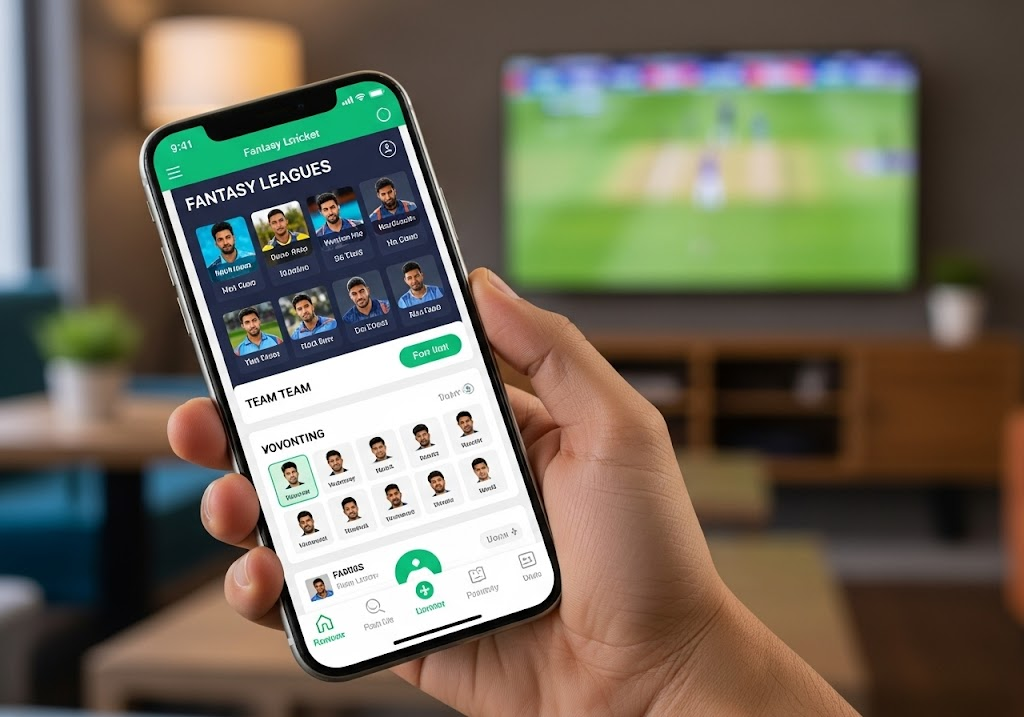

The desktop era is over. Smartphones are now the epicenter of communication, entertainment, and commerce, shaping the ways in which people consume content and experience online interactions. For many, the smartphone is not a screen — it’s the gateway to their social, work, and play worlds.
Such a shift has pushed businesses and content providers to rethink design, accessibility, and performance. Websites across sectors ranging from streaming and e-commerce to education and sports now adopt a mobile-first approach, designing for smaller screens first and then scaling up to others.
The rise of mobile-first platforms is more than a design trend. It’s a cultural migration towards swiftness, ease, and connectivity — a movement that continues to reshape the way humans engage with the digital realm second by second.
The Technology Behind Mobile-First Platforms
Mobile-first design would not be possible without the technologies that make it happen. From adaptive streaming to edge computing, every innovation aims for faster delivery, higher quality, and seamless performance on smaller screens.
To see these technologies in action, explore here — a platform that demonstrates how cutting-edge mobile-first design keeps live content smooth, responsive, and accessible worldwide.
Adaptive Streaming and Low Latency Delivery
Modern mobile-first platforms use adaptive bitrate streaming, which automatically adjusts video quality based on the user’s internet speed. This ensures smooth playback even on unstable connections. Low-latency delivery further reduces delay, allowing users to watch events — like live cricket — almost in real time.
On platforms such as DesiPlay Live Cricket, this means that cricket enthusiasts in Mumbai, London, or Nairobi can all react to the same delivery within milliseconds of each other, creating a truly synchronized global viewing experience.
Cloud Infrastructure and Content Distribution
Scalability is another distinguishing feature. Mobile audiences can suddenly spike, especially when it is a big match or event. Cloud infrastructure and CDNs handle such increases by dispersing information across servers globally. When thousands of users simultaneously add a stream, the site maintains stability by dynamically drawing resources from nearby nodes.
AI-Driven Personalization
Artificial intelligence powers much of the modern mobile experience. Algorithms learn about individuals’ behavior — favorite team, watch time, device — ahead of predicting their interests and serving up similar content. If you are watching a specific league or player regularly, the platform’s system will give preference to similar streams or alert you whenever matches are approaching.
This velocity-to-scalability-and-one-to-one-personalization equation is what drives the success of mobile-first platforms. They don’t just display content — display it strategically, providing every individual with the right experience at the right time.
The Future of Mobile-First Design
Mobile-first platforms aren’t just the future — there’s a model for the future of digital here. With ongoing advancements in technology, mobile design will be even more intuitive, personal, and immersive. The future of development won’t lie in making desktop experiences smaller but in how much more mobile can deliver.
1. The Transition Toward AI-Driven Interactions
Artificial intelligence will be at the center of every mobile platform. Systems will not respond to user actions but will act pre-emptively. A sport app like DesiPlay Live Cricket may automatically launch a live stream when your favorite team is playing or adjust video settings based on your internet speed without prompting. The premise is to eliminate friction entirely and create a world that will be digital and alive and responsive.
2. Integration With Wearables and Voice Technology
The future will witness more integration of mobile devices with wearables. Smartwatches and voice assistants will take mobile-first experiences beyond screens. Picture live scores automatically updated while running or asking your device for the latest cricket news while commuting.
This convergence of voice and mobility will reframe convenience and accessibility.
3. Augmented Reality and Immersive Experiences
With growing device power and bandwidth, mobile engagement will be increasingly shaped by augmented reality (AR). Users will be able to show live match statistics, player information, or 3D replays in their surroundings at the push of a button. It’s an evolution from watching to being immersed — a virtual layer smoothly overlaid on real life.
Major Areas That Will Shape the Next Generation of Mobile-First Platforms:
- More use of AI-driven automation.
- Integration at depth for IoT and wearable devices.
- Expansion of immersive AR/VR environments.
- Increased focus on sustainability and energy-efficient design.
Mobile-first design is not just adapting to how humans use technology — it’s shaping that behavior. As devices become smarter and connectivity faster, the line between technology and human experience will blur further, driving toward a world where every interaction is instant, personal, and intuitive.
Conclusion
The dominance of mobile-first platforms is an irreversible change in the nature of how we engage with the digital realm. What began as a design trend has become a worldwide standard — one that worships speed, simplicity, and personalization above all.
Platforms like DesiPlay Live Cricket show this vision in motion. By prioritizing mobile performance, adaptive streaming, and user-first design, they’ve brought real-time entertainment to the masses everywhere. It feels effortless, but beneath the ease lies sophisticated technology — AI, cloud infrastructure, and responsive design moving in harmony.
As technology continues to evolve, the mobile-first approach will shape more than applications and websites — really, it will reshape communication, media, and interaction itself. The phone itself will remain at the heart of this revolution, uniting people not just with information, but with experiences that accompany them.