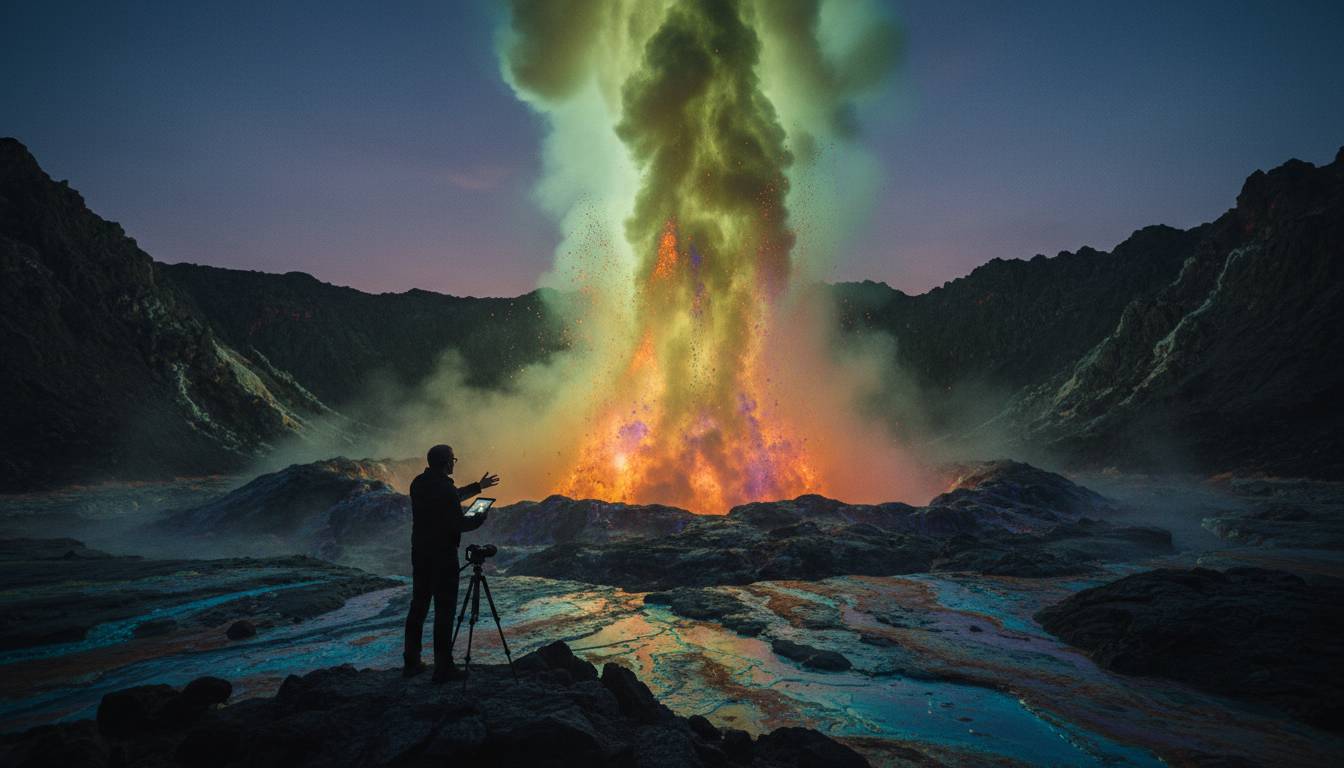

Yellowstone National Park’s Echinus Geyser—the world’s largest acidic geyser—has reawakened after nearly six years of dormancy. Beginning February 7, 2026, the geyser has produced a series of eruptions, captivating scientists and visitors alike with its rare and striking activity.
Eruption Resumes: A Rare Geological Event
Echinus Geyser, nestled in the Back Basin of Norris Geyser Basin, erupted on February 7, 2026, marking its first activity since December 2020 . Subsequent eruptions occurred on February 9, 12, and 15, before the geyser entered a more active phase on February 16, erupting every two to five hours .
Each eruption lasts approximately two to three minutes and propels acidic water 20 to 30 feet into the air . After each burst, the pool drains rapidly and takes about an hour to refill . While some historical eruptions reached heights of up to 75 feet, recent activity has remained more modest .
What Makes Echinus Unique?
Echinus Geyser is distinguished by its acidic waters, with a pH ranging from 3.3 to 3.6—comparable to vinegar or orange juice . This acidity results from the mixing of acidic gases with neutral groundwater, a composition that is unusual among geysers and typically capable of corroding rock. However, in Echinus’s case, the acidity is mild enough not to damage its internal structure .
The geyser’s name derives from the spiny, silica-coated rocks surrounding its cone, which resemble sea urchins . A vivid red rim of iron, aluminum, and arsenic further accentuates the pool’s mineral-rich appearance .
Scientific Insights and Observations
According to the U.S. Geological Survey (USGS), the recent activity mirrors patterns seen in late 2017, when Echinus also experienced a brief active phase . Michael Poland, Scientist-in-Charge of the Yellowstone Volcano Observatory, emphasizes that while the acidity may sound alarming, it is not concentrated enough to pose structural risks .
The geyser’s behavior remains unpredictable. Historically, Echinus has exhibited short-lived active periods lasting one to two months, followed by extended dormancy . Park officials caution that while summer visitors may hope for continued activity, a long-term resurgence is unlikely .
Significance and Broader Context
Echinus’s reawakening offers valuable scientific insight into Yellowstone’s dynamic geothermal systems. Acidic geysers are rare, and their behavior can shed light on underground hydrothermal processes and chemical interactions .
For park visitors and researchers, the geyser’s eruptions provide a rare opportunity to observe an unusual natural phenomenon. The Norris Geyser Basin, known for its thermal complexity, gains renewed attention thanks to Echinus’s activity .
Future Outlook and Uncertainties
While the recent activity is notable, experts remain cautious. Echinus’s history of sporadic eruptions suggests that this phase may be short-lived . The shifting geothermal landscape of Yellowstone means that future eruptions cannot be ruled out, even if long-term patterns remain elusive .
Conclusion
Echinus Geyser’s return to activity after nearly six years of dormancy is a rare and scientifically significant event. Its acidic eruptions, mineral-rich formations, and unpredictable behavior offer a compelling glimpse into the geothermal forces at work beneath Yellowstone. While the geyser’s future remains uncertain, its current display underscores the dynamic and ever-changing nature of Earth’s geothermal systems.
Frequently Asked Questions
What is the world’s biggest acidic geyser?
Echinus Geyser in Yellowstone National Park is the largest known acidic geyser, with a pH of 3.3 to 3.6 .
When did Echinus Geyser last erupt before 2026?
The geyser’s last recorded eruption occurred in December 2020 .
How often is Echinus erupting now?
Since February 16, 2026, Echinus has been erupting every two to five hours .
How high are the recent eruptions?
Recent eruptions reach heights of 20 to 30 feet and last two to three minutes .
Is the acidic water dangerous?
The acidity is mild—similar to vinegar or orange juice—and not strong enough to corrode the geyser’s structure .
Will Echinus remain active through summer?
It’s uncertain. Historically, Echinus’s active phases are brief, and sustained activity into summer is unlikely .