

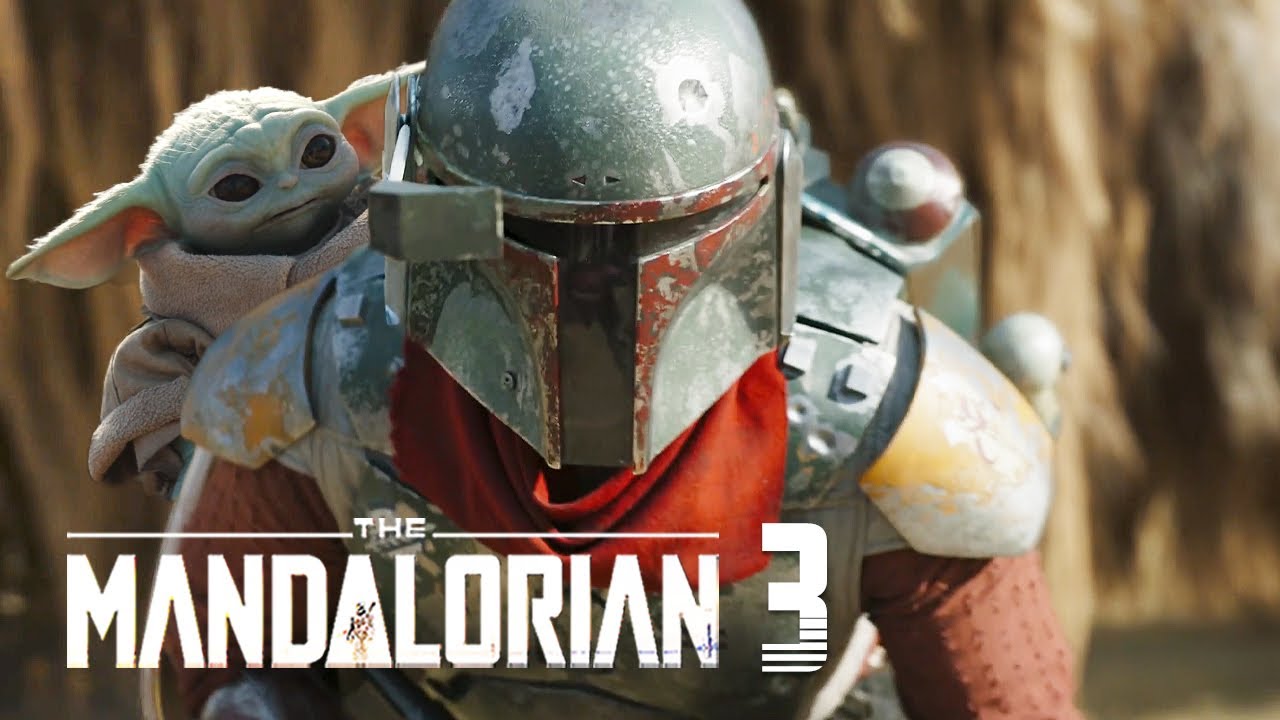
The Mandalorian season 4 may never arrive as a Disney+ season, but comments, franchise planning, and the pivot to The Mandalorian & Grogu point to a revealing possibility: the story appears to have been moving away from Moff Gideon and toward Grand Admiral Thrawn, one of Star Wars’ most beloved villains. That matters because it reframes what season 4 was likely building toward, why Lucasfilm folded the next chapter into a movie, and how Dave Filoni’s larger crossover plan has quietly shaped Din Djarin’s future from the start.
Why season 4 became a bigger Star Wars question
The first key fact is simple. Jon Favreau said he had written season 4 scripts before The Mandalorian season 3 even premiered. Multiple entertainment outlets reported that point in early 2023, which made it clear Lucasfilm was not treating the series as finished at that stage. Dave Filoni also indicated around the season 3 finale period that more story remained, even as he described the ending as satisfying on its own terms. In other words, the creative team had a continuation in mind, and it was not just vague wishful thinking. There was a real next step.
Then the strategy changed. Instead of announcing The Mandalorian season 4 as the next live-action installment, Lucasfilm formally shifted to The Mandalorian & Grogu, a theatrical feature that continues Din Djarin and Grogu’s story. That move did not erase what season 4 would have explored. If anything, it concentrated it. The strongest clue is that the franchise’s post-Return of the Jedi storytelling has increasingly pointed toward a collision with Thrawn, not another round with Gideon.
That distinction matters. Moff Gideon dominated The Mandalorian for three seasons, but by the end of season 3 his arc looked functionally exhausted, even if Star Wars leaves room for survival theories. Thrawn, by contrast, represented escalation. He is not just another Imperial remnant leader. He is the strategic centerpiece of the wider New Republic-era conflict that links The Mandalorian, Ahsoka, and Dave Filoni’s eventual crossover film.
The beloved villain at the center of the theory is Grand Admiral Thrawn
If there is one villain fans consistently describe as “beloved” in this corner of Star Wars, it is Thrawn. The character built his reputation first in novels, then in animation, and finally in live action through Ahsoka. He is not beloved because he is sympathetic in the usual sense. He is beloved because he is precise, cerebral, and different from the franchise’s more emotional or brute-force antagonists. He studies culture. He anticipates weakness. He makes the Empire feel dangerous in a colder, smarter way.
That is exactly why the idea of Thrawn becoming the focus of a would-be Mandalorian season 4 makes so much sense. The Mandalorian started as a smaller-scale frontier story. Over time, it widened into a political and military struggle over Mandalore, Imperial remnants, cloning, and the future of the galaxy after the Empire’s fall. Thrawn is the villain who naturally sits above all of that. He gives the scattered threats structure.
Screen-focused coverage and franchise commentary have repeatedly tied Thrawn to the larger Mandalorian-era endgame. Dave Filoni has spoken broadly about working in long arcs and timelines, and trade and fan-site reporting alike have treated Thrawn as the “big bad” of the interconnected story Lucasfilm has been assembling. Even when The Mandalorian itself did not put him front and center, the series kept brushing against his shadow through the Shadow Council and through Ahsoka’s parallel storyline.
What season 3 already set up behind the scenes
Season 3 did more than wrap up Din Djarin’s immediate conflict. It laid track. The Shadow Council scene is the clearest example. That sequence was not there just to tease future villains in a generic way. It established that Imperial warlords were fragmented, uneasy, and waiting on Thrawn’s return. Gideon’s irritation with that hierarchy was telling. He wanted power for himself, but the larger structure still implied that someone more important was out there.
That is why the “beloved villain twist” is less a shock than a reveal of intent. If season 4 had gone forward in television form, it likely would have had to answer a basic narrative question: what threat is big enough to pull Din back into a larger galactic conflict after the reclamation of Mandalore and his quieter new arrangement with Grogu? Thrawn is the cleanest answer. He raises the stakes without repeating old ground.
There is also a practical storytelling reason this works. Din Djarin is at his best when he is forced to navigate systems larger than himself. A villain like Gideon can chase, trap, and manipulate him. A villain like Thrawn can outthink entire factions, turning Din into one piece on a much bigger board. That changes the tone of the story. It becomes less about surviving a hunter and more about disrupting a strategist.
Why the movie pivot does not kill the season 4 idea
Some fans hear “there is a movie instead” and assume all season 4 plans were discarded. That is possible in part, but it is probably too simplistic. Franchises do not usually throw away that much development if the core characters and continuity remain intact. More often, they compress, merge, and redirect. The Mandalorian & Grogu looks like exactly that kind of pivot.
What changed may not be the villain focus, but the format. A streaming season can spend episodes on side quests, faction politics, and gradual reveals. A movie needs a cleaner hook, a more immediate threat, and a sharper emotional throughline. If Thrawn was the long-game villain for season 4, the film could either move him into the foreground or hold him as the looming architect while another antagonist handles the direct action. Either way, the Thrawn-centered trajectory still fits.
That is also why some newer reporting about other villains in The Mandalorian & Grogu does not necessarily contradict the season 4 theory. Star Wars often uses layered antagonism. A bounty hunter, warlord, or enforcer can drive the plot scene to scene while Thrawn remains the strategic force behind the era’s larger conflict. Fans have seen that structure before across animation and live action.
What makes Thrawn the right villain for Din Djarin’s next chapter
There is a deeper reason this idea resonates. Din Djarin has changed. In season 1, he was a lone operator. By season 3, he was tied to Mandalore’s restoration, New Republic tensions, and Grogu’s future. The villain had to evolve too. Thrawn is not just a stronger enemy. He is a more thematically appropriate one.
He tests alliances. He exposes weak institutions. He punishes complacency. Those are all pressure points in the Mandalorian era. The New Republic is overstretched. Imperial remnants are reorganizing. Mandalore is recovering but still vulnerable. A villain who can exploit all three at once is more compelling than one who simply wants revenge on Din.
From a franchise perspective, it also creates cohesion. Lucasfilm has spent years building connective tissue between The Mandalorian, Ahsoka, and the broader post-Return of the Jedi timeline. Thrawn is the glue. If season 4 had focused on him, that would not have been a random twist. It would have been the payoff to years of setup.
Frequently Asked Questions
Was The Mandalorian season 4 officially canceled?
Lucasfilm shifted the continuation of Din Djarin and Grogu’s story into the theatrical film The Mandalorian & Grogu rather than announcing a traditional fourth season as the next installment. That does not necessarily mean every season 4 idea vanished, but it does mean the story moved formats.
Which beloved Star Wars villain was season 4 likely building toward?
The strongest candidate is Grand Admiral Thrawn. He has been positioned as a major threat in the wider Mandalorian-era storyline, especially through Ahsoka and the Imperial Shadow Council setup in The Mandalorian season 3.
Why do fans consider Thrawn a beloved villain?
Thrawn stands out because he is a strategic, highly intelligent antagonist rather than a purely physical threat. His popularity comes from novels, Star Wars Rebels, and now live action, where his calm, analytical style makes him one of the franchise’s most distinctive villains.
Did Jon Favreau actually write The Mandalorian season 4?
Favreau said he had written season 4 before season 3 premiered. That confirms there was a concrete continuation in development, even though Lucasfilm later redirected the next chapter into a movie.
Could Thrawn still appear even if the story is now a movie?
Yes. The move to film does not rule him out at all. In fact, because Thrawn is central to the broader New Republic-era conflict, he remains one of the most logical villains or overarching antagonists for any continuation of Din Djarin’s story.
Will Moff Gideon return instead?
Star Wars rarely closes every door completely, so speculation about Gideon persists. Still, the larger franchise setup points more strongly toward Thrawn as the next major villainous focus, especially if Lucasfilm wants to escalate beyond the conflicts already covered in the first three seasons.
Conclusion
The most convincing reading of The Mandalorian season 4 is not that it would have repeated the show’s old formula, but that it would have widened the battlefield and handed Din Djarin a more formidable kind of enemy. Grand Admiral Thrawn fits that role better than anyone else. He is a fan-favorite villain with franchise-wide importance, a natural escalation from Gideon, and the clearest bridge between The Mandalorian’s intimate storytelling and Star Wars’ larger event-level future. Season 4 may have changed shape, but the villain twist at its core probably never did.

View 0 comments