

Introduction
The first Demon Slayer: Infinity Castle film, Part 1: Akaza Returns, premiered in Japan on July 18, 2025, and internationally later that year. It adapts the intense Infinity Castle arc from the manga, but with notable changes in pacing, character focus, and emotional depth. This article highlights the most significant differences between the manga and the film adaptation, offering a clear comparison for fans and newcomers alike.
Expanded Character Focus
The manga maintains a tight focus on the main characters during the Infinity Castle arc. In contrast, the film broadens its scope, giving more screen time to supporting Demon Slayer Corps members. These additional scenes amplify the scale of the battle and underscore the collective effort against Muzan’s forces.
Slower, More Emotional Pacing
The manga’s pacing is rapid, with events unfolding swiftly across chapters. The film, however, deliberately slows down key moments, allowing emotional beats and action sequences to resonate more deeply. This pacing shift enhances tension and gives viewers time to absorb the gravity of each confrontation.
Shinobu vs. Doma: A Tragic Crescendo
In the manga, Shinobu’s battle with Doma is brief yet impactful. The film transforms this encounter into a dramatic centerpiece, extending the fight and emphasizing Shinobu’s emotional turmoil and sacrifice. The result is a more visceral and haunting portrayal of her final stand.
Zenitsu vs. Kaigaku: Emotional Depth Added
The manga presents Zenitsu and Kaigaku’s clash as a short, underdeveloped fight. The film expands this confrontation significantly, exploring their shared history and emotional conflict. Zenitsu’s introspection and the cathartic resolution of their relationship give the battle much greater narrative weight.
Giyu vs. Akaza: A Hero’s Moment
While the manga emphasizes Tanjiro’s role in the fight against Akaza, the film shifts focus to Giyu, granting him a more heroic spotlight. His “Drop Ripple Thrust” is visually amplified, turning a brief moment into a standout cinematic highlight.
Akaza’s Backstory: More Tragic, More Human
Akaza’s tragic past is touched upon in the manga, but the film expands on it with greater detail and emotional nuance. Scenes depicting his relationships with Koyuki and Kenzo, and the aftermath of his transformation, deepen his character and evoke stronger empathy.
Kiriya’s Leadership: From Calm to Crisis
In the manga, Kiriya Ubuyashiki maintains composure while mapping Muzan’s location. The film reframes him as overwhelmed and panicked, heightening the sense of chaos within the shifting Infinity Castle.
Visual and Environmental Enhancements
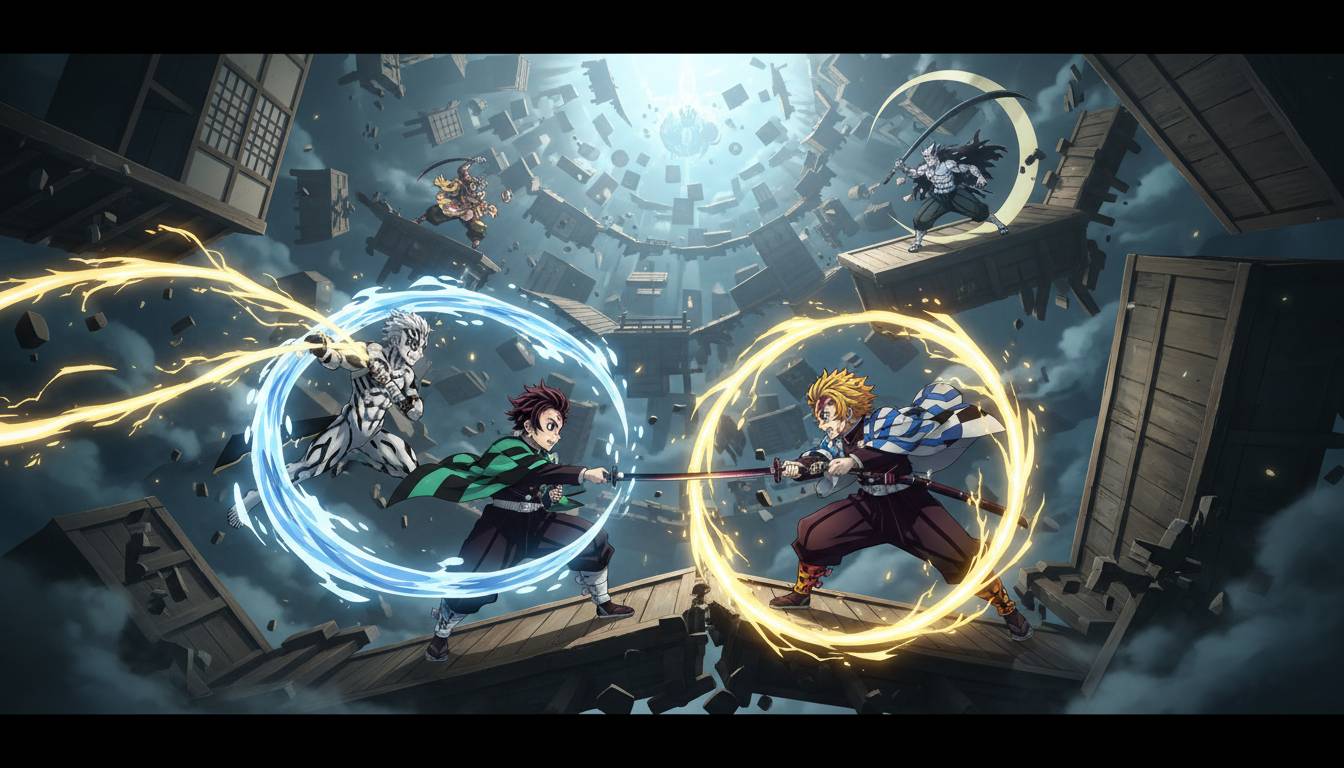
The Infinity Castle itself becomes a character in the film. Ufotable’s animation transforms the maze-like fortress into a visually stunning, disorienting environment. Gravity-defying architecture, shifting corridors, and hypnotic reflections intensify the sense of danger and confusion.
Supporting Characters Elevated
The film elevates previously minor characters, such as Yushiro and other Demon Slayer Corps members, giving them meaningful roles in the battle. These additions underscore the collective struggle and broaden the narrative beyond the main protagonists.
Omitted or Altered Content
To maintain narrative flow, the film trims certain manga details, including elements of Akaza’s past and the neighboring dojo subplot. While some fans may miss these, the film preserves the core emotional arcs and action sequences.
Summary of Key Differences
- Expanded roles for supporting characters
- Slower pacing with heightened emotional beats
- Extended and dramatized fights (Shinobu vs. Doma; Zenitsu vs. Kaigaku)
- Greater focus on Giyu’s heroism
- Richer backstory for Akaza
- Kiriya portrayed under pressure
- Visually immersive Infinity Castle environment
- Streamlined narrative with selective omissions
What’s Next for the Story
The film concludes with a stinger featuring Muzan, reinforcing the looming threat and setting the stage for the next installment. Fans are now watching for the release of the remaining films in the trilogy, which will continue adapting the Final Battle arc.
Conclusion
The Infinity Castle film adaptation remains faithful to the manga’s core storyline while enhancing its emotional and visual impact. By expanding character arcs, slowing pacing, and elevating key battles, the movie delivers a richer, more immersive experience. As the trilogy unfolds, viewers can expect further cinematic reinterpretations that balance fidelity with dramatic resonance.

View 0 comments