

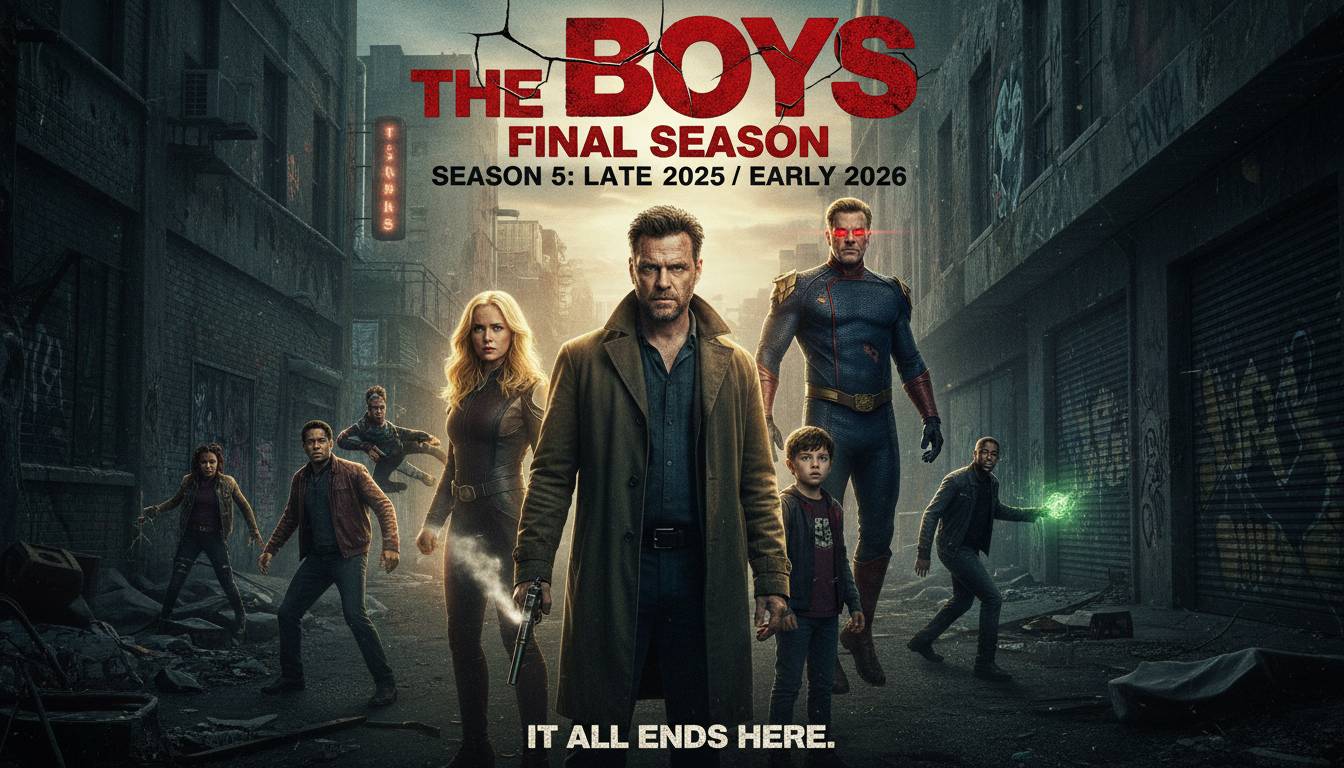
The “filler” label gets thrown around too easily, especially when a prestige genre show pauses the explosions and starts moving pieces into place. That is exactly what happened with The Boys Season 5, Episode 4. Some viewers came away frustrated because the hour did not deliver a giant death, a full-scale showdown, or a clean plot payoff. But that reaction misses what the episode is actually doing. It is not stalling the final season. It is tightening character motives, exposing vulnerabilities, and setting up endgame collisions the show cannot land without this groundwork.
Why the “filler” complaint took off so fast
The backlash is real. GamesRadar reported on April 24, 2026, that some fans were calling Season 5, Episode 4 a “filler” installment after expecting a bigger leap forward in the final season’s central conflict. The outlet specifically framed the reaction around disappointment with episode 4, while also noting that other viewers pushed back by listing several major developments that did happen in the hour. ComicBook.com, in a separate April 23, 2026 piece, said the episode annoyed some fans because it felt like setup and raised concerns about how the series is using its remaining runway. Those reactions explain the discourse, but they do not prove the criticism is right. They mostly show that audiences often confuse “less immediately explosive” with “narratively unnecessary.”
That distinction matters. In a final season, every episode has a job. Some episodes cash checks. Others write them. Episode 4 is clearly one of the latter. According to the reaction roundup cited by GamesRadar on April 24, viewers themselves pointed to several concrete developments: Annie returns, Frenchie and Kimiko split, Soldier Boy ends up emotionally damaged, Homelander learns Butcher no longer has the virus, Annie gets further development, the team gains information about who has the remaining V1, and Homelander’s weakness is identified as enriched uranium. That is not empty wheel-spinning. That is plot, character, and tactical information all moving at once.
Character movement is still story movement
The strongest argument against the “filler” claim is simple: Episode 4 changes what key characters know, want, and fear. That is story. It may not look like a finale-level body count, but it is the machinery that makes later payoffs land.
Take Homelander. If he now knows Butcher no longer has the virus, the balance between hunter and hunted shifts. Information is power in The Boys, and this series has always treated secrets like weapons. A reveal like that is not decorative. It changes strategy. It affects how aggressively Homelander can move, how exposed Butcher becomes, and how much room the show has to escalate the final conflict without cheating its own logic.
Then there is Soldier Boy. GamesRadar’s summary of fan pushback highlights that he ends the episode traumatized and depressed. That is not a side note. It is a destabilizing development for one of the show’s most volatile pieces. The Boys has never used Soldier Boy as a static blunt instrument. He is dangerous precisely because his emotional state can redirect the violence of a scene or even a season. If Episode 4 leaves him psychologically altered, that is setup with consequences, not padding.
Frenchie and Kimiko’s breakup also matters more than critics of the episode want to admit. Their relationship has long functioned as one of the show’s few emotional anchors. If that bond fractures now, in the final season, it is not random melodrama. It weakens the group internally at the exact moment external pressure is rising. Final seasons often work by isolating characters before forcing them into irreversible choices. This episode does that work.
The episode is building the endgame, not avoiding it
ComicBook.com made a sharper criticism than most casual fan posts. Its April 23 article argued that the episode’s “filler” feeling came partly from how obviously it seemed to set up Vought Rising, especially through references tied to Bombsight, Stormfront, Quinn, and Soldier Boy’s emotional response. That is a fair concern on paper. No one wants a final season to feel hijacked by franchise maintenance. But even that critique does not erase the episode’s function inside Season 5 itself.
In fact, the same details can be read another way. The Boys has always tied personal trauma, corporate mythmaking, and historical rot together. If Episode 4 digs into legacy material around Soldier Boy and Vought, that is not automatically spinoff bait. It can also be thematic consolidation. Final seasons are supposed to pull old threads tight. They revisit origins so endings feel earned. If the episode is reconnecting Homelander, Soldier Boy, Vought’s buried history, and present-day power struggles, then it is doing exactly what a penultimate stretch of a series should do.
That is why calling it filler feels too blunt. Filler is material you could remove without damaging the season’s structure. Based on the developments already identified in public reaction coverage, Episode 4 does not fit that definition. Remove Annie’s return, Homelander’s new knowledge, the V1 trail, the enriched uranium weakness, Soldier Boy’s emotional break, and the Frenchie-Kimiko rupture, and you are not trimming fat. You are cutting connective tissue.
Fans expected acceleration, but the show chose compression
Part of the disconnect is pacing. Viewers know Season 5 is the end, so they expect every episode to feel huge. That expectation is understandable. But “huge” can mean two different things. It can mean spectacle. Or it can mean compression, where the show packs future consequences into quieter scenes.
Episode 4 appears to choose the second option. Instead of delivering one giant event, it loads multiple pressure points at once. Homelander gets actionable information. Annie’s position evolves. Soldier Boy becomes less stable. The team gets closer to a possible weapon or leverage point. A core relationship breaks. None of those beats may feel like a climax in isolation. Together, though, they narrow the path forward. That is what endgame television often looks like before the detonations start.
There is also a broader TV literacy issue here. Audiences sometimes use “filler” when they really mean “an episode centered on setup, psychology, or aftermath.” Those are not the same thing. A bottle episode can be essential. A slower chapter can be indispensable. And a series as cynical and character-driven as The Boys cannot credibly sprint from shock to shock without stopping to show what those shocks cost people.
So, was it the weakest episode? Maybe. Filler? No.
It is possible to think Episode 4 is one of the weaker installments of Season 5 so far and still reject the filler accusation. Those are different judgments. Pacing complaints are valid. Concerns about franchise setup are valid. Wanting more urgency in a final season is valid. But the public details already attached to the episode show clear narrative movement. That alone disqualifies it from true filler status.
The better reading is that Episode 4 is a bridge episode with real structural weight. It is not designed to satisfy viewers looking for immediate catharsis. It is designed to make later payoffs sharper, uglier, and more coherent. In a show built on escalation, that kind of episode can feel deceptively small. It is not. It is the hour that makes the next collapse possible.
Frequently Asked Questions
Why are some fans calling The Boys Season 5 Episode 4 filler?
Because the episode does not deliver a massive standalone payoff. Coverage from GamesRadar on April 24, 2026 and ComicBook.com on April 23, 2026 shows that some viewers felt the hour was too focused on setup, character beats, and future story threads instead of immediate action.
What major things actually happened in the episode?
Public reaction coverage highlighted several developments: Annie returns, Frenchie and Kimiko break up, Soldier Boy is left emotionally shaken, Homelander learns Butcher no longer has the virus, the team gets information tied to the remaining V1, and Homelander’s weakness is identified as enriched uranium. That is substantial movement.
Can an episode be slower without being filler?
Yes. A slower episode can still be essential if it changes character motivations, reveals new information, or sets up later payoffs. That appears to be the case here. The episode may be less explosive, but it still alters the board in meaningful ways.
Did the episode spend too much time setting up other franchise stories?
That is the most credible criticism. ComicBook.com argued that some of the material may feel like setup for Vought Rising. Even so, those same scenes can also serve The Boys’ final season by deepening Soldier Boy, Vought’s history, and the logic behind the endgame conflict.
Is Episode 4 skippable?
No, not based on the plot points already discussed publicly. Skipping it would mean missing key information about Homelander, Butcher, Annie, Soldier Boy, and the group’s tactical position. That is the opposite of filler.
What is the best way to judge whether an episode is filler?
Ask one question: if you remove it, does the season still make full sense? In this case, the answer looks like no. Episode 4 appears to supply emotional fractures, strategic reveals, and vulnerability mapping that later episodes are likely to depend on.

View 0 comments