

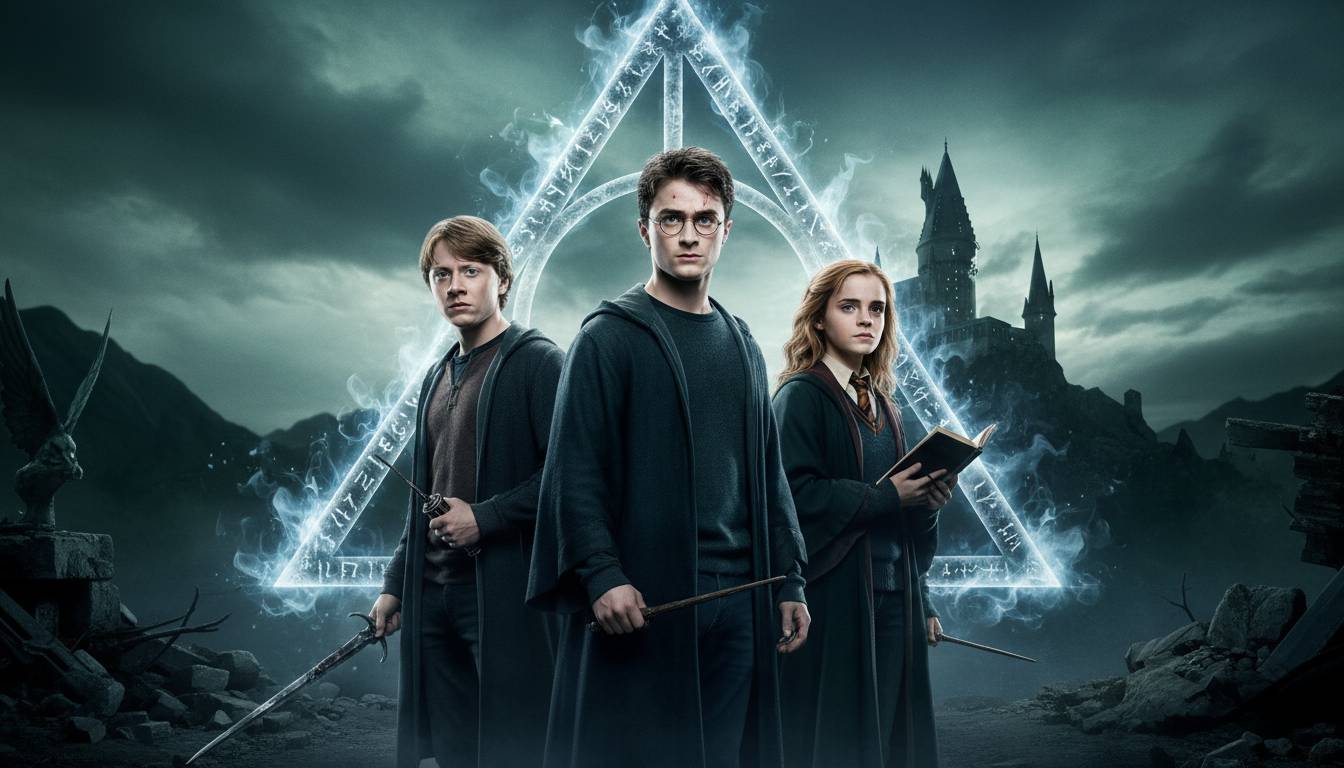
When Harry Potter and the Deathly Hallows closes, the war is over, Voldemort is gone, and the wizarding world finally gets something it had not seen in years: peace. But the story does not really stop at the Battle of Hogwarts. Between the book’s epilogue, later canon details published through Wizarding World, and a handful of author-confirmed updates, fans have a fairly clear picture of where the major characters landed. Here is what happened to the most important Harry Potter characters after Deathly Hallows, from careers and marriages to family life and Hogwarts itself.
Harry Potter: Auror, Husband, Father, and Eventually Department Head
Harry’s ending is the emotional center of the series, so it makes sense that his post-Deathly Hallows life is the one fans know best. In the epilogue, set nineteen years after Voldemort’s defeat, Harry is married to Ginny Weasley and the two have three children: James Sirius Potter, Albus Severus Potter, and Lily Luna Potter. They are seen at King’s Cross as Albus prepares to leave for Hogwarts.
His family life, though, is only part of the answer. According to later Wizarding World material, Harry did not return to Hogwarts to complete a final year of school. Instead, he joined the Ministry of Magic and entered the Auror Office. That decision fits the character perfectly. Harry had spent most of his teenage years confronting dark magic in one form or another, and after the war, the Ministry needed people who had actually fought Voldemort’s regime from the inside.
Over time, Harry rose through the ranks and became Head of the Department of Magical Law Enforcement. That is a major shift from the boy who distrusted authority for most of the series. It also shows how the postwar wizarding world changed: Harry was no longer just resisting broken institutions, he was helping rebuild them. In many ways, that is the real end of his arc.
Ginny Weasley: Quidditch Career First, Family Life After
Ginny’s future is sometimes reduced to “Harry’s wife,” but canon gives her a much fuller ending than that. Before settling into family life, Ginny became a professional Quidditch player for the Holyhead Harpies, one of the most famous all-witch teams in Britain. That tracks with what readers saw throughout the series. She was fearless, talented, and one of the strongest natural flyers of her generation.
Later, Ginny retired from professional play and became the senior Quidditch correspondent for the Daily Prophet. It is a smart continuation of her strengths. She stays close to the sport she loves, but in a role that reflects maturity and experience rather than school-age promise.
By the epilogue, Ginny and Harry have built a stable family together. More importantly, Ginny seems to have achieved something rare in the series: a life shaped by both ambition and affection, not one sacrificed for the other.
Ron Weasley and Hermione Granger: Different Careers, Same Partnership
Ron and Hermione also marry and have two children, Rose and Hugo Granger-Weasley. Their relationship, teased and tested across all seven books, becomes one of the clearest examples of a wartime bond turning into lasting adulthood.
Ron’s career path is a little less conventional than Harry’s. He initially joins Harry at the Ministry as an Auror, helping revolutionize the department after the war. Later, however, he leaves that job to work with George at Weasleys’ Wizard Wheezes. That move says a lot about Ron. He proves he can be brave and capable in the highest-stakes environment possible, then chooses a life that reconnects him with family and Fred’s memory. Helping expand the joke shop is not a step down. It is Ron deciding what kind of life he actually wants.
Hermione’s future is even more impressive. She begins her Ministry career in the Department for the Regulation and Control of Magical Creatures, where she continues the kind of reform-minded work readers saw in her concern for house-elves. She later moves into the Department of Magical Law Enforcement and eventually rises all the way to become Minister for Magic in later canon. Even if some fans focus more on her school brilliance, Hermione’s adult life confirms what the books always suggested: she was never just the smartest student in the room. She was one of the people most capable of changing the system itself.
Neville Longbottom, Luna Lovegood, and Draco Malfoy Took Very Different Roads
Neville’s ending is one of the most satisfying in the entire series. The awkward, underestimated boy who once struggled with confidence becomes the Herbology professor at Hogwarts. It is a perfect fit. Neville always had a gift for plants, and after standing up to Voldemort in the final battle, he had fully grown into the courage others once failed to see in him.
He also marries Hannah Abbott, who goes on to run the Leaky Cauldron. Together, they represent a quieter kind of happy ending, one rooted in steadiness rather than spectacle.
Luna Lovegood remains exactly the sort of person fans would expect her to become: unusual, brilliant, and impossible to box in. She becomes a magizoologist and travels the world in search of rare magical creatures. Later canon notes that she discovers and classifies several new species. She eventually marries Rolf Scamander, the grandson of Fantastic Beasts author Newt Scamander. That pairing feels especially right, given Luna’s lifelong fascination with magical creatures and the unseen corners of the world.
Draco Malfoy’s future is more subdued. He marries Astoria Greengrass, and the two have a son, Scorpius Malfoy. Draco never becomes a heroic figure in the same mold as Harry, but his postwar life suggests a man trying to step away from the ideology that shaped his childhood. By the time of the epilogue, the hostility between Draco and Harry has cooled into something more restrained. Not friendship, exactly. But not open hatred either. For Draco, that matters.
The Older Generation: McGonagall, George, and Others Who Carried On
Not every major post-Deathly Hallows development belongs to Harry’s generation. Several older or supporting characters also have meaningful endings.
Professor McGonagall eventually becomes Headmistress of Hogwarts. After the chaos of Voldemort’s rise and fall, that appointment feels almost inevitable. She had the authority, discipline, and moral clarity the school needed. Hogwarts under McGonagall represents continuity, but also recovery.
George Weasley’s future is bittersweet. After Fred’s death in the Battle of Hogwarts, George continues running Weasleys’ Wizard Wheezes. Ron later joins him there. George also marries Angelina Johnson, and they have two children, including a son named Fred. It is one of the series’ clearest reminders that survival after war is never simple. Joy returns, but grief does not disappear.
Kingsley Shacklebolt becomes Minister for Magic in the immediate aftermath of Voldemort’s defeat, helping stabilize the government and reform institutions that had been corrupted by Death Eater influence. His leadership bridges the gap between wartime emergency and long-term rebuilding.
As for Hagrid, he remains at Hogwarts, still beloved, still teaching and caring for magical creatures. That continuity matters. In a series defined by loss, Hagrid’s presence helps Hogwarts remain emotionally recognizable.
What the Ending Really Says About the Wizarding World
The major Harry Potter characters do not all end up in glamorous positions, and that is part of why their futures work. Some become powerful officials. Some teach. Some raise families. Some travel. Some run shops. The point is not that every character gets a fairy-tale reward. It is that after years of fear, they finally get the chance to choose.
That is the real answer to what happened after Deathly Hallows. Harry, Ron, Hermione, Ginny, Neville, Luna, Draco, and the rest moved from survival into adulthood. They carried scars from the war, but they also helped shape the peace that followed. The epilogue may be brief, yet the broader canon makes one thing clear: the battle ended at Hogwarts, but their lives did not.
Frequently Asked Questions
Did Harry Potter ever go back to Hogwarts after Deathly Hallows?
No, Harry did not return as a student to complete another year. Instead, he joined the Ministry of Magic and trained as an Auror, later rising to become Head of the Department of Magical Law Enforcement.
Who did Hermione Granger become after the war?
Hermione entered the Ministry of Magic and worked on reform, first in the Department for the Regulation and Control of Magical Creatures and later in Magical Law Enforcement. In later canon, she eventually becomes Minister for Magic.
What happened to Ron Weasley after Deathly Hallows?
Ron first worked as an Auror alongside Harry. Later, he left the Ministry and joined George Weasley at Weasleys’ Wizard Wheezes, helping turn the family business into a major success. He also married Hermione and had two children.
Did Neville Longbottom become a professor?
Yes. Neville became the Herbology professor at Hogwarts, a role that suits both his talent and his personal growth across the series. He also married Hannah Abbott.
What happened to Draco Malfoy after the final book?
Draco married Astoria Greengrass and had a son, Scorpius. His later life suggests distance from the pure-blood extremism that shaped his youth, even if he never becomes one of Harry’s close friends.
Who became Headmaster or Headmistress of Hogwarts?
Minerva McGonagall eventually became Headmistress of Hogwarts, guiding the school after the war and helping restore stability after one of the darkest periods in its history.


View 0 comments