

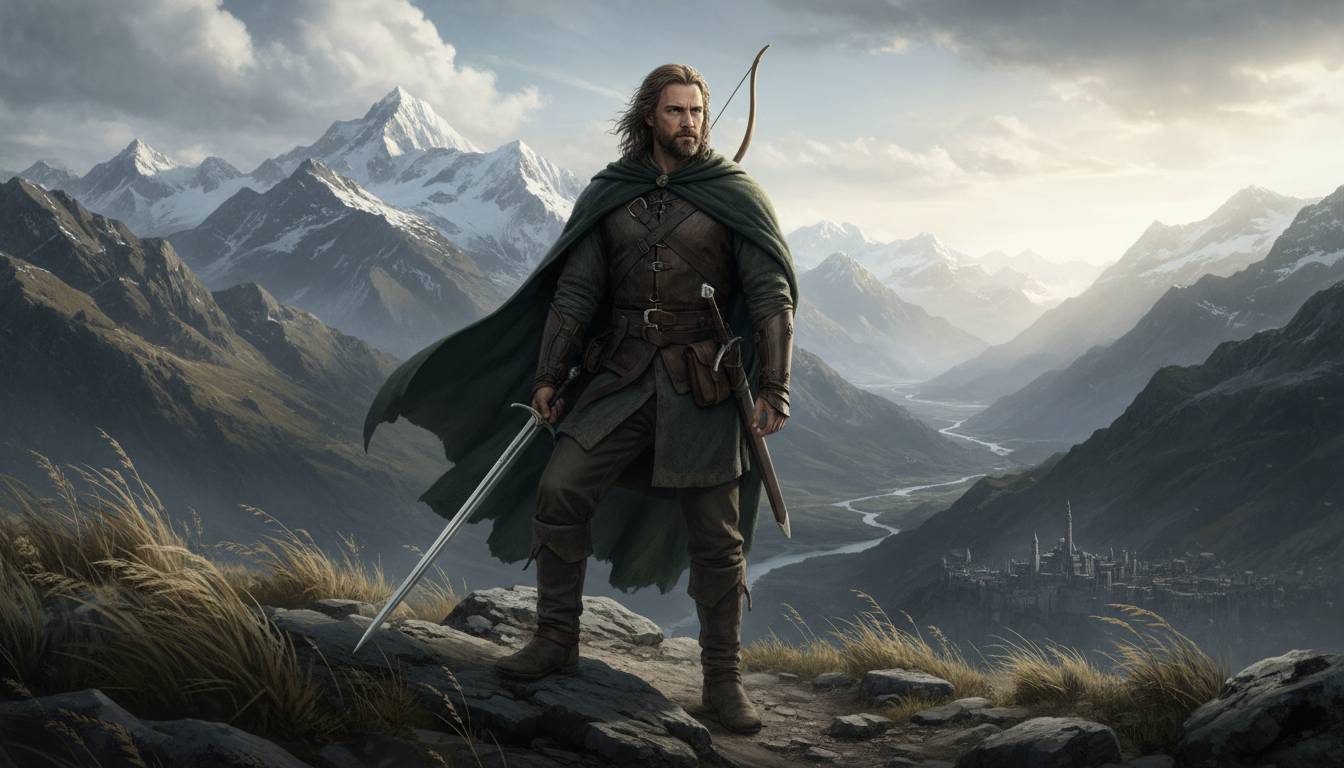
The ending of The Lord of the Rings feels final, but Tolkien did not leave his heroes standing still. In the appendices to The Return of the King, especially Appendix A and Appendix B, he mapped out what happened to the Fellowship, the rulers of Men, and several other major figures after Sauron’s defeat. Some found peace. Some took up crowns and duties. Some sailed away. And a few endings are far sadder than the films ever suggest. Here is the canon fate of every major character after the War of the Ring.
Frodo Baggins: The Ring-bearer Who Could Not Fully Heal
Frodo survived Mount Doom, returned to the Shire, and helped save it again during the Scouring of the Shire, a major book event omitted from Peter Jackson’s films. Even after victory, though, he never truly recovered. Tolkien makes it clear that the wounds Frodo carried were not only physical. The Morgul blade injury from Weathertop and the burden of carrying the One Ring stayed with him long after the quest ended.
For a time, Frodo lived quietly at Bag End, but his pain returned on anniversaries tied to his suffering. Eventually, he left Middle-earth altogether. On September 29 of the year 3021 of the Third Age, Frodo sailed from the Grey Havens with Gandalf, Bilbo, Elrond, and Galadriel. This was not exactly death, but it was a final departure from the mortal lands of Middle-earth. He went to the Undying Lands, where he could find a measure of peace that the Shire could no longer give him.
It is one of Tolkien’s most bittersweet endings. Frodo saved the world, but he did not get a simple happy ending inside it.
Samwise Gamgee: Mayor, Family Man, and the Last Ring-bearer to Depart
Sam’s story is almost the mirror image of Frodo’s. He came home, married Rosie Cotton, and built the life Frodo could not. Sam and Rosie had many children, and Sam became one of the most important hobbits in the Shire. He served as Mayor for multiple terms and remained a central figure in rebuilding and restoring the land after Saruman’s damage.
Frodo also left Bag End to Sam, a deeply symbolic passing of the torch. Sam became the keeper of Frodo’s memory as well as the guardian of the home they had both loved. In Tolkien’s timeline, after Rosie died, Sam eventually rode to the Grey Havens himself. Because he had briefly carried the Ring in Mordor, tradition within the legendarium holds that he too was allowed to pass over Sea. That makes Sam the last of the Ring-bearers to leave Middle-earth.
His ending is gentle, earned, and deeply moving. Of all the hobbits, Sam perhaps comes closest to getting both adventure and fulfillment.
Aragorn and Arwen: A Long Reign Followed by a Tragic Farewell
After the fall of Sauron, Aragorn was crowned King Elessar and became the ruler of the Reunited Kingdom of Gondor and Arnor. His reign was long and successful. Tolkien presents Aragorn as the restorer king in full: he brought peace, renewed old alliances, healed lands damaged by war, and ruled with wisdom for many years.
He also married Arwen, fulfilling the love story that Tolkien considered essential enough to include in the appendices. Together they had a son, Eldarion, and several daughters. Under Aragorn, Gondor entered a period of renewal rather than decline, which matters because so much of The Lord of the Rings is about fading kingdoms and lost greatness. Aragorn actually reverses that pattern, at least for a time.
But the ending is not simply triumphant. Aragorn eventually chose the time of his death, as his Númenórean heritage allowed. Arwen was devastated by his passing. After he died, she went alone to Lothlórien, now emptying and fading, and there she died on Cerin Amroth. It is one of Tolkien’s quietest tragedies. They win the age, but they cannot escape mortality and separation forever.
Gandalf: Mission Accomplished
Gandalf’s role in Middle-earth was always larger than that of a wandering wizard. He was one of the Istari, sent to oppose Sauron and help the peoples of Middle-earth resist darkness. Once the Ring was destroyed and Sauron defeated, Gandalf’s task was complete.
He did not remain to shape the Fourth Age as a political force. Instead, he departed from the Grey Havens with Frodo, Bilbo, Elrond, Galadriel, and the other Ring-bearers and Eldar. Gandalf’s leaving marks more than a character exit. It signals the end of the old world of magic, elves, and direct divine intervention. The Fourth Age belongs to Men, not to figures like Gandalf.
That is why his farewell feels so final. He is not just leaving the story. His departure closes an era.
Legolas and Gimli: An Unlikely Friendship That Endured to the End
Legolas remained in Middle-earth for a long time after the war. Tolkien says he helped establish an Elvish colony in Ithilien, helping restore the land after the devastation around Gondor. That detail often gets overlooked, but it fits his character perfectly. He is not only a warrior. He is also a bringer of renewal and beauty.
Gimli’s fate is just as notable. He became Lord of the Glittering Caves at Aglarond and led his people there. In the aftermath of war, Gimli was involved in rebuilding, including work connected to Gondor. He did not fade into the background. He became a respected lord in his own right.
The most famous part of their ending, though, comes much later. After Aragorn’s death, Legolas built a grey ship and sailed into the West. Tolkien adds that Gimli went with him, if that tradition is true. It is one of the most extraordinary notes in the appendices: a dwarf, because of his friendship with Legolas and reverence for Galadriel, may have entered the West. Whether read literally or as a preserved tradition, it gives their bond one final, beautiful chapter.
Merry and Pippin: From Mischief to Greatness
Meriadoc Brandybuck and Peregrin Took did not return to being ordinary hobbits. Both became major leaders in the Shire. Merry became Master of Buckland, while Pippin became Thain of the Shire, effectively the leading authority among the hobbits. They married, had families, and remained celebrated figures for the rest of their lives.
Tolkien also gives them a distinctly noble ending beyond the Shire. Late in life, Merry and Pippin traveled again to Gondor after the death of their wives. They died there and were laid in Rath Dínen among the great of Gondor. That is an astonishing honor for two hobbits who began the story stealing vegetables, dodging relatives, and stumbling into danger.
Later, Aragorn himself was laid beside them. The symbolism is hard to miss. Their friendship with the king was not ceremonial. It lasted their whole lives.
Faramir and Éowyn: Healing, Marriage, and Ithilien Reborn
Faramir and Éowyn receive one of the warmest endings in Tolkien’s canon. After meeting in the Houses of Healing, they married and settled in Ithilien. Faramir became Prince of Ithilien and remained an important leader under King Elessar. Éowyn, who had long sought glory in battle and feared being trapped in a cage, found a different kind of purpose there.
Tolkien frames her change carefully. She does not become lesser because she turns away from war. Instead, she chooses life, growth, and peace after confronting death directly. Together, Faramir and Éowyn helped make Ithilien one of the fairest regions in the renewed kingdom.
Their story matters because it is one of Tolkien’s clearest examples of healing after trauma. Not every victory ends with another battle. Some end with restoration.
Éomer, Galadriel, Elrond, and Bilbo
Éomer succeeded Théoden as King of Rohan and ruled long and well. His reign preserved the alliance between Rohan and Gondor, one of the central political bonds of the story’s ending. He represents continuity, but also renewal after terrible loss.
Galadriel remained for a time in Middle-earth after Sauron’s defeat, but her age was ending. She eventually sailed West from the Grey Havens, leaving behind Lothlórien as the power of the Three Rings faded. Elrond did the same, departing Middle-earth once Arwen’s choice was made and the time of the Elves had truly passed.
Bilbo, already ancient by hobbit standards, also sailed West with Frodo. His role after the war is small, but emotionally important. The first great adventurer of this age and the last great Ring-bearer leave Middle-earth together.
Saruman, Gollum, and Sauron: No Return, No Redemption
Not every major character had an after-story. Gollum died in the fire of Mount Doom, taking the Ring with him. Sauron was not killed in the ordinary sense, but with the Ring destroyed, his power collapsed beyond recovery. His spirit endured only as a powerless shadow, unable to rise again.
Saruman survived the fall of Isengard in the books and returned north, where he briefly seized control of the Shire. After Frodo and the other hobbits helped overthrow him, Saruman was killed, and his spirit dissolved into nothing, blown away and denied return. His end is smaller than Sauron’s, almost pitiful, which is exactly the point. He had once been great and became petty.
Why These Endings Matter
Tolkien does not end The Lord of the Rings with a single emotional note. That is why the appendices feel so rich. Some characters are rewarded with love, family, and long rule. Some carry wounds that never fully close. Some leave the world entirely. And some, despite all their power, end in ruin.
The deeper pattern is this: victory in Middle-earth always comes with change. The Fourth Age begins because the old powers depart. Frodo leaves. Gandalf leaves. Elrond and Galadriel leave. Even Aragorn’s restored kingdom cannot last forever unchanged. The world is saved, yes, but it moves on. That is Tolkien’s ending, and it is far more mature than a simple happily-ever-after.
Frequently Asked Questions
Did Frodo die at the end of The Lord of the Rings?
No. Frodo did not die when he left Middle-earth. He sailed to the Undying Lands, a place of healing and peace. He was still mortal, so he did not become immortal, but he was allowed to leave Middle-earth because of what he had suffered as the Ring-bearer.
What happened to Sam after Frodo left?
Sam returned to the Shire, married Rosie Cotton, raised a large family, and became Mayor. Much later, after Rosie died, he also went to the Grey Havens. Tolkien strongly implies that as a former Ring-bearer, Sam too was permitted to sail West.
Did Legolas and Gimli really go to the Undying Lands together?
Tolkien presents it as a tradition recorded in the appendices. According to that tradition, Legolas sailed West after Aragorn’s death, and Gimli went with him. It is one of the most famous and beloved post-war details in the legendarium.
What happened to Aragorn after becoming king?
Aragorn ruled the Reunited Kingdom for many years as King Elessar, married Arwen, and restored peace and order to Gondor and Arnor. Eventually, he chose the time of his death, following the old Númenórean custom. His death led to Arwen’s final sorrow and passing.
Did Merry and Pippin stay in the Shire forever?
No. They became major leaders in the Shire first, with Merry as Master of Buckland and Pippin as Thain. Later in life, they traveled to Gondor, where they died and were buried among the great of the realm, an honor almost unimaginable at the start of their journey.

View 0 comments