

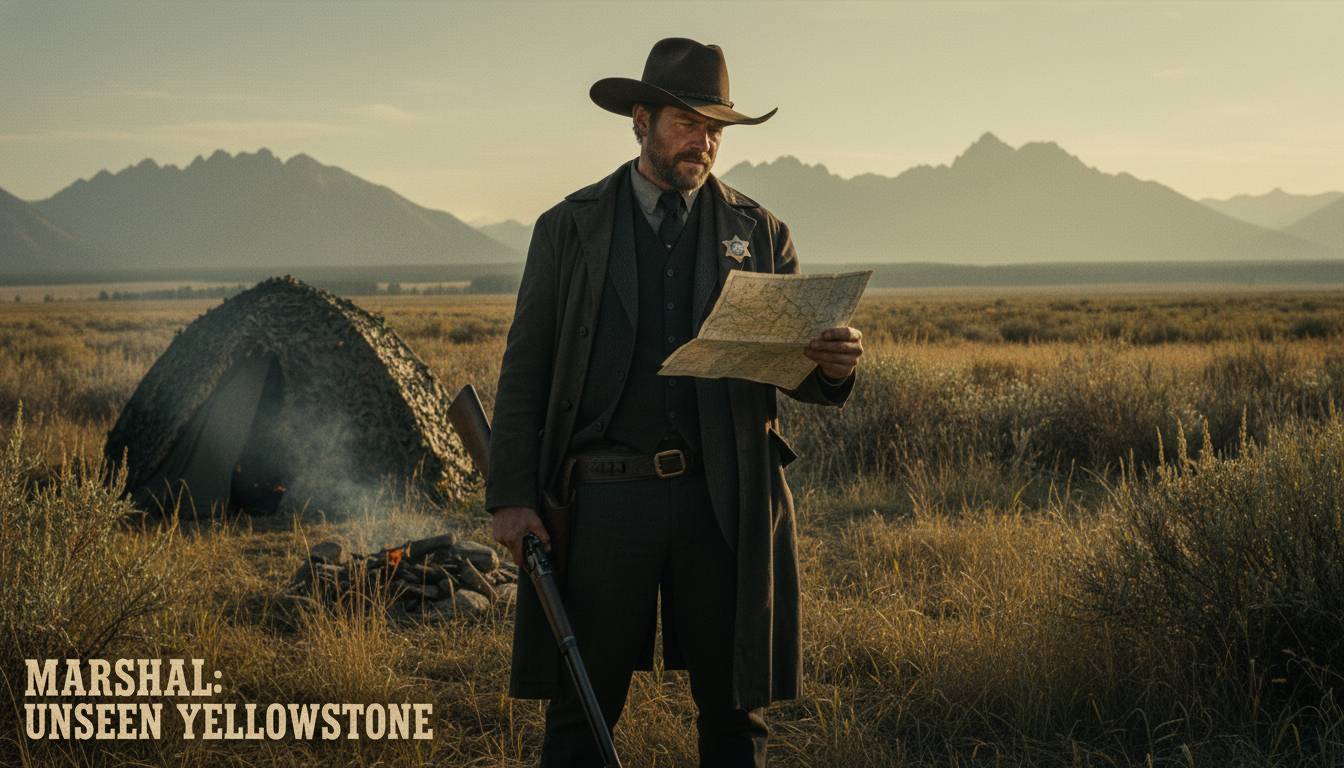
Episode 9 of Marshals: A Yellowstone Story, titled “In Low Places,” does more than stage another rescue mission for Kayce Dutton. It quietly opens a door into franchise history by centering the Clegg family, a Montana dynasty presented as one of the Duttons’ oldest enemies. That matters because Yellowstone itself never fully mapped this rivalry on screen, yet Episode 9 treats it like inherited history. The result is one of the hour’s most intriguing moves: it turns a personal hostage crisis into a retroactive expansion of the Dutton mythos.
Episode 9 turns a rescue plot into family history
The central action of Episode 9 is straightforward on the surface. Andrea Cruz is kidnapped, and Kayce and the Marshals team move into a high-pressure operation to get her back. Multiple recaps published after the April 26, 2026 broadcast identify Randall Clegg as the key antagonist behind the crisis, with the episode framing the confrontation as more than a one-off criminal dispute. Showbiz Junkies’ recap of “In Low Places” emphasizes the rising tension of the mission, while Country Rebel notes that Kayce is burdened by guilt over his family’s long-running feud with Clegg. TVLine goes even further, describing the Cleggs as one of the Duttons’ oldest enemies and explaining that Kayce believes that history helped fuel the violence in the present.
That is the real reveal. The episode is not simply saying Kayce has another enemy. It is saying the Duttons have been carrying a rivalry that predates the events viewers actually watched in Yellowstone. For longtime fans, that lands as a retroactive addition to the canon. The feud was not a major pillar of the original series, at least not in any sustained or explicit way, yet Marshals now treats it as established background with emotional consequences.
Why the Clegg conflict feels new even in a familiar universe
There is a reason this twist stands out. Yellowstone spent years defining the Duttons through visible enemies: land developers, political rivals, Broken Rock power struggles, Market Equities, and internal family warfare. Those conflicts were concrete, recurring, and central to the show’s identity. By contrast, the Clegg feud arrives in Marshals as buried history. TV Insider notes that Clegg himself was not part of Yellowstone and was only introduced in Marshals Episode 3 as a longtime enemy of the Duttons. That means Episode 9 is doing narrative backfill. It is asking viewers to accept that this rivalry always existed, even if they never saw it play out before.
Normally, that kind of move can feel clumsy. Here, it mostly works because the writers tie the revelation to Kayce rather than to franchise lore for its own sake. Kayce has always been the Dutton most split between inherited violence and the hope of stepping outside it. A hidden feud fits him better than it would fit Beth or Jamie because his story has always carried the weight of things left unsaid. Episode 9 uses that silence well. Instead of delivering a giant exposition dump, it lets the feud surface through guilt, responsibility, and the sense that Kayce is paying for battles he did not start.
The episode reframes John Dutton without overusing him
One of the more interesting side effects of Episode 9 is how it reshapes John Dutton’s legacy. The original series made clear that John had no shortage of enemies, but this hour implies there were corners of his war map viewers never saw. The AOL coverage of the episode points out that, before his death in Season 5 of Yellowstone, John obviously was not a fan of Randall Clegg, and that Kayce appears to settle part of that score by apprehending the Clegg patriarch.
That is a smart choice structurally. Rather than dragging John back into the foreground through flashbacks or heavy-handed references, the episode lets his influence linger through unfinished conflict. It suggests that John’s grudges did not die with him. They became Kayce’s burden. In franchise terms, that is useful because it gives Marshals a way to remain connected to Yellowstone without feeling trapped by it.
Kayce’s emotional arc is the real engine of the hour
The hostage plot gives Episode 9 urgency, but Kayce’s internal response gives it weight. Country Rebel’s recap highlights that he wrestles with guilt over the Dutton-Clegg feud and the danger it created for his team. TVLine similarly frames the mission as deeply personal, not only because Andrea is in danger but because Kayce thinks his family history helped create the conditions for the standoff.
That emotional framing matters more than the mechanics of the takedown. Viewers have seen Kayce in tactical mode before. What makes this episode different is that competence is not enough. He cannot simply solve the problem and walk away clean. The feud forces him to confront a familiar Yellowstone question in a new setting: how much of the Dutton inheritance is land, and how much is violence passed from one generation to the next?
This is where Episode 9 earns its place in the broader franchise. It does not just expand the mythology. It uses that expansion to sharpen what has always made Kayce compelling. He is effective under pressure, but he is never untouched by the cost. The Clegg storyline gives that tension a fresh shape.
Does Episode 9 fully resolve the feud?
Not completely, and that is probably intentional. The preferred framing that the episode “resolves” a hidden rivalry is only partly true. Yes, Randall Clegg is apprehended by the end of the hour, and that gives the story a sense of immediate closure. But several recaps suggest the conflict is not entirely over. TVLine describes the ending as a chilling warning from Kayce’s nemesis, while FandomWire explicitly argues that Episode 9 may not be the final word on the feud.
So the better reading is that Episode 9 resolves one phase of the rivalry while formally introducing it as a larger piece of franchise history. In other words, the episode closes the week’s crisis but opens a broader narrative lane. That is a classic spinoff strategy. It rewards viewers with a payoff while preserving future story value.
Why this reveal matters for the Yellowstone universe
The biggest takeaway is not that the Duttons had another enemy. It is that Marshals is willing to deepen the universe by exposing conflicts that were never front-and-center in the parent series. That can be risky, but it also gives the spinoff its own identity. Instead of recycling the same ranch politics, Episode 9 widens the map and lets Kayce inherit a more complicated past.
For fans, that makes “In Low Places” more than a solid procedural hour. It is a canon-building episode. It suggests that the world of Yellowstone was always larger, messier, and more feud-driven than viewers realized. Whether the Clegg rivalry becomes a long-term pillar or remains a sharp one-season detour, Episode 9 proves that hidden history can still feel consequential when it is tied to the right character. And in this franchise, Kayce was always the right character for that job.
Frequently Asked Questions
What is the hidden feud revealed in Marshals Episode 9?
Episode 9 reveals that the Dutton family has a long-running rivalry with the Clegg family, especially Randall Clegg. The episode presents that conflict as old Montana history, even though Yellowstone never fully explored it on screen.
Was Randall Clegg ever in Yellowstone?
No, published coverage indicates that Randall Clegg was not a character in Yellowstone. He was introduced in Marshals, with later episodes framing him as a longtime enemy of the Duttons.
Does Episode 9 end the Dutton-Clegg rivalry?
It ends the immediate confrontation, since Randall Clegg is apprehended, but it does not appear to close the larger feud completely. Some recaps suggest the conflict could continue beyond Episode 9.
Why is the feud important to Kayce Dutton?
The episode shows Kayce feeling personally responsible for the danger around him because he believes his family’s history with the Cleggs helped trigger the crisis. That makes the mission emotional as well as tactical.
Why does this storyline matter for Yellowstone fans?
It expands the franchise mythology. By introducing a rivalry viewers never fully knew about, Marshals adds depth to the Dutton legacy and gives Kayce a conflict that feels connected to Yellowstone without simply repeating old storylines.


View 0 comments