

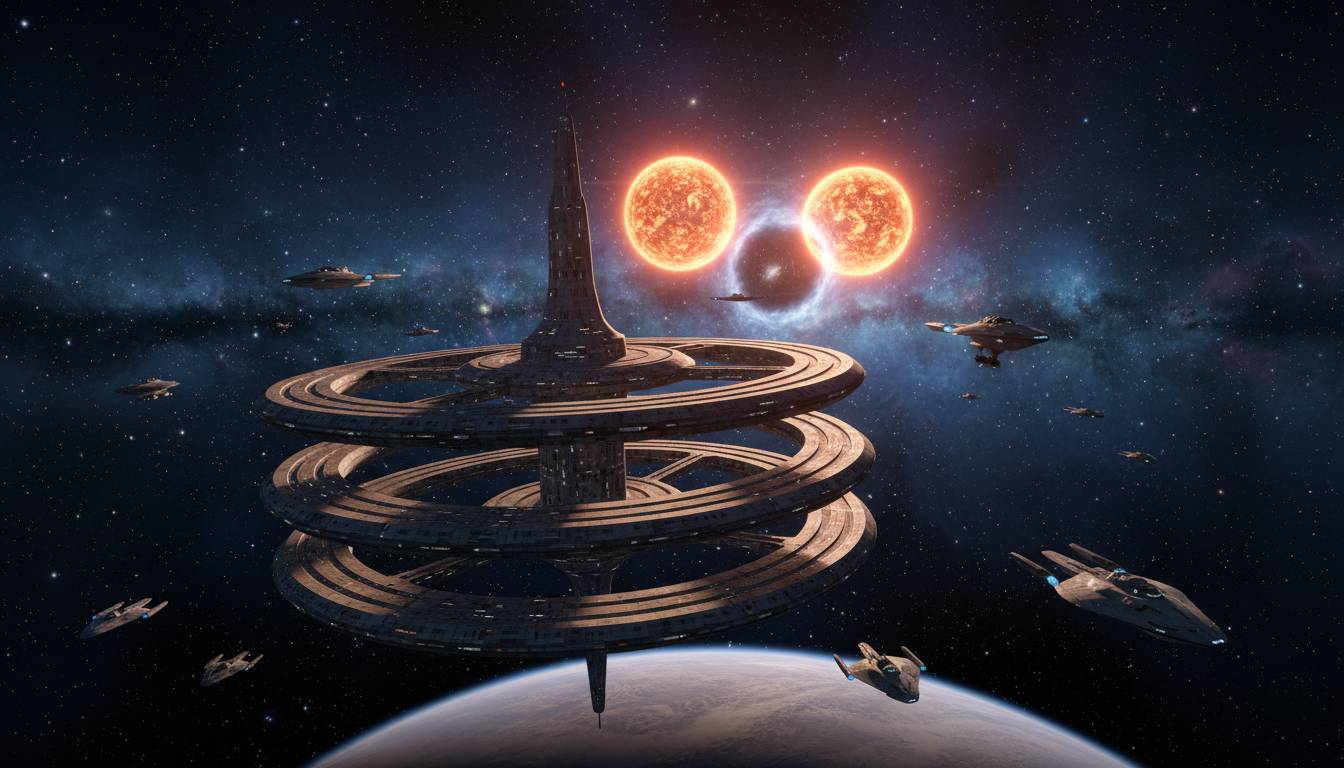
Few episodes in all of Star Trek have a reputation like “In the Pale Moonlight.” First broadcast on April 15, 1998, as season 6, episode 19 of Star Trek: Deep Space Nine, it is still widely treated as the series’ high-water mark because it pushed Benjamin Sisko into morally dangerous territory and never offered an easy escape hatch. What makes the episode’s legacy even better is the way it came together: one of its defining structural ideas emerged after writer Ronald D. Moore spent a late night drinking and suddenly realized how to fix the script.
How a late-night breakthrough reshaped a classic
The core story behind the episode is unusually specific, which is one reason fans keep repeating it. Coverage from IMDb’s retrospective on the episode’s 25th anniversary and a Reactor write-up on the oral history both point to the same detail: Moore’s uncredited rewrite breakthrough came after a night of drinking, when he figured out the story would work if it were told in flashbacks. That was not a minor tweak. It became the episode’s entire dramatic engine.
According to summaries of that production history, the creative team had been struggling with pacing. On paper, “In the Pale Moonlight” is a dense political story. Sisko wants to bring the Romulans into the Dominion War. Garak offers a path. The plan spirals into bribery, forgery, murder, and self-justification. Told in a straightforward way, that material could have felt procedural. Instead, the flashback confession format turns it into something more intimate and more dangerous. Sisko is not just recounting events. He is prosecuting himself, defending himself, and trying to live with what he has done.
That framing device matters because it changes the audience’s relationship to the plot. We are not watching a captain make hard wartime choices from a safe distance. We are sitting in his quarters while he records a personal log, drinks, hesitates, and edges closer to a truth he does not want to say out loud. The result is one of the most psychologically direct hours in the franchise.
Why “In the Pale Moonlight” became Deep Space Nine’s defining episode
Calling any single episode the best is always subjective, but this one has a stronger case than most. “In the Pale Moonlight” was the 143rd episode of Deep Space Nine and the 19th episode of season 6. By that point, the series had already spent years building the political and moral complexity that separated it from earlier Star Trek shows. This episode cashes in all of that groundwork at once.
It also arrives at exactly the right moment in the Dominion War arc. The Federation is under pressure. Betazed has fallen. The war is not a distant backdrop anymore; it is a machine grinding down ideals. Sisko’s decision to work with Garak only lands because Deep Space Nine had already taught viewers that survival in wartime comes with costs. Other Trek series often restored the moral order by the final scene. Deep Space Nine was willing to let the stain remain.
That is why the episode feels bigger than its plot summary. Yes, it is about tricking the Romulans into entering the war. But it is really about whether a Starfleet officer can commit unforgivable acts for a cause he still believes is just. The famous ending works because the script refuses to pretend the answer is clean. Sisko does not emerge noble in the traditional Star Trek sense. He emerges compromised, shaken, and persuasive anyway. That tension is the whole point.
The flashback structure was the secret weapon
Moore’s late-night realization did more than solve pacing. It gave the episode a voice. Without the flashback structure, “In the Pale Moonlight” might still have been a strong war story. With it, the episode becomes a confession chamber.
The structure lets Avery Brooks play several emotional registers at once. In one scene, Sisko is controlled and strategic. In another, he is disgusted with Garak. In another, he is disgusted with himself. Because the story is filtered through his log entries, every event carries a second meaning: what happened, and what Sisko needs to believe happened. That is richer than a standard linear narrative.
It also creates one of Deep Space Nine’s smartest tonal balances. The episode is tense, but not loud. It is political, but never dry. It is philosophical, but rooted in action. The log format keeps the story moving while giving it the gravity of a personal reckoning. That is a hard trick to pull off. Plenty of prestige dramas built entire identities around that kind of morally compromised narration years later. Deep Space Nine did it in 1998, inside a syndicated science-fiction series.
What the drinking anecdote really says about the writers’ room
The story is funny on the surface. A great episode gets fixed after a night of drinking. But the anecdote lasts because it reveals something real about how Deep Space Nine worked at its best. This was a show willing to experiment structurally, trust its audience, and let its characters look bad when the story demanded it.
Moore’s breakthrough was not random inspiration detached from craft. It was the kind of insight that comes when talented writers have already done the hard work and are trying to crack the final problem. The issue was not whether the material was strong. It was how to present it. Once the answer became flashbacks, everything clicked into place: the rhythm, the tension, the intimacy, the ending.
That is also why the origin story fits the episode so well. “In the Pale Moonlight” is about blurred lines, late-night rationalizations, and the stories people tell themselves to keep going. Learning that its final form emerged from a hazy, after-hours realization somehow feels perfectly on brand.
Its legacy inside Star Trek still stands out
More than 25 years after its April 1998 debut, “In the Pale Moonlight” remains one of the episodes most often cited when people argue that Deep Space Nine was the boldest Star Trek series. It is not just admired as a good DS9 episode. It is regularly treated as one of the best episodes in the entire franchise.
That endurance comes from execution, not just darkness. Plenty of television can be grim. Very little is this precise. The episode gives Sisko a terrible bargain, lets him choose, and then denies him the comfort of innocence. Garak, meanwhile, becomes the perfect counterweight: charming, practical, horrifying, and completely certain that history will reward results over ethics. Their scenes together are among the sharpest in the series.
So yes, one of Deep Space Nine’s greatest achievements really does trace back to a night of drinking. But the better takeaway is this: the drinking did not create the episode’s greatness on its own. It unlocked the storytelling form that let the greatness show up on screen.
Frequently Asked Questions
What episode is this article about?
It is about “In the Pale Moonlight,” the 19th episode of Star Trek: Deep Space Nine season 6 and the 143rd episode of the series overall. It first aired on April 15, 1998.
Why do so many fans call it Deep Space Nine’s best episode?
Because it combines wartime politics, character drama, and moral ambiguity at an unusually high level. The episode forces Benjamin Sisko to confront the cost of winning the Dominion War, and it never softens the consequences.
What was the “night of drinking” origin story?
Retrospectives and oral-history coverage report that writer Ronald D. Moore had a late-night drinking session and realized the episode would work better if it were told in flashbacks. That insight became the finished episode’s defining structure.
Did Ronald D. Moore write the episode alone?
Moore is the credited writer, but the episode’s development involved the broader Deep Space Nine creative team. The key point in the origin story is that Moore’s rewrite insight helped solve the script’s pacing and presentation problems.
Why is the flashback format so important?
It turns the story into Sisko’s confession rather than a standard mission narrative. That gives the episode its emotional intensity and makes the final moral reckoning far more powerful.
Is “In the Pale Moonlight” a good starting point for new viewers?
It works on its own as drama, but it is better after some familiarity with Deep Space Nine, especially the Dominion War arc and the relationship between Sisko and Garak. The episode hits harder when you understand what Sisko is risking.

View 0 comments