

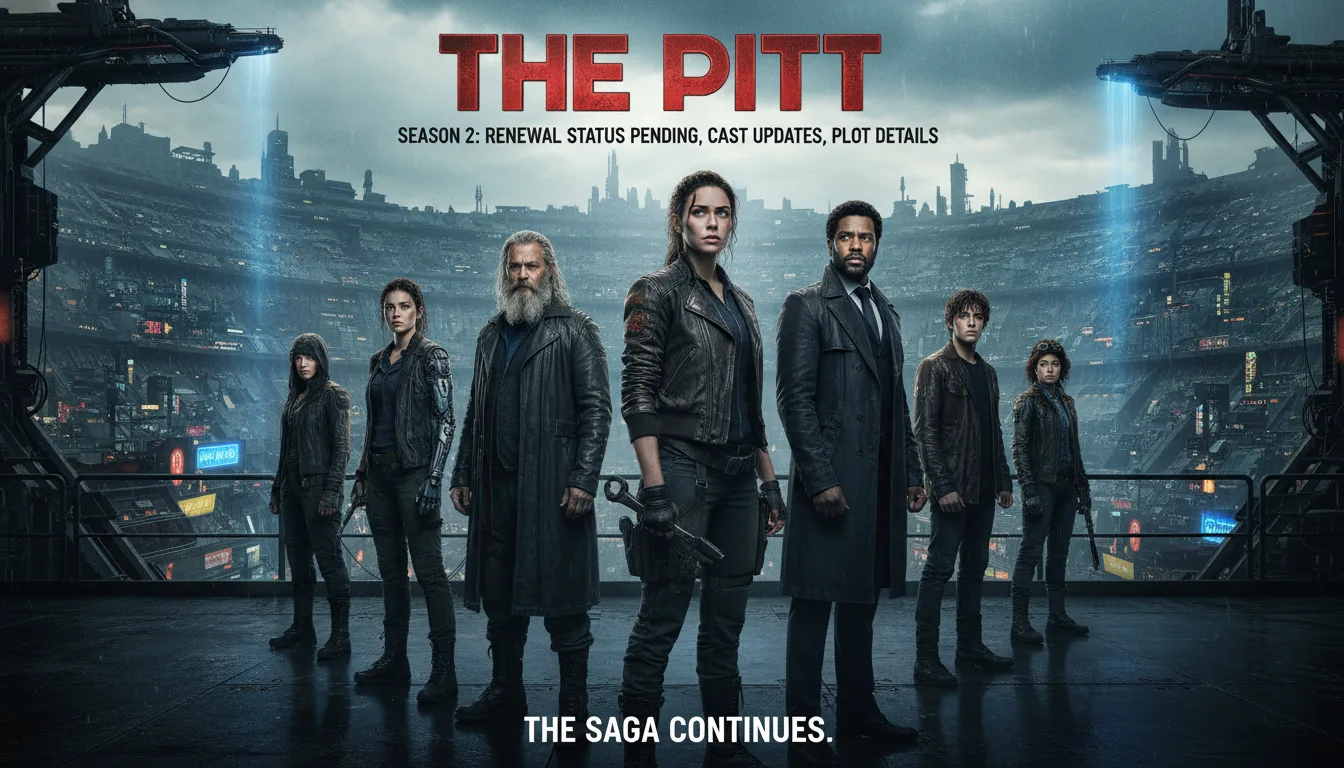
The hardest scene to shoot in The Pitt Season 2 was not one of the bloodiest procedures or the show’s most emotionally explosive confrontation. Instead, it was a deceptively ordinary sequence that turned into a technical and performance minefield once cameras rolled. In exclusive interviews and production conversations published across the last several months, the cast and crew have pointed to a recurring truth about HBO Max’s medical drama: the scenes that look simplest on screen often demand the most precision behind it. That is exactly what makes this reveal so interesting.
The scene that proved toughest was not the obvious one
When people think about difficult scenes on The Pitt, they usually jump straight to surgery, trauma cases, or the show’s more distressing patient storylines. That makes sense. The series has built its reputation on realism, practical effects, and a relentless emergency-room rhythm. But comments from cinematographer Johanna Coelho suggest the most challenging work in Season 2 came from a scene that appeared, at first glance, far less intimidating.
In an interview published by The Credits in February 2026, Coelho described one standout early-season sequence as a moment that began as a “seemingly simple conversation” before evolving into a highly complicated piece of staging. That detail matters. It points to a scene whose difficulty came not from gore or spectacle, but from choreography, blocking, timing, background action, and camera movement all happening at once.
That is the twist. The hardest scene was difficult because it had to feel effortless.
Coelho’s description lines up with what has become one of The Pitt’s defining production signatures. The show operates inside an immersive hospital set designed to allow 360-degree shooting. That freedom gives the series its fluid, lived-in energy, but it also removes many of the shortcuts television crews usually rely on. There is less room to hide lights, less room to cheat angles, and far more pressure on every actor, operator, and background performer to hit marks naturally.
Why a “simple conversation” became a production nightmare
That kind of scene is brutal to execute well. A medical drama can prepare extensively for a surgery sequence because everyone knows the prosthetics, blood effects, and procedural beats are the center of attention. A dialogue scene that gradually expands into a moving web of doctors, nurses, patients, and equipment is trickier. If one performer misses a cue, if one camera move lands half a second late, or if one background action pulls focus at the wrong moment, the illusion breaks.
Coelho explained that these are the moments that become both the most challenging and the most rewarding. That tracks with other reporting around the series. No Film School previously highlighted that The Pitt shoots in story and scene order, a method that helps emotional continuity but also means production cannot always isolate difficult material into neat, disconnected units. The pressure builds as the day unfolds, much like the shift inside the show itself.
That structure changes the acting challenge too. Taylor Dearden said in a 2025 interview with The Playlist that shooting in sequence can create “full-on adrenal fatigue,” because emotionally intense material is revisited in fragments over several days. In other words, even scenes that do not look punishing on screen can wear down a cast when they are embedded in the show’s real-time format.
What the crew’s comments reveal about the real difficulty
The most revealing part of Coelho’s explanation is that complexity on The Pitt is often hidden in plain sight. Viewers may notice a dramatic patient collapse or a tense confrontation first. What they may not notice is the camera weaving through a cramped room, the extras crossing at exact moments, the practical lighting holding up from every angle, and the actors delivering dialogue while medical business unfolds around them.
That hidden labor is why the answer is not the one many fans would guess.
Other Season 2 interviews reinforce the same idea from different angles. CinemaBlend reported that some of the messiest scenes were not defined by blood at all, but by the sheer number of important characters packed into a small room. Glamour, meanwhile, highlighted the emotional difficulty of filming a rape-kit scene involving Dana, showing that “hardest” can mean technical strain, emotional vulnerability, or both. TechRadar also covered how uncomfortable the ICE-related storyline felt to shoot, with cast members describing a tense set atmosphere during those scenes.
Still, Coelho’s account stands apart because it reframes difficulty as orchestration. Not trauma. Not shock value. Precision.
That fits The Pitt’s larger creative identity
The Pitt has never worked like a conventional medical drama. Its real-time structure, ensemble movement, and documentary-like camera language depend on scenes feeling discovered rather than manufactured. That style is expensive in terms of effort. It asks every department to operate at a high level simultaneously.
Lighting is a good example. In the AOL-exclusive interview published two days ago, Coelho discussed the challenge of pre-lighting an immersive hospital set that can be filmed from nearly any direction. On paper, that sounds like a convenience. In practice, it means the crew must solve problems before the scene even starts, while still preserving flexibility for directors and actors once the blocking evolves.
Then there are the prosthetics. Coelho noted elsewhere that productions sometimes need to shoot close coverage of prosthetic work first because those pieces can degrade over repeated takes. That adds another layer of planning. A scene may need to preserve the integrity of practical effects while also maintaining emotional continuity and camera flow. It is easy to see how a modest-looking exchange could become more difficult than a visibly chaotic emergency.
Why this reveal matters for fans heading into more of Season 2
There is a reason this answer feels satisfying. It confirms that The Pitt’s realism is not accidental. The show’s toughest scenes are often the ones where every moving part has to disappear. Fans tend to remember the emotional payoff. The crew remembers the invisible mechanics that made it possible.
That also helps explain why the series has earned such strong word of mouth. The Pitt does not just stage medical emergencies. It builds an environment where conversation, movement, and tension all overlap in a way that feels unforced. When that works, the audience barely notices the craftsmanship. When it does not, the whole illusion collapses.
So no, Season 2’s hardest scene to film was not necessarily the goriest or the loudest. By the crew’s own account, it was a scene that looked manageable until every technical demand stacked up at once. That is the kind of challenge viewers rarely predict, and exactly the kind of answer that says a lot about why The Pitt feels different from almost everything else in the genre.
Frequently Asked Questions
What was the hardest scene to shoot in The Pitt Season 2?
Based on comments from cinematographer Johanna Coelho, the toughest scene was not an obvious trauma sequence. It was an early Season 2 scene built around a seemingly simple conversation that became highly complex because of camera movement, blocking, background action, and timing.
Why was that scene harder than a surgery or emergency sequence?
Because it had to look natural while coordinating many moving parts at once. On The Pitt, scenes that appear simple can be harder than major medical set pieces because there is less room for visible stylization and more pressure on every department to stay perfectly synchronized.
Did the cast mention other difficult scenes in Season 2?
Yes. Separate interviews pointed to emotionally difficult material as well, including vulnerable patient interactions, the rape-kit storyline, and the ICE-related episode. Those scenes were challenging for different reasons than the technically demanding conversation sequence described by the cinematographer.
How does The Pitt film scenes differently from other medical dramas?
The series uses an immersive hospital set, favors 360-degree shooting possibilities, and often shoots in story order. That approach helps realism and performance continuity, but it also makes staging, lighting, and camera coordination much more demanding.
Why do fans not immediately notice the hardest scenes?
Because the most difficult scenes are often designed to feel invisible. If the blocking, lighting, and performances all work together, viewers experience the moment as effortless. That is usually the sign that the crew pulled off something extremely hard.

View 0 comments