

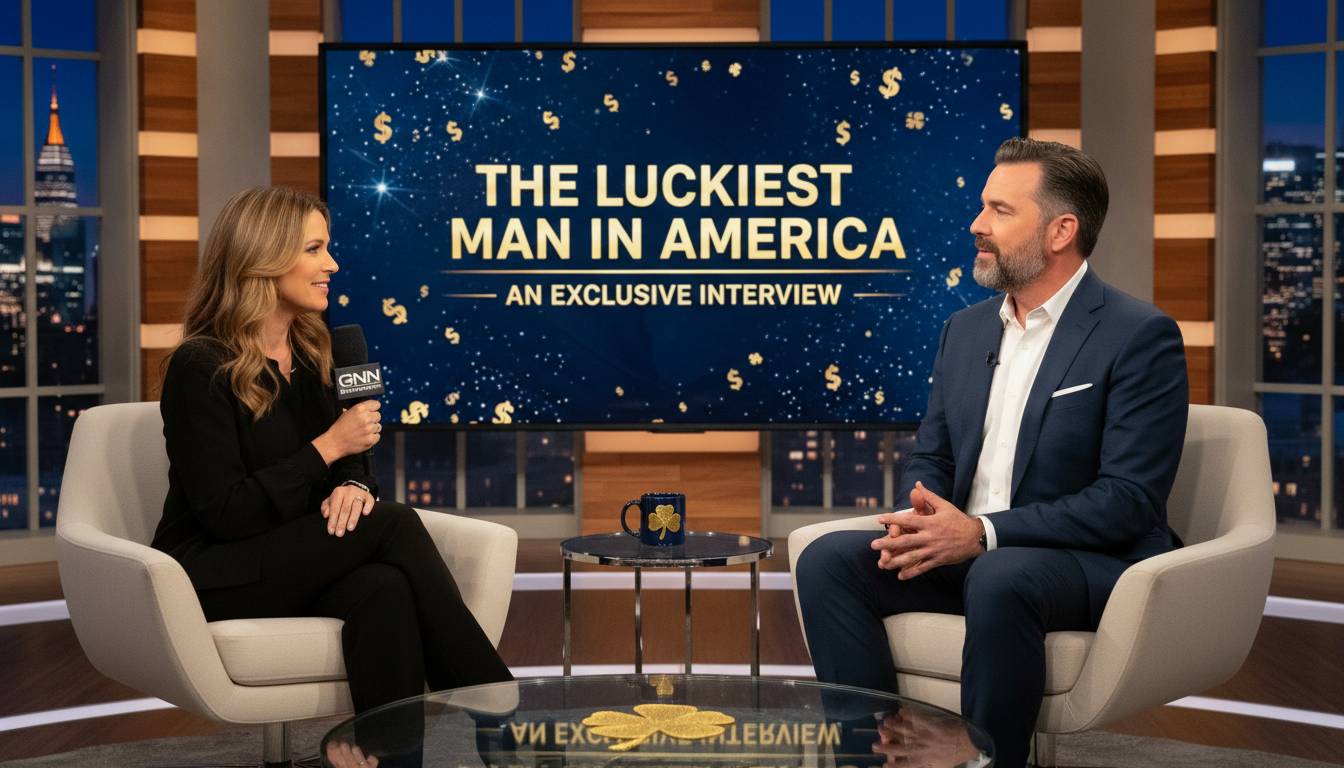
An urgent wave of attention is sweeping through Hollywood and beyond as The Luckiest Man in America, a film dramatizing the real‐life 1984 game show scandal involving Michael Larson, continues to make headlines. Here’s what’s new today—and why it matters.
Latest Developments and Why They Matter
The film The Luckiest Man in America centers on Michael Larson, a man who memorized patterns on Press Your Luck‘s game board to win nearly $110,237 during a 1984 episode—still one of the most notorious moments in game show history . Directed by Samir Oliveros and co-written with Maggie Briggs, the film premiered at the Toronto International Film Festival in September 2024 and opened in U.S. theaters on April 4, 2025 .
This coverage matters now because the movie is drawing fresh attention to a decades-old scandal by exploring the moral complexity of Larson’s actions and examining the thin line between genius and cheating . Its nuanced portrayal makes the story feel timely again.
Context: From Scandal to Silver Screen
The thriller‐drama stars Paul Walter Hauser as Michael Larson, supported by a talented ensemble including Walton Goggins, David Strathairn, Maisie Williams, and Johnny Knoxville . Hauser’s nuanced performance reflects Larson’s obsessive focus and emotional volatility .
Critics note the film resists portraying Larson in simple terms. Instead, it invites audiences to question whether he was a clever underdog or an immoral cheat . Reviews like those on Rotten Tomatoes offer mixed assessments, with some finding the emotional depth solid but longing for a more conclusive ending .
What’s New Today
Box Office and Exhibition
The film has pulled in a modest gross in theaters, hovering in the low hundreds of thousands so far—around $421K in the U.S. . Although limited, the theatrical run continues to generate buzz, particularly among cinephiles and game show lovers.
Streaming Release Rumblings
While originally not destined for major streaming platforms, it’s expected that The Luckiest Man in America could become available for digital rental or purchase roughly three weeks post-theatrical release—a strategy aligned with other IFC Films titles . Industry watchers today are watching for an official announcement confirming a digital rollout around late April 2025.
Ongoing Media Interest
Media discussions around the film remain frequent. A recent interview highlights Hauser’s personal anecdotes during filming and his deep dive into Larson’s mindset—bringing fresh color to press narratives . Coverage amplifies interest by focusing not just on plot, but on production craftsmanship—sets recreated in Bogotá, performance choices, and budget creativity .
Reactions and Reflections
“Is he a clever underdog or a manipulative cheat?”—a prevailing question posed by the film itself, reflecting broader social fascination with moral ambiguity .
Additionally, game show historians and media insiders applaud the film’s craftsmanship. Matt Zoller Seitz, for instance, likens it to Quiz Show and views it as compact yet immersive—a small-scale character study that successfully revisits a niche chapter of television history .
What’s Next to Watch
- Digital release timing: Industry watchers expect the film to hit streaming and VOD platforms soon—possibly by late April 2025 .
- Broader audience reception: If the streaming release succeeds, the film could gain traction among mainstream audiences and spark renewed debate over game show ethics.
- Cultural ripple effects: Additional interviews, features, or retrospectives on Michael Larson and Press Your Luck may emerge, bringing further attention to the story and its moral undertones.
In a media environment crowded with sequels and franchise announcements, The Luckiest Man in America stands out—quietly compelling, rich in nuance, and anchored in a peculiar real-life incident that still provokes debate. As it continues its rollout across theaters and into the streaming space, the film remains a focal point for discussions about fairness, ingenuity, and how TV—and truth—are shaped.

View 0 comments