

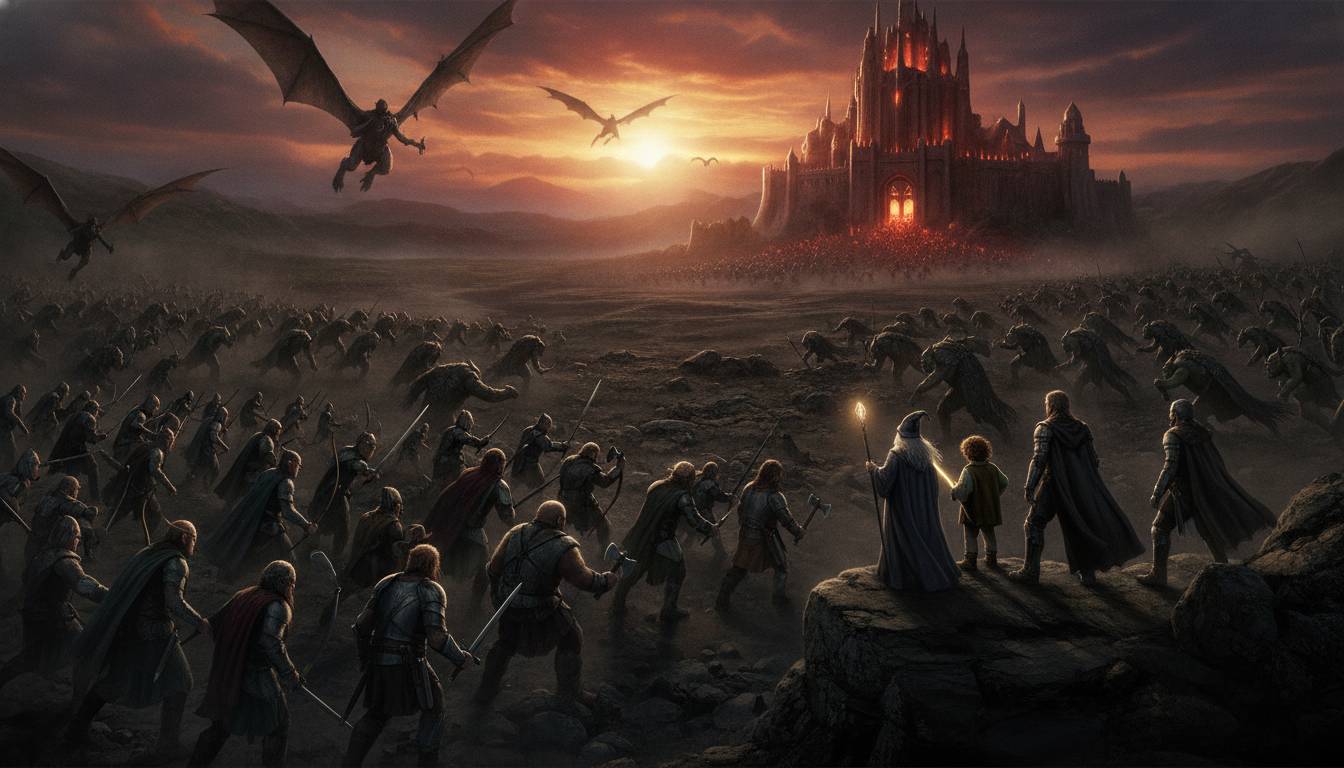
The Lord of the Rings trilogy anchors any list of perfect fantasy movies, according to Collider. Released between 2001 and 2003, these films set new artistic and technical standards, making Middle-earth vivid and real for audiences everywhere. Spirited Away and The Wizard of Oz stand out for animation and color design, respectively, highlighting the genre’s diverse artistry. On top of that, other acclaimed films such as Pan’s Labyrinth, The Princess Bride, and Beauty and the Beast showcase fantasy’s versatility and ability to reach all ages. Each title below reveals a different aspect of why fantasy cinema continues to captivate new and returning audiences, as recognized by Collider.
The Lord of the Rings Trilogy: High Fantasy Redefined
Per Collider, The Lord of the Rings trilogy, directed by Peter Jackson and released from 2001 to 2003, completely reshaped the fantasy genre in global cinema. Massive in scope, these films combine sweeping New Zealand scenery with detailed practical effects and digital wizardry to bring Tolkien’s mythology to the screen. This world-building, combined with intricate characterization and epic storytelling, fostered a renewed enthusiasm for fantasy on film that extended across generations. Several later movies, from blockbusters to independent projects, built upon the visual language first made popular by Jackson’s adaptation—crafting new standards for fantasy. The trilogy remains the defining masterpiece of high fantasy cinema, according to Collider.
Spirited Away: Animation’s Surreal Masterpiece
According to Collider, Spirited Away (2001), directed by Hayao Miyazaki, stands among the most influential animated fantasy films ever made. The movie follows a young girl navigating a magical bathhouse run by spirits, blending Japanese folklore with stunning surreal animation and hand-drawn artistry. Its unique setting, fluid visual style, and dreamlike pacing draw both children and adults into a shapeshifting realm. Box office achievements and the film’s Academy Award recognition cemented it as a touchstone for modern animation.
The Wizard of Oz: A Technicolor Dream
Per Collider, The Wizard of Oz, released in 1939, dazzles with its lush Technicolor visuals and iconic fantasy scenes. Dorothy’s journey “over the rainbow” stands as one of cinema’s defining explorations of imagination and self-discovery, setting a template for childhood fantasy across generations. The production’s large budget contributed to pioneering special effects and inventive set designs, with its vibrant color palette and visual spectacle now preserved in the Library of Congress’s National Film Registry. Later musicals and fantasy films frequently cite The Wizard of Oz as a foundational influence—critics still reference its influence on visual storytelling today.
Pan’s Labyrinth: Dark Fairy Tale Innovation
Guillermo del Toro’s Pan’s Labyrinth (2006) merges the horrors of post–civil war Spain with intricate childhood fantasy, earning widespread critical praise. Collider describes the movie’s mature themes and striking visuals as setting it apart from traditional family-friendly fantasy. Elaborate set design, practical effects, and haunting makeup ground the story in physical reality while keeping every mythic creature and vision unsettlingly real. Its awards and international acclaim moved global fantasy cinema toward more serious subject matter—demonstrating that fairy tales can be both dark and meaningful. Many current filmmakers cite Pan’s Labyrinth as a direct inspiration for expanding the genre’s narrative range.
Pirates of the Caribbean: The Curse of the Black Pearl—Blockbuster Fantasy Fun
Coverage from Collider indicates Pirates of the Caribbean: The Curse of the Black Pearl (2003) delivers blockbuster-scale fantasy and edge-of-your-seat entertainment. Disney brought fresh life to the pirate mythos, adding a supernatural twist and propelled by Johnny Depp’s unforgettable Captain Jack Sparrow. Audiences responded to the lively set pieces, memorable characters, and wild effects, all of which blended into a swashbuckling adventure that sparked a massive multi-film franchise. The energy, humor, and fantasy spectacle set a standard for fantasy blockbusters in the early 2000s, with its box office success and sequels confirming the genre’s massive commercial potential.
The Seventh Seal: Philosophical Fantasy Embodied
Ingmar Bergman’s The Seventh Seal (1957) stands as one of cinema’s boldest philosophical fantasy films. The movie’s stark black-and-white imagery—centering on a knight playing chess with Death during the Black Plague—offers a unique meditation on mortality and fate. Bergman pioneered the idea of blending supernatural themes with existential questions, forever changing how directors use fantasy to explore big ideas. Many directors reference The Seventh Seal’s striking visual tableaux in discussions of truth, symbolism, and spiritual struggle.
The Princess Bride: Irreverent and Timeless Fantasy
Collider adds that Rob Reiner’s The Princess Bride (1987) combines sly humor, fairy tale adventure, and heartfelt romance in a form that bridges generations. The movie’s narrative mixes sword fights, satire, and endlessly quotable dialogue with a structure that appeals to both cynics and dreamers. Its enduring popularity comes from an unforced balance of comedy and real emotion—inviting fans to rewatch it over and over. Characters from Westley to Inigo Montoya became pop culture staples. The film’s influence can still be seen in comedic fantasy works made decades later. The Princess Bride remains among the most beloved fantasy films ever made, because it just never gets old.
La Belle et la Bête: Dreamlike Classicism
Jean Cocteau’s La Belle et la Bête (1946) adapts Beauty and the Beast as a poetic fantasy. Stunning black-and-white visuals and creative camera techniques give audiences a world where magic feels as real as myth. Cocteau’s living statues, shadowplay, and ethereal set design influenced visionary directors like Jean-Pierre Jeunet and Guillermo del Toro, making his mark on fantasy’s aesthetic language. The film’s haunting style continues to inspire new interpretations of Beauty and the Beast, keeping its legacy alive in modern cinema and stage adaptations—and reminding viewers just how timeless the tale of wonder and cautionary romance remains.
The Thief of Bagdad: Early Color Innovation
The Collider report notes that the Thief of Bagdad (1940) stands as a turning point in fantasy filmmaking through its daring use of color cinematography and visual effects. The story’s flying carpets, palatial wonders, and magical transformations enchanted viewers with innovative techniques that were ahead of their time. Technicolor sequences and ambitious special effects captured imaginations and set a visual benchmark for fantasy features that followed. Its Middle Eastern designs and vibrant storytelling introduced a template that both animated and live-action directors would borrow for decades.
Beauty and the Beast (1991): Disney’s Animated Fantasy
Disney’s Beauty and the Beast (1991) raised animated fantasy’s profile with Oscar-caliber quality and enduring cultural impact. Its refined hand-drawn animation and genuinely heartfelt romance set it leagues apart from earlier Disney offerings. The box office numbers—both domestic and international—marked a turning point for critical respect toward animation, pushing the medium into awards contention for the first time. That leap in recognition, data confirms, paved the way for big-budget animated features to be taken seriously by critics and audiences alike. Its production design, catchy music, and unforgettable characters continue to influence animated filmmakers more than 30 years later, revealing the film’s lasting legacy in the genre.
Harvey: Imagination and Reality Collide
Collider points out that Harvey (1950) quietly threads fantasy into everyday life, challenging audiences’ sense of what’s real. Elwood P. Dowd’s six-foot rabbit companion—Harvey—turns the story into a gentle meditation on belief, skepticism, and basic human kindness. The film’s subtle approach turns every character’s encounter with Harvey into a question about sanity, magic, and hope. Although Harvey never actually appears on screen, the power of suggestion is so strong audiences are almost convinced. Harvey remains a template for using everyday fantasy to provoke bigger questions about relationships and imagination, confirming its influence on genre-bending films that blur dream and reality.
Fantasy Cinema’s Lasting Impact
These fantasy films collectively demonstrate how the genre reinvents itself to spark wonder and explore universal themes. Directors take myth, fairy tale, and legend, reimagining them to set new standards for visual storytelling and personal artistic vision. These films have inspired countless creators to experiment with narrative structure and emotional depth, continuously pushing past what’s been done before. The ongoing admiration—and frequent re-release—of these works confirms fantasy cinema’s enduring grip on imagination and ambition. Their influence shows up in modern movies that break boundaries and fully embrace the dreamlike, limitless possibilities of pure cinema.


View 0 comments