

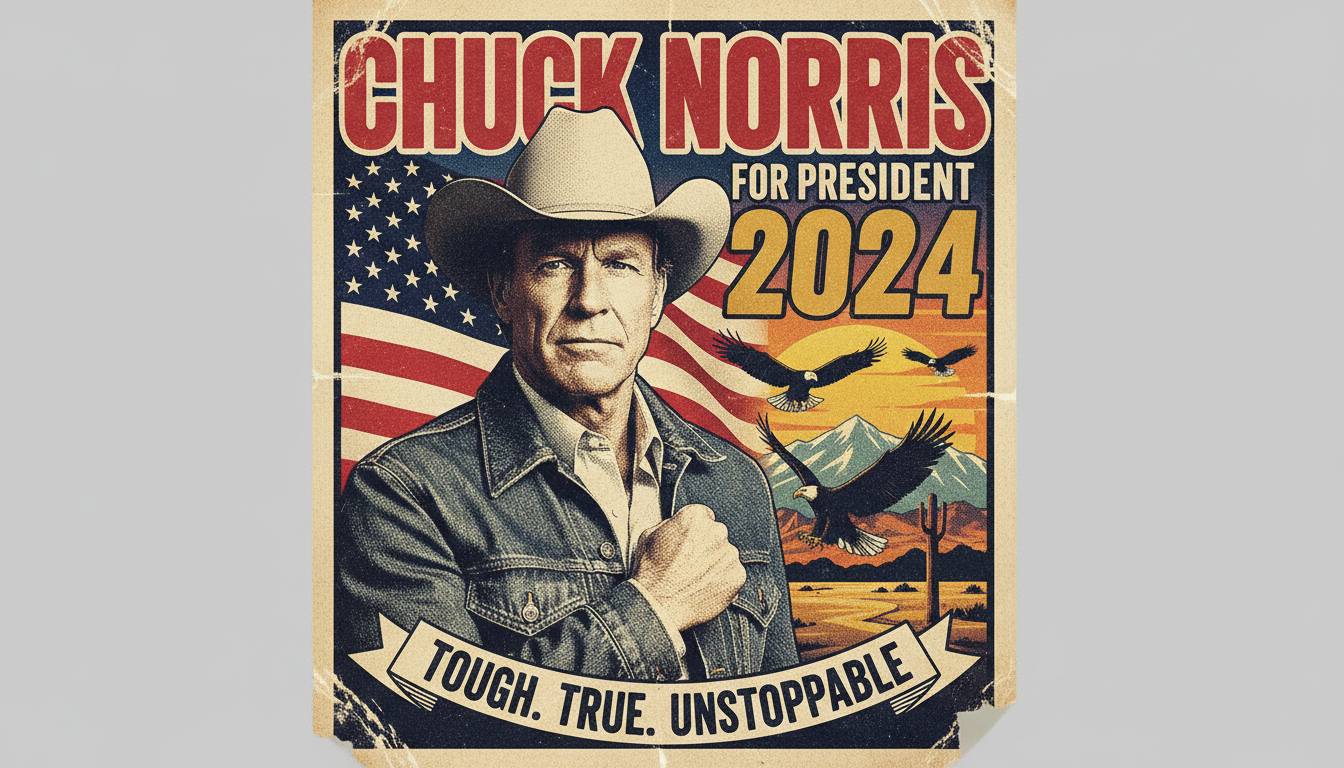
There was a brief stretch in the early 1990s when Hollywood kept trying to bottle the underdog-kid-masters-martial-arts formula and sell it again. One of the stranger results was Sidekicks, a 1992 film released in the United States in 1993, where Chuck Norris did not just star in the movie. He played Chuck Norris. That gimmick should have been enough to make the film memorable. Instead, it turned the movie into an awkward vanity project, a Karate Kid-style copy that never figured out whether it wanted to be a fantasy, a family drama, or a commercial for Norris himself.
A martial arts underdog story with a built-in problem
Sidekicks centers on Barry Gabrewski, played by Jonathan Brandis, an asthmatic teenager who gets bullied at school and escapes into elaborate daydreams where he fights alongside his hero, Chuck Norris. IMDb’s plot summary describes Barry as a bullied teen who fantasizes about being Norris’ sidekick before training in karate to change his life. That setup tells you almost everything about the movie’s ambitions. It wants the emotional payoff of The Karate Kid, but it swaps out grounded character work for hero worship.
The comparison is not subtle. Roger Ebert’s 1993 review said the film tells “the same durable story” as earlier martial arts underdog movies, while also noting the arrival of Mako’s mentor character as if he had stepped into a role already played before in the genre. Deseret News was even blunter, calling the film little more than a “Karate Kid” rehash. Screen Rant later summed it up the same way, describing Sidekicks as Chuck Norris’s attempt at his own version of The Karate Kid. The pattern is obvious: bullied kid, wise teacher, tournament arc, confidence-building lessons, and a final showdown meant to deliver catharsis. The difference is that Sidekicks keeps interrupting itself so Barry can imagine how amazing Chuck Norris is.
That is the movie’s first big weakness. The fantasy sequences are not just occasional flourishes. They dominate the tone. Instead of letting Barry become interesting on his own, the film repeatedly reminds viewers that the real star is the celebrity inside Barry’s head. It is a strange choice for a coming-of-age story, because the emotional center keeps drifting away from the kid who is supposed to be growing.
Why Chuck Norris playing Chuck Norris made the movie worse
On paper, Norris appearing as himself sounds funny. Maybe even self-aware. In practice, it makes Sidekicks feel less like a movie and more like a feature-length act of brand management. Roger Ebert called the materialization of Norris the film’s “big surprise,” but the novelty wears off fast because the movie treats his image with total sincerity. Film Inquiry later described the project as an “exercise in vanity,” and that criticism sticks because Sidekicks never really pokes fun at Norris hard enough to justify the concept.
That matters because self-parody only works when the star is willing to look ridiculous. Sidekicks does not go that far. Norris appears as a near-mythic figure, a moral guide and fantasy savior, which leaves the movie stranded between wish fulfillment and self-promotion. Barry does not just admire him. The whole film seems to. Even when Norris appears in Barry’s imagination, the scenes are staged to reinforce his legend rather than deflate it.
There is also a structural issue. If your protagonist is a vulnerable kid trying to find confidence, the story should gradually shift power back to him. Sidekicks keeps borrowing emotional energy from Norris’ celebrity aura instead. That undercuts Barry’s journey. The movie says Barry must believe in himself, but its visual language keeps insisting that what really matters is proximity to Chuck Norris.
The cast was better than the material
That is part of what makes the movie frustrating. It was not completely devoid of talent. Jonathan Brandis had real screen presence and was one of the more recognizable young actors of the era. Mako brought warmth and credibility as Barry’s mentor. Beau Bridges and Julia Nickson-Soul added experience to the supporting cast, while Joe Piscopo played the broad, cartoonish antagonist energy the film thought it needed. Wikipedia’s cast listing also confirms Richard Moll and Bob Wall among the recognizable faces around the edges.
But the performances are trapped inside a movie that cannot settle on a tone. One minute it is dealing with bullying and asthma. The next it is staging exaggerated fantasy action built around Norris iconography. Then it pivots into a family-friendly tournament movie. Those pieces do not blend. They collide.
Ebert noted the film’s running time at 100 minutes and PG rating, which fits the family-market strategy exactly. Rotten Tomatoes lists the movie at 1 hour and 40 minutes and shows how poorly it landed critically, with a 26% Tomatometer score on Norris’ filmography page and a 49% audience score attached to the title page. Those numbers are not everything, but they capture the split response: some viewers found it harmless and nostalgic, while critics mostly saw a derivative, clumsy imitation.
It was not a total box office disaster, but it still faded fast
Calling Sidekicks a flop needs a little nuance. Wikipedia says the film debuted at No. 2 at the box office, which sounds respectable. It also notes that Houston businessman Jim “Mattress Mac” McIngvale invested $8 million in producing it alongside Chuck Norris and the Kick Drugs Out of Schools campaign. That is not tiny money for a modest family martial arts picture in the early 1990s.
Still, opening decently is not the same thing as leaving a mark. IMDb user reviews and later retrospectives keep circling the same point: the movie is largely forgotten outside Norris fans, Brandis completists, or people who grew up during that VHS era. That is probably the clearest sign of failure. The Karate Kid became a cultural fixture because its emotional beats were clean, specific, and durable. Sidekicks had the formula, the star gimmick, and a marketable premise, yet it never became essential viewing. It just drifted into trivia-night territory.
There is a reason for that. The movie arrived in a period already crowded with kid-focused martial arts entertainment. 3 Ninjas, released in 1992, became a box office success and grossed $29 million against a $2.5 million budget, according to its film summary. Sidekicks, by contrast, had a bigger hook on paper but less identity. It was too earnest to be a spoof, too derivative to be fresh, and too obsessed with Chuck Norris to work as a true underdog story.
Why the movie still gets talked about
For all its problems, Sidekicks has not vanished completely. Part of that is the Jonathan Brandis factor. Part of it is simple curiosity: people hear that Chuck Norris once played himself in a Karate Kid-style movie and assume that has to be either wonderfully weird or gloriously bad. The truth is less exciting. It is mostly just awkward. Not unwatchable. Not fascinatingly terrible. Just a muddled family film built around a concept that never becomes as clever as it sounds.
That may be why the movie survives as a footnote rather than a cult classic. It is easy to describe in one sentence. Harder to love in full. Sidekicks wanted to turn Chuck Norris into a dream figure for a bullied kid and then wrap that fantasy in a familiar tournament narrative. What it actually revealed was the limit of star image as storytelling fuel. A legend can carry an action scene. He cannot, by himself, make a borrowed coming-of-age formula feel personal.
Frequently Asked Questions
What movie featured Chuck Norris playing himself?
The movie was Sidekicks, a 1992 production released in the United States in 1993. In it, Chuck Norris appears as himself, both in fantasy sequences and as a real figure within the story’s final stretch.
Is Sidekicks basically a Karate Kid copy?
Yes, in broad structure it is. The film follows a bullied teenager, a mentor figure, martial arts training, and a tournament climax. Multiple reviews, including Roger Ebert and Deseret News, explicitly compared it to The Karate Kid and called it a rehash of that formula.
Who stars in Sidekicks besides Chuck Norris?
The film stars Jonathan Brandis as Barry Gabrewski, with Mako, Beau Bridges, Julia Nickson-Soul, and Joe Piscopo in major supporting roles. Richard Moll and Bob Wall also appear.
Was Sidekicks a box office hit or a flop?
It opened reasonably well, debuting at No. 2 at the box office according to Wikipedia, so it was not an instant commercial collapse. But it failed to become a lasting hit and is mostly remembered today as an oddity in Chuck Norris’ filmography.
How was Sidekicks received by critics?
Not well. Rotten Tomatoes lists a low critical score for the film, and contemporary reviews often described it as derivative. Critics generally agreed that the movie leaned too heavily on familiar underdog-martial-arts tropes and Chuck Norris worship.
Is Sidekicks worth watching today?
If you are curious about early-1990s family martial arts movies, Jonathan Brandis, or strange star vanity projects, it is worth a look. If you want a sharper, more emotionally satisfying underdog story, The Karate Kid remains the better choice by a wide margin.


View 0 comments