

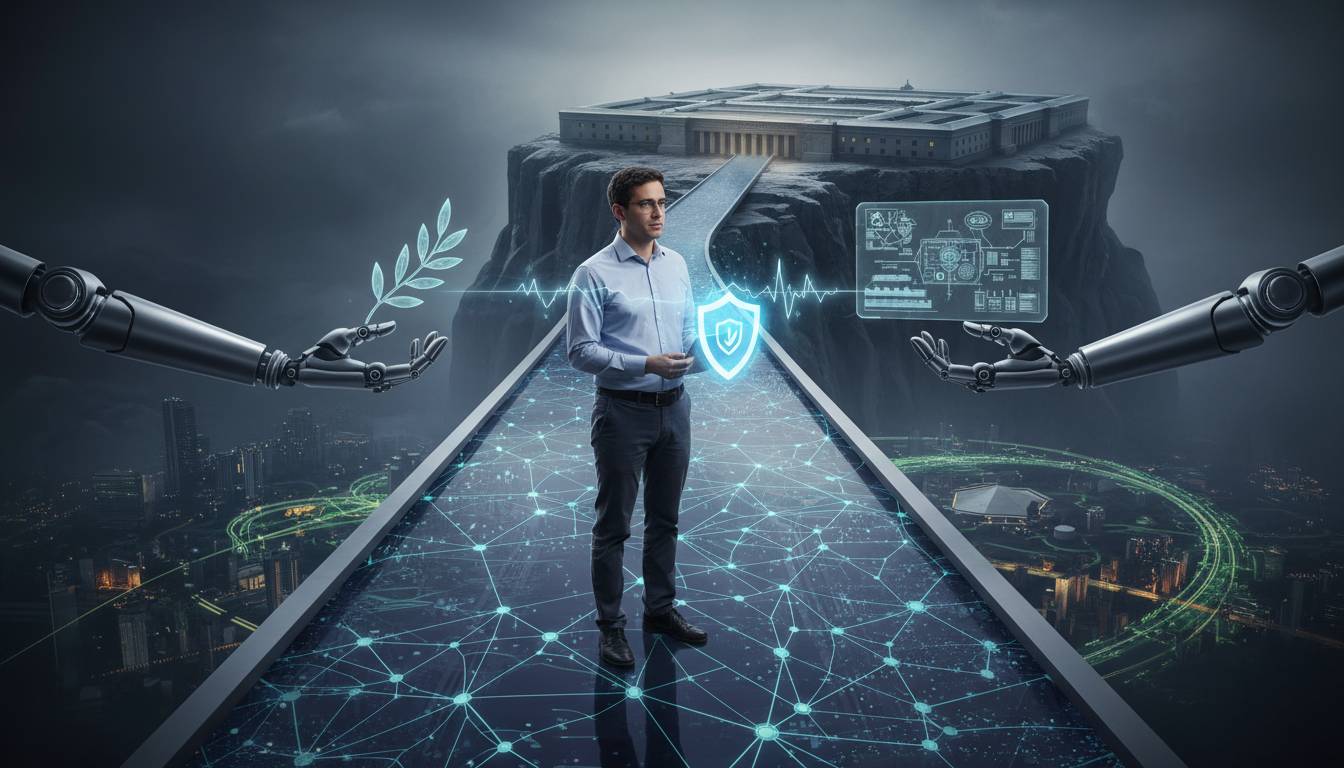
An unexpected turn in the high-stakes standoff between Anthropic and the U.S. Department of Defense (DoD) unfolds as CEO Dario Amodei reportedly makes one more attempt to mend ties with the Pentagon. After a public clash over AI safeguards, Amodei is now back at the negotiating table, seeking a resolution that aligns with both national security and ethical principles.
Renewed Talks Amid Tensions
Negotiations between Anthropic and the Pentagon collapsed on March 3, 2026, when the White House directed federal agencies to cease using Anthropic’s tools, and Defense Secretary Pete Hegseth labeled the company a “supply chain risk” . Despite this, Amodei is now reportedly engaging with Emil Michael, the Under-Secretary of Defense for Research and Engineering, in a last-ditch effort to reach a workable agreement .
Amodei’s willingness to resume discussions underscores his commitment to finding common ground. According to CBS News, he told investors that Anthropic and the DoD “have much more in common than we have differences” and that the company is trying to “de-escalate the situation and come to some agreement that works for us and works for them” .
The Core of the Dispute: Red Lines and Ultimatums
At the heart of the dispute are two non-negotiable “red lines” set by Anthropic: the Pentagon must not use its AI model Claude for mass domestic surveillance or fully autonomous weapons . Defense Secretary Hegseth issued an ultimatum in late February, demanding unrestricted military use of Claude or threatening to cancel the $200 million contract and invoke the Defense Production Act .
Amodei responded firmly, stating, “we cannot in good conscience accede to their request,” and reaffirmed that Anthropic would rather exit the contract than compromise on its ethical standards .
Public Clash and Political Fallout
The standoff quickly became a public spectacle. Amodei described the Pentagon’s designation of Anthropic as a supply chain risk as “retaliatory and punitive,” emphasizing that it was unprecedented for a U.S. company . He also framed the disagreement as a patriotic act, saying, “Disagreeing with the government is the most American thing in the world,” and reaffirmed Anthropic’s commitment to national security values .
Meanwhile, the White House cast doubt on reconciliation prospects, citing an internal memo from Amodei disparaging the Trump administration—suggesting that personal tensions may further complicate negotiations .
Broader Industry and Strategic Implications
Anthropic’s stance has drawn support from within the tech industry. Over 300 employees from Google and OpenAI signed an open letter backing Anthropic’s refusal to allow its AI to be used for surveillance or autonomous weapons . Nvidia CEO Jensen Huang also weighed in, calling the conflict “not the end of the world” and acknowledging both sides’ reasonable perspectives .
The outcome of these talks could set a precedent for how the U.S. government negotiates AI contracts with private firms, balancing national security needs with ethical constraints.
Analysis and Outlook
This renewed effort by Amodei to reconcile with the Pentagon highlights several key dynamics:
- Ethical Leadership vs. National Security: Anthropic’s insistence on safeguarding democratic values positions it as a safety-first leader in AI. However, the Pentagon’s demand for flexibility underscores the tension between ethical constraints and operational readiness.
- Legal and Political Stakes: The supply chain risk designation and potential invocation of the Defense Production Act raise legal and political questions about executive power and corporate autonomy.
- Industry Influence: The public support from other tech firms and leaders like Nvidia may bolster Anthropic’s negotiating position and influence broader industry norms.
- Future of AI Governance: A successful resolution could pave the way for AI contracts that include explicit ethical guardrails. Conversely, a breakdown could push the government to favor more compliant providers like OpenAI, which recently struck a deal with the Pentagon .
Conclusion
Dario Amodei’s renewed attempt to make peace with the Pentagon marks a critical moment in the evolving relationship between AI innovators and national defense. As talks resume, the stakes remain high—not just for Anthropic’s future, but for the broader trajectory of AI governance in the United States. Whether a compromise can be reached that honors both security imperatives and democratic values remains to be seen.
Frequently Asked Questions
What are the “red lines” Anthropic refuses to cross?
Anthropic will not allow its AI model Claude to be used for mass domestic surveillance or fully autonomous weapons. These remain non-negotiable conditions in its negotiations with the Pentagon .
Why did the Pentagon label Anthropic a “supply chain risk”?
Defense Secretary Pete Hegseth designated Anthropic a supply chain risk after the company refused to grant unrestricted use of its AI model. This designation could bar Anthropic from defense contracts and may trigger legal challenges .
Is Anthropic still in talks with the Pentagon?
Yes. Despite the breakdown in early March, Amodei is reportedly back in discussions with Emil Michael to de-escalate the situation and find a mutually acceptable agreement .
How has the tech industry responded?
Over 300 employees from Google and OpenAI signed a letter supporting Anthropic’s position. Nvidia CEO Jensen Huang also expressed optimism, calling the conflict manageable and acknowledging both sides’ perspectives .
What precedent could this set for AI contracts?
A resolution could establish a model for future AI contracts that include explicit ethical safeguards. A failure to reach agreement may shift government preference toward more compliant providers, potentially reshaping industry norms .
What are the next steps?
The immediate next steps involve continued negotiations between Anthropic and the Pentagon. The outcome will likely influence both legal frameworks and public expectations around AI use in national defense.

View 0 comments