

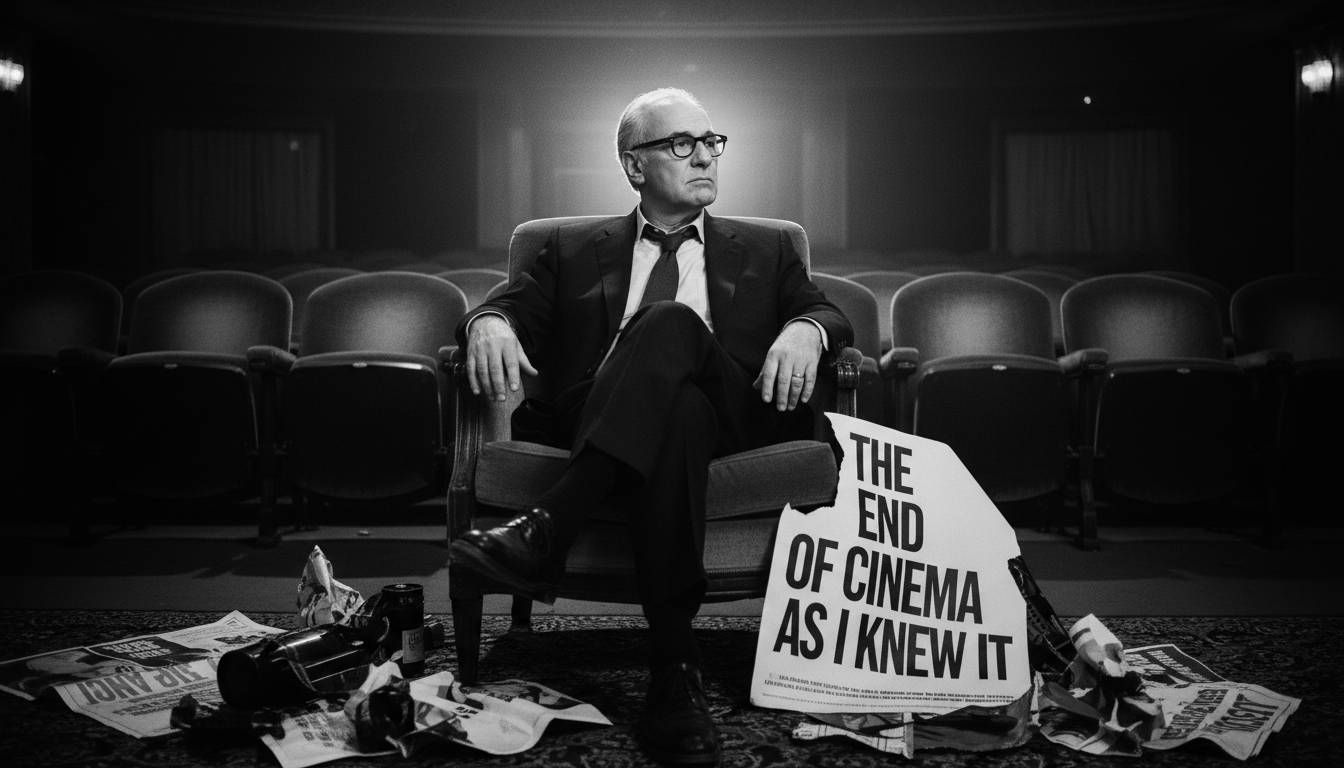
Martin Scorsese finally won the Academy Award for Best Director with The Departed at the 79th Oscars on February 25, 2007, but the irony is hard to miss: he has openly described making the film, especially its post-production, as a deeply unpleasant experience. That tension gives the story real bite. The movie delivered the career milestone many thought should have arrived years earlier, yet Scorsese himself did not seem to view the production as a triumphant creative high. Instead, it was a bruising path to his only directing Oscar.
The strange contradiction at the center of Scorsese’s Oscar story
For decades, Martin Scorsese was treated as one of American cinema’s greatest living directors without having a competitive Best Director Oscar to show for it. He had already made Mean Streets, Taxi Driver, Raging Bull, Goodfellas, Casino, Gangs of New York and The Aviator before the Academy finally awarded him for The Departed. The film won four Oscars in total at the ceremony held on February 25, 2007: Best Picture, Best Director, Best Adapted Screenplay and Best Film Editing. That victory remains his only personal Best Director win.
What makes that win so fascinating is that Scorsese did not frame The Departed as a joyful or liberating production. Reporting on comments attributed to him from an interview with the Hamilton Spectator, later highlighted by multiple entertainment outlets, noted that he found the process of making the film “particularly the post-production” highly unpleasant. Other coverage summarized the production as horrible or exhausting for him, stressing the pressure created by the film’s scale, pace and complicated assembly.
That is the hook. Not that Scorsese disliked the finished movie in some simplistic way, but that the experience of making it wore him down. There is a difference, and it matters. Plenty of directors struggle through difficult productions. In Scorsese’s case, the difficult film became the one the Academy could not ignore.
Why The Departed became the movie the Academy embraced
The Departed arrived in 2006 as a remake of the 2002 Hong Kong crime thriller Infernal Affairs, but it did not feel like a routine remake. Scorsese turned it into a hard-edged Boston crime drama with a major ensemble that included Leonardo DiCaprio, Matt Damon, Jack Nicholson and Mark Wahlberg. It had star power, studio backing, propulsive editing and a narrative engine that was easier for broad awards voters to latch onto than some of his more spiritually or structurally challenging films.
That accessibility is part of the answer. Goodfellas is often cited as one of the greatest gangster films ever made, and Raging Bull is regularly ranked among the finest American films of the 20th century, yet both lost Best Director. The Departed, by contrast, hit a sweet spot between prestige and momentum. It was violent and cynical, yes, but also slick, fast and immediately legible as a major awards contender. Even Scorsese’s long Oscar narrative helped. By 2007, the sense that he was overdue had become impossible to separate from the race itself.
There is another layer. The Academy often rewards not only a single film, but a body of work through one film. The Departed benefited from that pattern. It was not merely judged as a standalone success. It was also the moment when years of admiration, frustration and delayed recognition finally converged.
Scorsese’s own comments make the win more revealing
Scorsese’s remarks about the production are what elevate this from ordinary Oscar trivia into something more revealing about filmmaking. According to later reports revisiting the film’s legacy, he had “zero expectations” for its awards run and found the process draining. That does not sound like a director campaigning around a personal masterpiece he believed would rewrite his legacy. It sounds more like someone who survived a difficult job and moved on.
That perspective also fits the broader pattern of Scorsese’s career. He has often spoken more passionately, and more personally, about films such as Silence, Raging Bull, The Last Temptation of Christ, Kundun or Killers of the Flower Moon than he ever has about The Departed. The Departed is admired, and for good reason, but it is rarely the first title invoked when critics or cinephiles debate his most personal work. The Oscar did not necessarily go to the film that best defines him. It went to the one that arrived at the right moment with the right combination of craft, momentum and institutional readiness.
What made the production so difficult?
Several factors seem to have fed the strain. The Departed is a tense, layered film built on deception, reversals and parallel loyalties. That kind of structure can become especially punishing in the editing room, where rhythm, clarity and suspense have to be balanced scene by scene. Scorsese has long been known for exacting post-production standards, and this film’s narrative mechanics left little room for error. Reports revisiting his comments specifically point to post-production as the most unpleasant part of the process.
There were also stories of friction and intensity around the production. Mark Wahlberg later discussed clashing with Scorsese during filming, a reminder that even successful sets can be combustible when strong personalities and high expectations collide. That does not mean the production was uniquely chaotic by Hollywood standards, but it supports the idea that The Departed was not some effortless awards machine from the inside.
Then there was the studio context. Scorsese later recalled that Warner Bros. had interest in franchise potential around The Departed, a notion that clearly did not align with his sensibility. That anecdote is revealing because it shows how commercial pressures could intrude even on a film that now looks, in retrospect, like a prestige crime classic.
Why the Oscar still matters, even if the film was a painful experience
The win matters because it closed one of the most discussed gaps in modern awards history. Before The Departed, Scorsese had been nominated multiple times and lost to directors including Robert Redford and Clint Eastwood. By the time he won, the award had become about more than one season. It was about correcting a record that many believed had been incomplete for years.
But the story also matters because it pushes back against a lazy assumption: that awards validation and artistic satisfaction always line up. They do not. Sometimes the film that gets the trophy is not the one that felt most natural to make, or the one the director holds closest. In Scorsese’s case, the Academy crowned a film he struggled through. That makes the victory more human, not less. It reminds us that great work can emerge from frustration, fatigue and resistance.
How The Departed fits into Scorsese’s legacy now
The Departed remains a major film in Scorsese’s career, but its place is unusual. It is historically important because it won him Best Director. It is commercially significant because it became one of his biggest mainstream successes. Yet it also sits slightly apart from the films most often described as his deepest personal statements. That split is exactly why the story endures. The movie that brought him the industry’s highest directing honor was not the one he seemed to cherish most in the making.
That does not diminish The Departed. If anything, it sharpens appreciation for it. The film is lean, brutal, funny and expertly assembled. It gave the Academy a version of Scorsese they could reward without hesitation. Still, the irony remains intact: after a career full of landmarks, the one that finally got him over the line was a film he did not enjoy making.
Frequently Asked Questions
What movie won Martin Scorsese his only Best Director Oscar?
The Departed won Martin Scorsese the Academy Award for Best Director at the 79th Oscars on February 25, 2007. The film also won Best Picture, Best Adapted Screenplay and Best Film Editing.
Did Martin Scorsese actually hate making The Departed?
Published reports summarizing Scorsese’s comments say he found making the film, especially the post-production process, highly unpleasant. That does not necessarily mean he hated the finished movie, but it does indicate the production experience was difficult and draining for him.
Why is The Departed such an important film in his career?
It is the film that finally earned him a competitive Best Director Oscar after years of acclaimed work and multiple nominations. It also won Best Picture, making it one of the most awards-successful films of his career.
Was The Departed considered Scorsese’s best movie by critics?
Not universally. Many critics and film fans more often point to Raging Bull, Taxi Driver or Goodfellas as the defining peaks of his career. The Departed is highly regarded, but its Oscar success is often seen as both a reward for the film itself and a recognition of Scorsese’s broader body of work.
Why did the Academy reward The Departed instead of earlier classics?
Awards timing played a major role. The Departed was accessible, star-driven and arrived when the sense that Scorsese was overdue had become overwhelming. In that sense, the win reflected both the film’s strengths and the Academy’s desire to finally honor one of cinema’s most celebrated directors.


View 0 comments