

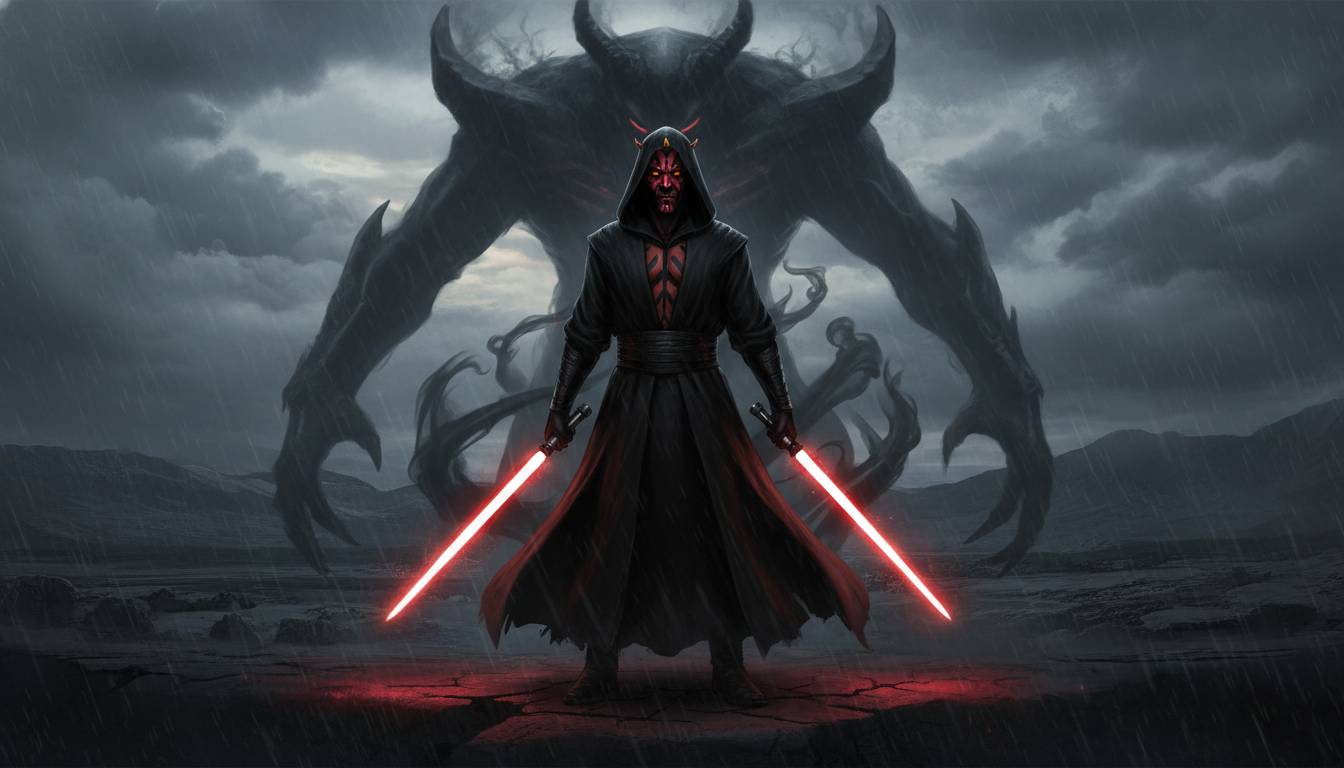
Lucasfilm’s Maul: Shadow Lord is not just another gap-filling Star Wars series. The strongest official material released so far points to something more specific: the show appears built to explain how Maul’s criminal power evolves into the underworld position fans see in Solo: A Star Wars Story. That connection matters because Solo ended on one of the franchise’s most intriguing loose threads. Shadow Lord now looks positioned to turn that cameo from a shock reveal into a fully developed crime saga with real narrative weight.
Lucasfilm’s official setup makes the Solo link hard to miss
The clearest evidence comes from StarWars.com, which describes Maul: Shadow Lord as a new chapter in Maul’s story set “a few years after” Darth Sidious establishes the Imperial era. That timing is crucial. It places the series after the Clone Wars collapse of Maul’s earlier power base and before his later appearances in Star Wars Rebels and Solo. In other words, Lucasfilm is working in the exact stretch of timeline where Maul’s criminal rebuilding would need to happen if Solo’s reveal is going to make complete sense.
That is the major connection. Solo did not simply show Maul alive. It showed him operating above Crimson Dawn, the syndicate tied to Qi’ra and Dryden Vos. For years, that scene functioned as a tantalizing endpoint without a full on-screen bridge. Shadow Lord finally looks like the project designed to build that bridge.
Official series material strengthens that reading. The StarWars.com series page says Maul’s accomplices attempt to manufacture a syndicate war between crime figures Nico Deemis and Looti Vario while preparing a cargo of credits for transport. That is not incidental world-building. It is a direct signal that the show’s engine is organized crime, power consolidation, and strategic manipulation between rival factions. Those are exactly the mechanics needed to explain how Maul could move from post-Clone Wars instability to the kind of criminal authority implied in Solo.
This is bigger than a cameo payoff
Many stories about Shadow Lord have focused on the obvious headline: Maul gets his own starring series. Fair enough. But that angle undersells what Lucasfilm seems to be doing. The more interesting play is structural. Shadow Lord may serve as the missing underworld chapter between The Clone Wars and Solo, giving Star Wars a crime-story spine that the films only hinted at.
That matters because Solo’s final Maul scene was never really about fan service alone. It reframed the movie’s criminal world. Dryden Vos stopped looking like the top of the pyramid. Qi’ra’s survival gained a darker implication. Crimson Dawn suddenly felt like part of a larger network rather than a standalone gang. Yet the movie ended before exploring any of it. Shadow Lord appears ready to pick up that thread from the opposite direction, showing Maul rebuilding influence rather than simply revealing he already has it.
GamesRadar’s coverage of the series has emphasized that the show follows Maul as he plots to rebuild his criminal syndicate on a planet untouched by the Empire. That detail is especially telling. If Maul is rebuilding, then Lucasfilm is not skipping the hard part. It is dramatizing the process: recruitment, intimidation, territorial control, and the creation of leverage over other syndicates. That is the kind of storytelling Solo never had time to deliver.
Why the underworld angle changes how fans should read Solo
Rewatch Solo with this in mind and the ending shifts. Maul’s hologram appearance is no longer just a surprise reveal for viewers who followed The Clone Wars. It becomes a promise that the galactic underworld has a hidden ruler operating beyond the film’s immediate plot. Shadow Lord seems poised to cash in on that promise by showing how Maul weaponizes chaos after the Republic’s fall.
There is also a tonal fit here that should not be overlooked. Solo is one of the franchise’s most overtly criminal stories, built around heists, betrayals, smuggling routes, and syndicate politics. Shadow Lord, based on the official synopsis and trailer descriptions, appears to live in that same lane. That shared DNA is what makes the connection feel organic rather than retrofitted. Lucasfilm is not forcing Maul into Solo’s orbit after the fact. It is exploring the exact ecosystem that Solo introduced and then left largely unexplored.
From a franchise perspective, that is smart. Star Wars has plenty of Jedi-versus-Sith material. What it has less often is sustained attention on the underworld as a political system of its own. Maul is uniquely suited to that territory because he is both a fallen Sith apprentice and a crime boss. He understands fear, hierarchy, and opportunism. Shadow Lord can use that dual identity to tell a story that is neither a standard Force saga nor a simple gangster tale, but something in between.
The timeline supports the theory almost perfectly
Chronology is doing a lot of work here. Maul survives The Phantom Menace, re-emerges in The Clone Wars, builds the Shadow Collective, loses ground during the fall of Mandalore, and later appears in Solo and then Rebels. The unresolved question has always been what happened in the middle. How did a character who suffered repeated setbacks regain enough influence to sit atop Crimson Dawn’s chain of command?
Shadow Lord appears to occupy that middle space. StarWars.com’s official description places it after Sidious has already launched the Imperial era. That means the galaxy is in transition, institutions are collapsing, and criminal organizations have room to expand into the cracks. For a strategist like Maul, that environment is ideal. He does not need to beat the Empire head-on. He needs to exploit the disorder around it. That is exactly the kind of rise that would make his Solo status believable.
Even coverage that stresses the series is not a straight line to later events still supports the broader point. If the path is messy, that actually helps. Criminal empires are not built cleanly. Rivalries, betrayals, and temporary alliances are part of the machinery. A direct connection to Solo does not require Shadow Lord to end with Maul walking into Dryden Vos’s office. It only needs to show the strategic evolution that makes Solo’s underworld hierarchy credible.
What Lucasfilm may be fixing in the canon
There is another reason this series matters. It gives Lucasfilm a chance to strengthen one of the most debated loose ends in modern Star Wars film continuity. Solo introduced a major criminal-power reveal, but because planned follow-ups never materialized, that reveal remained underdeveloped on screen. Shadow Lord can now retroactively deepen Solo by supplying motive, infrastructure, and context.
That is not patchwork if it is done well. It is franchise repair through expansion. Star Wars has done this before, especially in animation, where characters and plotlines often gain depth long after their first appearance. Maul himself is the best example. He began as a visually striking villain with limited dialogue in The Phantom Menace. Animation turned him into one of the saga’s most layered antagonists. Shadow Lord may now do something similar for Solo’s criminal mythology.
Why this connection is the real story
The headline is not merely that Maul returns. Fans already knew that. The real story is that Maul: Shadow Lord looks designed to connect directly to Solo’s underworld narrative in a way no previous project has managed. Official descriptions point to syndicate warfare, criminal rebuilding, and a timeline slot that aligns almost exactly with the missing rise of Crimson Dawn’s hidden master.
If that holds, Shadow Lord could become more than a character spotlight. It could be the long-delayed answer to what Solo was setting up all along: how Maul turned survival into influence, and influence into underworld control.
Frequently Asked Questions
What is the major connection between Maul: Shadow Lord and Solo: A Star Wars Story?
The major connection is the criminal underworld. Official material for Shadow Lord points to Maul rebuilding and manipulating syndicates, which lines up with Solo’s reveal that he sits above Crimson Dawn’s leadership structure.
Is Maul: Shadow Lord officially canon?
Yes. It is an official Lucasfilm Animation series featured on StarWars.com, which places it within the established Star Wars canon framework.
Does Shadow Lord take place before or after Solo?
Everything officially described so far indicates that Shadow Lord takes place before Solo. It is set after the rise of the Empire, in the period where Maul’s criminal influence can be rebuilt.
Why did Solo’s Maul cameo matter so much?
Because it revealed that the movie’s criminal world was connected to a larger power structure. Dryden Vos was not the final authority, and Crimson Dawn was tied to Maul, opening a much bigger story than the film had time to explore.
Will Shadow Lord explain Crimson Dawn directly?
Lucasfilm has not fully outlined every plot point publicly, so that exact level of detail is not confirmed. Still, the official emphasis on syndicate conflict strongly suggests the series will at least explain the kind of criminal rise that leads into Crimson Dawn’s Solo-era position.


View 0 comments