

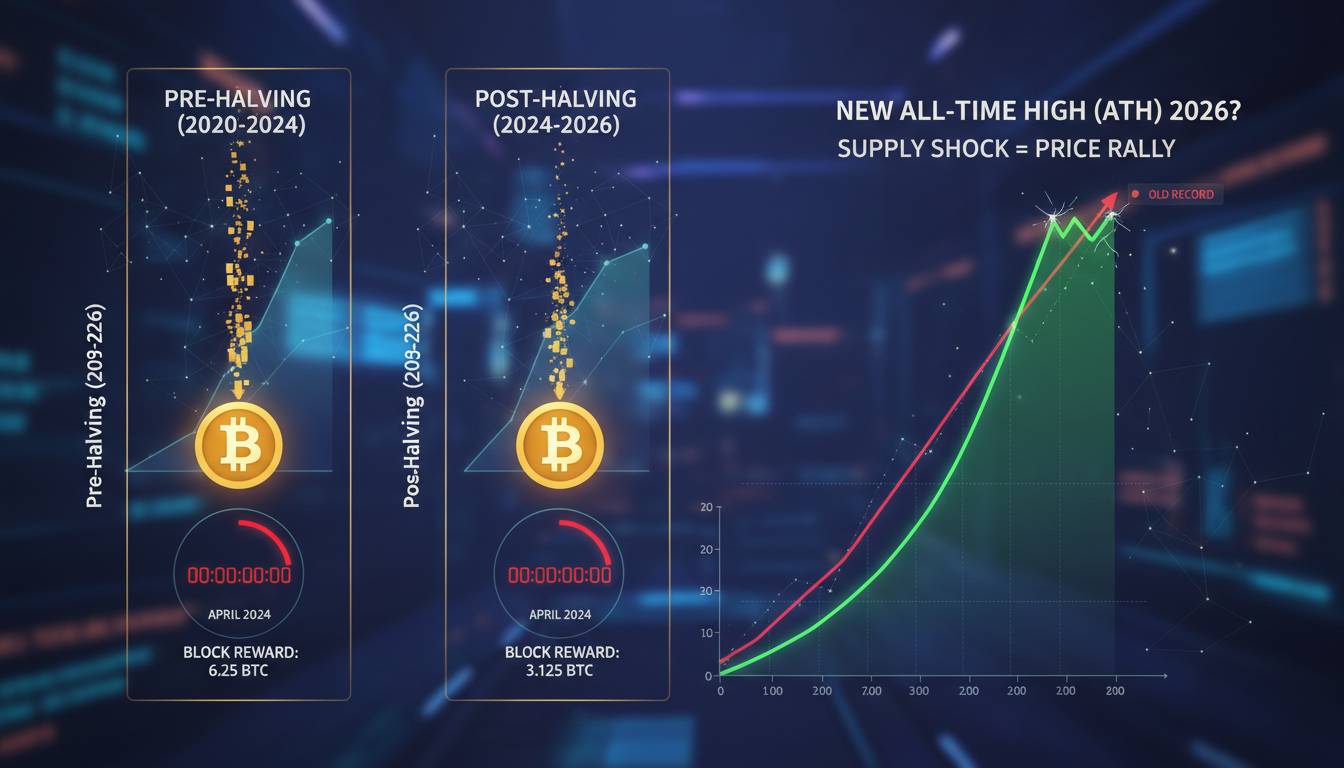
Bitcoin is trading near $68,000 as of mid-February 2026, showing modest gains amid broader market volatility. Analysts remain divided on whether BTC will break its October 2025 all-time high near $126,000 or settle into a consolidation phase. The key question: will 2026 mark a historic breakout or a year of rest?
Why This Matters Now
Bitcoin’s trajectory in 2026 matters because it may signal a shift from speculative cycles to institutional-driven growth. With spot ETFs, regulatory clarity, and macroeconomic pressures shaping demand, the coming months could redefine Bitcoin’s role in mainstream finance. The debate centers on whether BTC will reclaim new highs or consolidate in a familiar range.
Diverging Forecasts: Bullish, Neutral, and Bearish Scenarios
Bullish Outlook: New All-Time Highs Ahead
Several major institutions anticipate Bitcoin will surpass its previous peak in 2026. Grayscale expects a new all-time high in the first half of the year, citing rising institutional demand, inflation hedging, and clearer U.S. regulations . Bitwise echoes this view, arguing that the traditional four-year cycle is fading and that ETFs and institutional flows could push BTC to fresh highs . VanEck also signals optimism, suggesting that Bitcoin could set a new record in 2026, driven by its scarcity and growing institutional adoption .
Mid-Range Projections: $150,000 as a Consensus
Standard Chartered and Bernstein have revised their 2026 targets to around $150,000, down from earlier, more aggressive forecasts . Tom Lee of Fundstrat now expects BTC to reach between $150,000 and $200,000 by early 2026 . Similarly, Forbes notes that many institutional forecasts cluster in the mid to upper six-figure range, with $120,000–$170,000 seen as realistic under steady adoption and macro conditions .
Cautious and Bearish Views: Consolidation or Pullback
On the more conservative side, Fidelity’s Jurrien Timmer views 2026 as a potential “off year,” with Bitcoin likely consolidating between $65,000 and $75,000 . CryptoQuant’s on-chain models warn of downside risks if ETF inflows slow or miner selling increases, suggesting support could fall toward $70,000 or even $56,000 . In extreme scenarios, analysts like Peter Brandt warn of a breakdown in technical structure that could trigger a drop toward $25,000 .
What’s Driving the Debate?
Institutional Adoption and ETF Inflows
Institutional interest is a central theme. Grayscale and Bitwise emphasize that ETFs and clearer regulation are transforming Bitcoin into a mainstream asset . Citigroup projects a base-case target of $143,000, with a bull case near $189,000, assuming regulatory clarity and ETF inflows continue .
The Halving Cycle: Still Relevant or Obsolete?
Traditionalists argue the April 2024 halving sets up a peak in late 2025 or early 2026, followed by consolidation . Standard Chartered and others still reference this cycle, though they temper expectations . Meanwhile, proponents of the “Institutional Era” believe the cycle is breaking down as new forces drive demand .
Macro Conditions and Market Structure
Macro factors remain influential. Fed policy, inflation, and liquidity conditions will shape investor appetite. Forbes highlights that macro stability and adoption trends underpin mid-range forecasts . On-chain data, such as ETF flows and miner behavior, also inform risk models like those from CryptoQuant .
What to Watch Next
- ETF Inflows: Sustained institutional buying could validate bullish forecasts.
- Regulatory Developments: Passage of crypto-friendly legislation may unlock new capital.
- Macro Signals: Fed rate decisions and inflation data will influence risk appetite.
- Technical Levels: Key support between $65,000–$75,000 and resistance near $126,000 will guide short-term moves.
Conclusion
Bitcoin’s 2026 outlook is deeply contested. Bullish scenarios envision new all-time highs, driven by institutional adoption and regulatory clarity. Mid-range forecasts center around $150,000, reflecting tempered optimism. Meanwhile, cautious voices warn of consolidation or deeper pullbacks if structural support falters. Ultimately, the year may reveal whether Bitcoin has matured beyond its cyclical past—or remains tethered to it.
The market now watches ETF flows, policy developments, and macro trends. These will determine whether Bitcoin breaks records—or simply holds its ground.

View 0 comments