

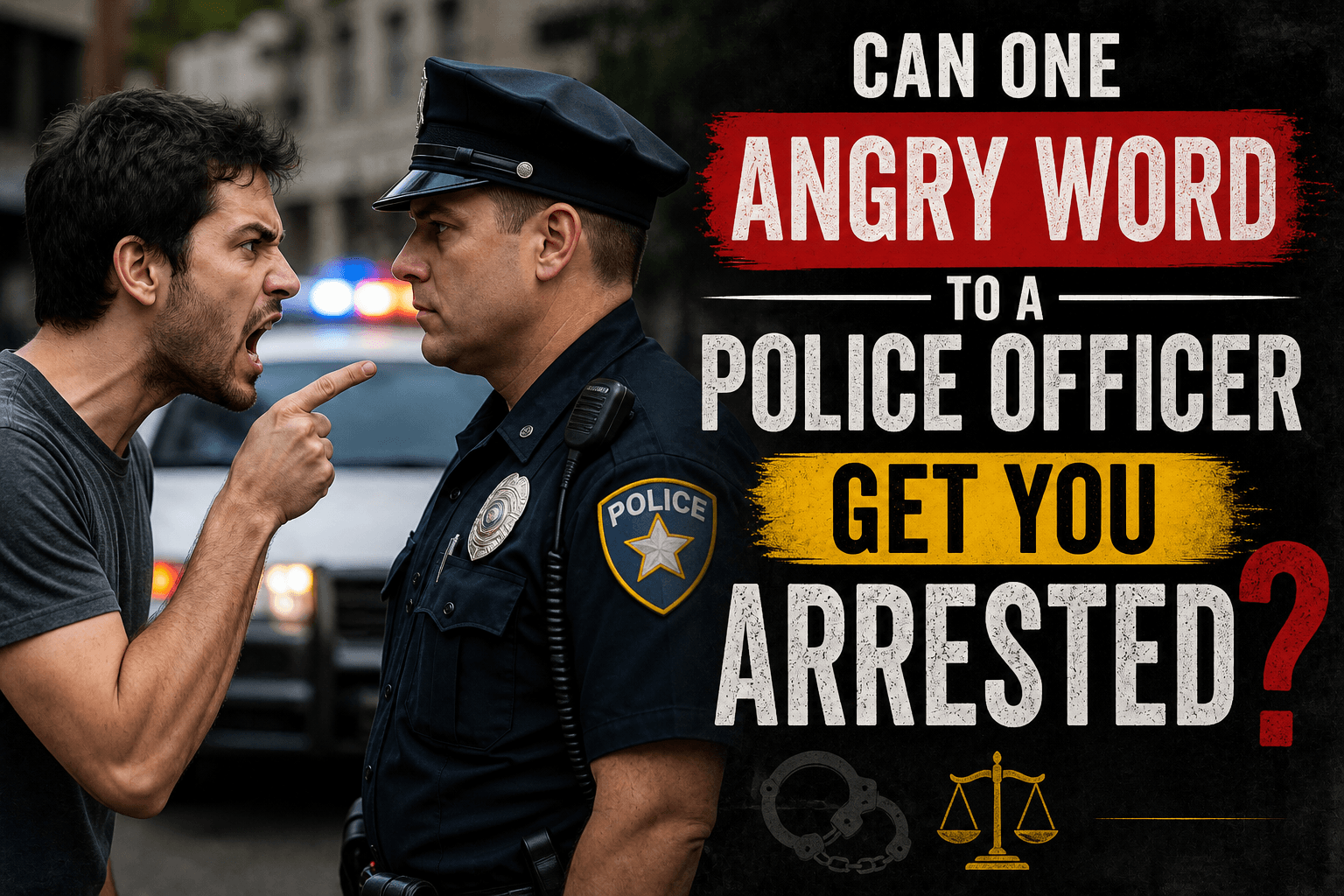
Police encounters aren’t known for bringing out everyone’s best vocabulary. Someone who’s angry, scared, or frustrated may swear at an officer or say something insulting. That can make an encounter more tense, but offensive language by itself doesn’t automatically fall outside First Amendment protection.
The important line is often between speech and conduct. Criticizing an officer is different from threatening violence, physically blocking police activity, or engaging in behavior that violates a separate law. Once actions enter the picture, the legal question can change quickly.
Context matters too, which is why a single rude word rarely tells the whole story. Questions about cursing at a police officer in Ohio ultimately depend on what was said, what happened around it, and the legal basis for any police action.
Being Rude Isn’t Automatically a Crime
The First Amendment generally protects a broad range of speech, including criticism directed at government officials. That protection doesn’t disappear simply because the language is crude, disrespectful, or unpleasant. Police officers, like other public officials, can be the subject of harsh verbal criticism.
That doesn’t mean every statement made during a police encounter is protected in every circumstance. Certain narrowly defined categories of speech, including true threats, can receive different constitutional treatment. Ohio disorderly conduct law can also raise fact-specific questions about words and surrounding behavior.
The distinction matters because “offensive” and “illegal” aren’t interchangeable. An officer may dislike what someone says without the words themselves providing lawful grounds for an arrest. When a dispute reaches court, the actual language and circumstances can matter far more than whether the conversation was civil.
What You Do Can Change Everything
A person can be verbally angry while still creating a separate legal problem through their actions. Physically interfering with officers, refusing certain lawful commands, obstructing police activity, or engaging in threatening behavior can shift attention away from protected criticism and toward potentially unlawful conduct.
Threats deserve particular care. There’s a meaningful legal difference between insulting an officer and communicating a serious threat of violence. The surrounding circumstances can help determine what a statement meant, so simply isolating one word or sentence may not capture the full interaction.
Disorderly conduct questions can also depend on more than profanity. Volume, location, behavior, and the effect on people nearby may become relevant under the particular law being applied. Someone evaluating an arrest therefore needs the complete sequence of events, not just the fact that swearing occurred.
A Heated Encounter Can Turn Quickly
Police encounters can change tone in seconds. An argument on a quiet sidewalk isn’t necessarily viewed the same way as shouting during an active arrest, traffic stop, or crowded disturbance. Bystanders, safety concerns, and ongoing police activity can all add context.
Officer commands matter as well, although not every command creates the same legal obligation. Someone may have a right to criticize police while still being required to comply with a lawful order in the circumstances. Arguing verbally doesn’t necessarily create permission to interfere physically.
That’s one reason these cases can become messy afterward. Body-camera footage, witness accounts, dispatch records, and other evidence may show details that aren’t obvious from an arrest report alone. The legal analysis often turns on what actually happened before, during, and after the angry words.
An Arrest Isn’t the Final Legal Answer
Being arrested can feel like a final judgment in the moment, but it isn’t one. An arrest starts a legal process. Prosecutors still have to decide how to proceed, and courts can later examine whether charges are supported and whether constitutional issues affect the case.
That review can include the reason police gave for the arrest and whether the facts satisfied the elements of the alleged offense. If speech played a central role, First Amendment protections may become important. Evidence such as video can help clarify whether the incident involved protected criticism or additional conduct.
None of that means every disputed arrest will be thrown out. Outcomes depend on the evidence, charges, procedural posture, and applicable law. It does mean that an officer making an arrest doesn’t settle the constitutional question by itself. Courts, not the arrest alone, determine legal disputes.
Conclusion
Swearing at a police officer and breaking the law aren’t automatically the same thing. The First Amendment can protect speech that is rude, angry, or deeply offensive, including criticism of police. Courtesy may make an encounter easier, but constitutional protection isn’t reserved only for polite language.
The situation changes when separate conduct enters the picture. Threats, physical interference, obstruction, or other behavior can create legal issues that have little to do with whether someone used profanity. Context is often what separates a protected outburst from a more complicated case.
If an arrest follows an angry exchange, the charge and surrounding evidence deserve closer attention than the swear word itself. What was said matters, but so do actions, circumstances, and the law officers relied upon. Angry speech alone doesn’t automatically become criminal conduct simply because it was directed at police.

View 0 comments