

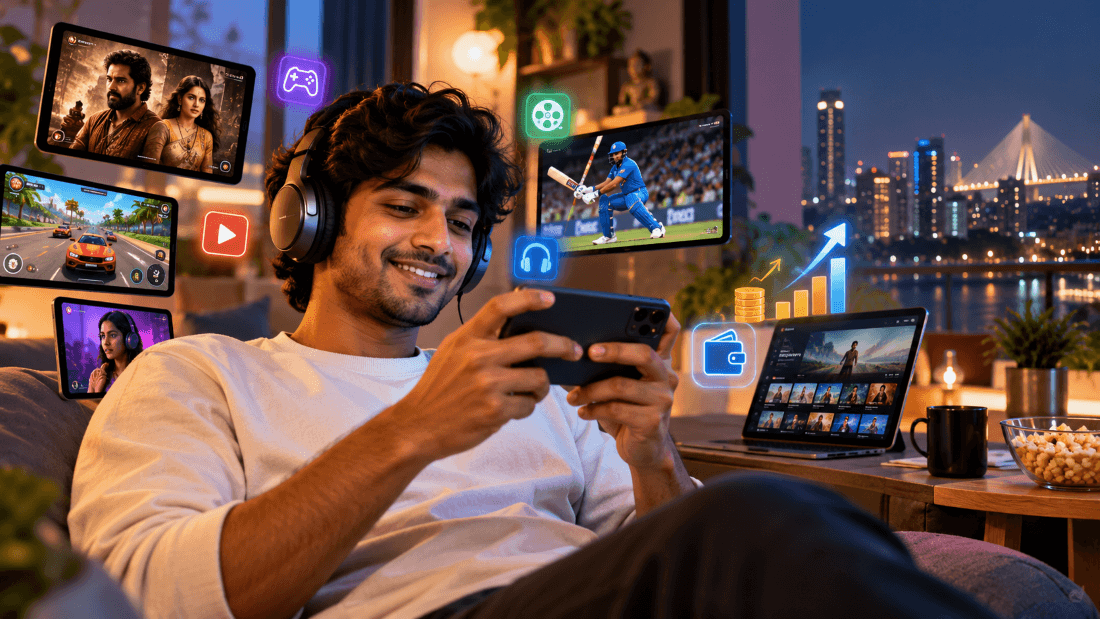
India’s digital entertainment market has changed quickly over the past few years. Faster mobile internet, affordable smartphones and a younger online audience have created room for everything from streaming services and mobile games to fantasy sports and betting platforms. Products such as the StarkBet online platform fit into this wider shift because users increasingly expect entertainment to be available instantly, work smoothly on mobile and offer several types of content in one place.
This growth is not only about people spending more time online. The business model itself has evolved. Digital platforms are learning how to keep users engaged, personalise content and make payments easier. In India, where mobile-first behaviour is especially strong, those advantages matter a lot.
Entertainment Has Become a Mobile-First Business
For many Indian users, the smartphone is now the main entertainment device.
People watch films, follow cricket, play games, listen to music, shop and manage payments from the same screen. That has completely changed the economics of entertainment. A company no longer needs to persuade someone to visit a cinema, buy a console or sit in front of a television.
It needs to earn a place on a mobile screen.
That sounds simple, but it changes almost every part of the business. Platforms must load quickly, work on different devices and remain easy to use even when internet quality is not perfect.
Several factors have helped this shift:
- wider access to affordable smartphones
- competitive mobile data prices
- rapid adoption of digital payments
- stronger demand for on-demand entertainment
- growing familiarity with apps and browser-based services
For entertainment companies, this creates an enormous potential audience. At the same time, competition for attention becomes much tougher.
Attention Has Become an Economic Asset
Traditional entertainment businesses were built around individual products. A person bought a cinema ticket, paid for a game or purchased a music album.
Digital platforms work differently.
Their value often depends on how frequently users return and how much time they spend inside the platform. This is why modern services put so much effort into recommendations, notifications, personalised menus and continuously updated content.
A user who finds something interesting every time they open an app is more likely to come back.
This approach can be seen across almost every entertainment category. Streaming platforms recommend the next show. Music services create personalised playlists. Gaming platforms highlight titles based on previous activity.
The economics are built around retention.
Acquiring a new user can be expensive. Keeping an existing one active is usually far more efficient.
India Offers a Particularly Strong Digital Audience
India is an unusual market because of its size and its diversity.
There are users from major cities with high-end smartphones and fast connections, but there are also millions of people using affordable Android devices. Some prefer English interfaces, while others are more comfortable with Hindi or regional languages.
Successful platforms have learned that a single generic product does not work equally well for everyone.
Localisation has therefore become a business advantage.
This can mean offering:
- local payment systems
- regional languages
- cricket-related content
- mobile-friendly interfaces
- smaller data requirements
- promotions adapted to local audiences
Platforms that understand these habits can build stronger relationships with users than services designed mainly for Western markets.
The Rise of the All-in-One Entertainment Platform
Another major trend is consolidation.
Users do not necessarily want ten different apps for ten different activities. They often prefer services that combine several forms of entertainment.
Gaming platforms are a good example. Many now bring together casino-style games, sports markets, live entertainment and promotional features within the same account.
The same idea appears elsewhere.
Streaming companies add games. Social platforms add shopping. Payment apps add entertainment offers. E-commerce companies add video content.
The boundaries between industries are becoming less clear.
From a business perspective, this makes sense. If a company already has an active user base, adding a new service can be cheaper than building an audience from zero.
Why Online Gaming Fits the New Model
Online gaming is particularly well suited to this digital economy because content can be refreshed constantly.
A physical entertainment venue has limits. A digital platform can add new games, events and features without rebuilding the entire service.
For users, that means variety.
Someone might play a short game while commuting, follow a sports event later in the evening and explore another type of entertainment at the weekend.
This flexibility is one reason gaming platforms have become part of the wider digital entertainment ecosystem.
For example, Slot Games at StarkBet illustrate how modern platforms can organise a large selection of titles within a single mobile-friendly environment. Users can move between different themes and formats without needing separate applications or accounts.
That convenience matters more than it may seem.
Small reductions in friction often have a big effect on how people use digital products.
Digital Payments Have Removed One of the Biggest Barriers
Payments used to be a weak point for many online businesses in India.
That situation has changed dramatically.
Consumers are now comfortable paying through mobile banking, cards, UPI and digital wallets. The process has become faster and more familiar, which makes online services easier to use.
For digital entertainment companies, this is extremely important.
A complicated payment process creates hesitation. A simple one reduces it.
The growth of digital payments has also made smaller transactions more practical. Users no longer need to think in terms of large purchases. They can pay for subscriptions, upgrades or entertainment in smaller amounts.
This supports a wider range of business models.
Free Access and Paid Features Can Work Together
One of the smartest changes in digital entertainment has been the move away from the idea that every user must pay immediately.
Many platforms allow people to explore part of the service first.
A streaming company might offer a limited trial. A mobile game may be free to download but include optional purchases. A gaming platform may allow users to browse games and promotions before creating an account.
This reduces the psychological barrier to entry.
People can understand the product before deciding whether they want to spend money.
For companies, the challenge is finding the right balance. Too many restrictions can push users away. Too much free content can make monetisation difficult.
The strongest platforms tend to make the free experience useful while giving paying users clear additional value.
Personalisation Is Becoming More Important
The amount of entertainment available online is now almost overwhelming.
People are not struggling to find content. They are struggling to choose.
That has made recommendation systems far more valuable.
If a user regularly watches cricket, the platform can prioritise cricket-related content. Someone who prefers strategy games may see those titles first. A user who plays only short sessions might receive suggestions that fit that behaviour.
Good personalisation saves time.
It can also improve retention because the service feels more relevant.
The important point is that personalisation should make navigation easier, not simply create more notifications. Users quickly notice when recommendations become intrusive.
Shorter Entertainment Sessions Are Changing Product Design
Not every digital session lasts an hour.
A large part of mobile entertainment happens in small gaps during the day. People may have five minutes while waiting for transport, ten minutes during a break or a little time before bed.
Platforms are increasingly designed around these shorter sessions.
This affects everything from page loading speed to the way games and videos are presented.
A user should be able to open the service, find something interesting and begin quickly.
Long registration processes and complicated menus feel increasingly outdated in this environment.
Speed has become part of the product.
Competition Is Pushing Platforms to Improve
The digital entertainment market is crowded, which is good for users.
Services must compete on more than advertising.
A platform with a slow interface or poor mobile experience can lose users quickly because alternatives are only a few taps away.
That pressure encourages companies to improve:
- loading speed;
- design;
- payment options;
- customer support;
- content variety;
- security;
- personalization.
This competition is one of the reasons digital products improve so quickly compared with many traditional industries.
Updates can be released continuously instead of waiting for a completely new product generation.
Trust Is Becoming a Bigger Part of the Business Model
As people spend more time and money online, trust becomes increasingly important.
Users want to know how their data is handled. They want secure payments and clear account controls. They also expect platforms to explain rules, terms and promotional conditions in a way that can actually be understood.
This is especially relevant for financial and gaming services.
A platform may have excellent technology, but users will still leave if they do not feel comfortable using it.
Trust is therefore not just a legal or compliance issue. It has become part of customer retention.
What Comes Next for India’s Digital Entertainment Market?
The next stage will probably involve even more overlap between different types of entertainment.
Streaming, gaming, social media, sports and payments are already starting to connect.
Artificial intelligence will also play a bigger role in recommendations, customer support and content discovery. At the same time, faster networks and better smartphones will make richer mobile experiences possible.
The biggest opportunity may not come from creating entirely new categories.
It may come from making existing entertainment easier to access.
Platforms that reduce friction, understand local habits and keep improving their mobile experience are likely to remain relevant as user expectations rise.
Conclusion
The growth of online entertainment in India is being driven by more than technology alone. It comes from a combination of mobile access, digital payments, changing consumer habits and business models built around convenience and repeat engagement.
People now expect entertainment to be immediate, personalised and available wherever they are. Platforms that meet those expectations can grow quickly because digital distribution allows them to reach large audiences without the physical limits of traditional entertainment.
The market will keep changing, but one pattern already looks clear. In India, entertainment is becoming less tied to a particular place or device and more connected to the individual user. That shift is changing how digital platforms compete, earn revenue and build long-term audiences.

View 0 comments