

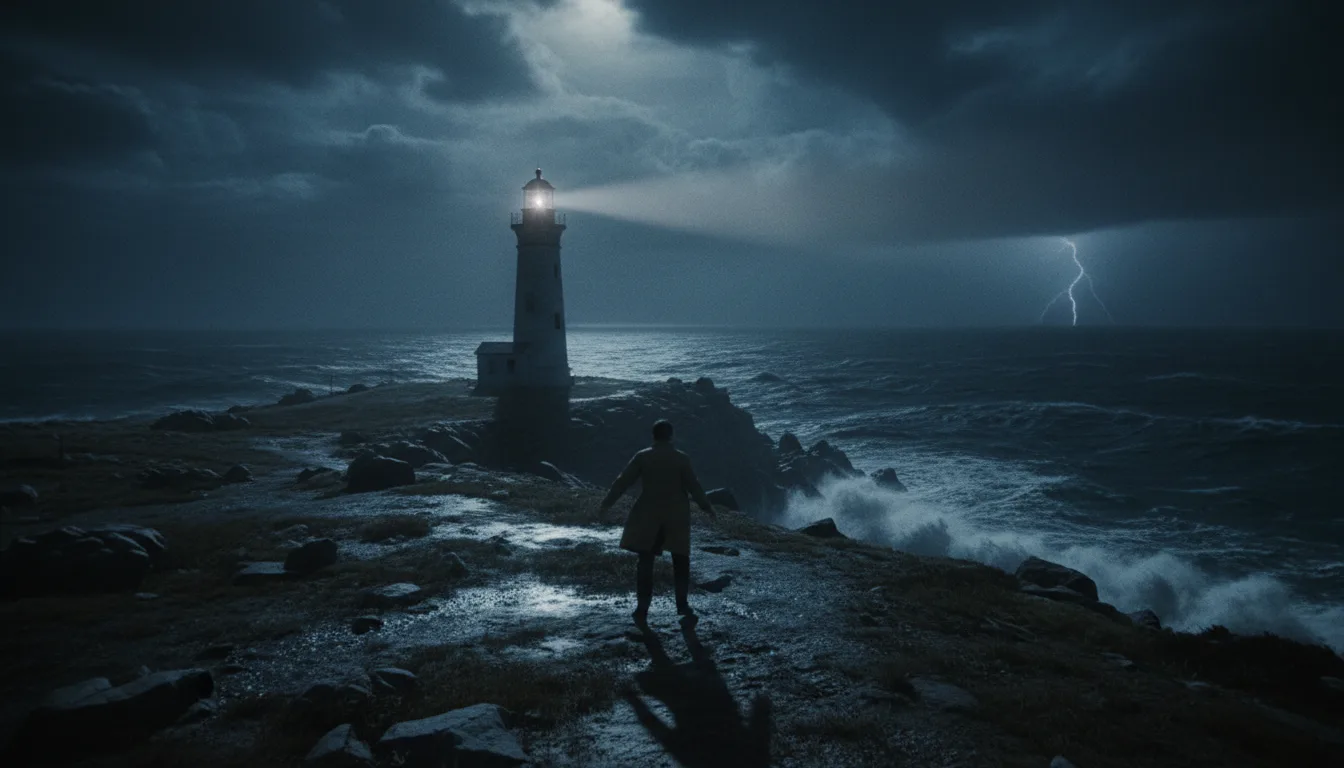
The ending of Shutter Island reveals that Teddy Daniels is actually Andrew Laeddis, a patient at Ashecliffe Hospital. The entire investigation is a therapeutic role-play designed by Dr. Cawley and Dr. Sheehan to break his delusion—if it fails, he’ll be lobotomized. In his final moment of clarity, Andrew asks, “Which would be worse: to live as a monster, or to die as a good man?” suggesting he’s aware of his choice to submit.
The Illusion of Investigation
From the start, Teddy’s mission appears straightforward: find the missing patient Rachel Solando. But as events unfold, every clue unravels into a fabricated lie. The hospital staff, including his partner Chuck (Dr. Sheehan), are part of an elaborate charade to help Andrew confront reality.
Key Clues Subtly Hint at the Truth
- The name “Edward Daniels” is an anagram of “Andrew Laeddis,” and “Rachel Solando” rearranges into “Dolores Chanal,” his deceased wife.
- Teddy experiences extreme withdrawal symptoms—not ordinary migraines—due to stopping his prescribed psychiatric medication.
These details underscore the depth of his delusion and the careful construction of the role-play therapy.
The Lighthouse Revelation
When Teddy reaches the lighthouse, the truth is disclosed. Dr. Cawley explains he has been playing along in a last-ditch attempt to get Andrew to accept his identity and avoid a lobotomy. Teddy’s violent past—including killing his wife after she murdered their children—becomes painfully clear.
He appears lucid after this revelation, suggesting the therapy is working—only to slip back the next morning into his old persona. This relapse pushes the doctors to proceed with the irreversible procedure.
Final Line: Clarity or Collapse?
The core of the film’s ambiguity lies in Andrew’s final words:
“Which would be worse: to live as a monster, or to die as a good man?”
Does this moment signal relapse—or a conscious choice to escape guilt?
Two Dominant Interpretations
-
A Choice to Let Go
Andrew may be lucid enough to realize the horror of his actions. Choosing lobotomy could be a form of self-preservation against unbearable shame. Dr. Gilligan, the film’s psychiatric consultant, supports this view, suggesting Andrew chooses a kind of suicide through surrender. -
A Flash of Sanity Lost to Delusion
The author, Dennis Lehane, considers it a fleeting moment of clarity before full relapse. To him, Andrew does not make a conscious choice—he simply falls back into his delusion, dooming himself to lobotomy.
Layers of Meaning in the Ending
Ambiguity as Artistic Strategy
Scorsese intentionally leaves the viewer unsettled. That uncertainty prompts multiple viewings and deeper reflection. As one critic noted, the line exists to muddy the waters—not necessarily clarify them.
Thematic Echoes of Guilt
The final line echoes Catholic notions of sin and redemption. It reflects Andrew’s overwhelming guilt—that even redemption may not be survivable for him.
Real-World Resonance
Physically lobotomizing patients was sadly common in the 1950s. Andrew’s case mirrors historical debates on psychological versus surgical pathways in mental health—forcing deeper contemplation about ethics and treatment.
A Glimpse at Alternative Theories
Some viewers argue Teddy might’ve been sane after all—that the doctors conspired to force him into submission, using gaslighting tactics to cover up inhumane experiments. But both Scorsese and Lehane affirm the intended interpretation: Andrew is delusional, and the role-play is therapy, not entrapment.
Why This Ending Still Captivates Us
- Narrative Depth: The structure forces viewers to reevaluate everything, from Teddy’s motivations to the trustworthiness of his allies.
- Psychological Realism: It touches on denial, trauma, guilt—trajectories deeply rooted in human experience.
- Viewer Investment: The ambiguity empowers the audience to form personal interpretations, keeping the story alive well beyond the credits.
Conclusion
The twist ending of Shutter Island hinges on Andrew Laeddis’s final moment of clarity—or delusion. Whether he consents to lobotomy to escape guilt or succumbs to his fractured psyche remains open to interpretation. The film’s profound ambiguity, historical grounding, and psychological depth all contribute to a haunting finale that lingers long after the lights come up.
FAQs
1. Was Teddy Daniels really delusional the entire time?
Yes. He’s actually Andrew Laeddis, a patient playing a delusional marshal. The investigation is part of a therapeutic role-play.
2. What does the final question mean?
It’s ambiguous—either a conscious choice to end suffering through lobotomy or a fleeting moment of clarity before relapse.
3. Did Andrew truly recover before relapsing?
He briefly regains awareness, but the next day acts delusional—prompting the lobotomy decision. Whether this relapse is genuine or feigned is debated.
4. How is the film’s ending different from the book’s?
The movie adds ambiguity via Andrew’s final line. The book presents a clearer relapse, without this twist.
5. Why did Scorsese choose such an ambiguous ending?
Ambiguity invites rewatching and reflection. It keeps the ending alive in audience memory—and aligns with themes of guilt and mental fragility.






View 0 comments