

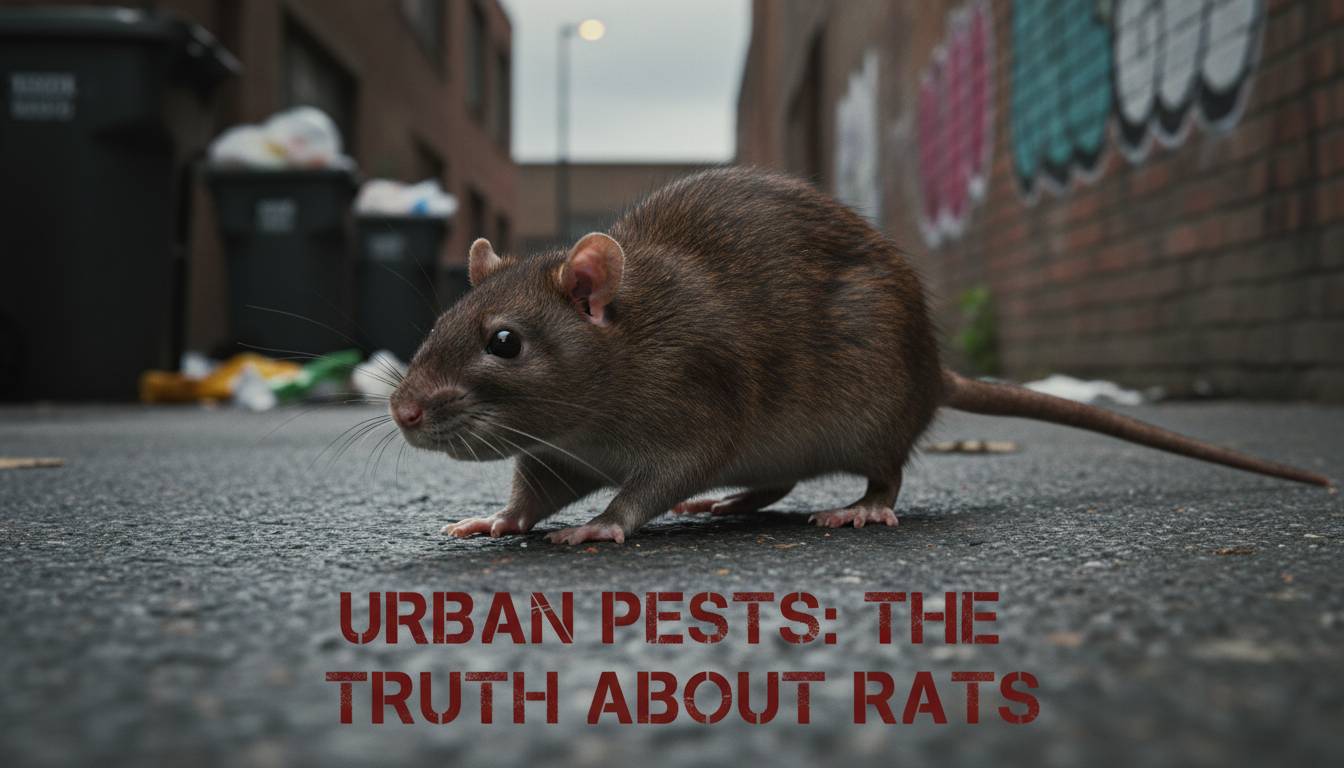
Rats, cockroaches, and other urban “pests” are not simply invading cities from the outside. In most cases, cities create the food, water, shelter, and heat that let these species thrive. U.S. public-health guidance from the CDC and EPA shows the problem is less about wild animals suddenly appearing and more about human-built environments, waste systems, moisture, and structural gaps that sustain them.
That is the uncomfortable part of the story. Urban pests are often treated as symbols of disorder, yet the conditions that support them are usually ordinary features of city life: overflowing trash, leaky pipes, aging buildings, dense housing, and fragmented maintenance. Research and public-health agencies consistently frame rats and cockroaches not as random intruders but as highly adaptable species responding to opportunities people provide. Understanding that mechanism matters because it changes the solution. The most effective control is not endless spraying. It is redesign, repair, sanitation, and prevention.
💡
Urban pests follow human systems.
EPA and CDC guidance identifies food waste, water access, clutter, structural openings, and harborage as the main conditions that allow rodents and cockroaches to persist in homes and cities, rather than any single seasonal surge or isolated infestation pattern.
How Human Infrastructure Created a Year-Round Pest Habitat
Rats and roaches succeed in cities because cities remove the limits that would otherwise keep populations lower. Buildings provide warmth in winter. Basements, wall voids, sewers, subways, crawl spaces, and utility corridors create protected travel routes. Trash rooms, alley bins, litter, pet food, grease, and food scraps supply calories with little effort. Leaks, condensation, and standing water solve another survival problem: moisture.
The CDC says rodents are drawn by food and shelter and that the first signs usually appear before people see the animals themselves, including droppings, gnaw marks, and nesting material. EPA housing guidance makes the same point for both rodents and cockroaches, stressing that moisture, poor waste handling, and structural defects support infestations. In other words, pest presence is often a building-performance issue as much as a pest-control issue.
What Commonly Sustains Urban Pest Populations
| Condition | Why It Matters | Species Affected |
|---|---|---|
| Exposed food waste | Reliable calorie source | Rats, mice, cockroaches |
| Leaks and standing water | Supports survival and breeding | Cockroaches, rodents |
| Cracks, gaps, wall voids | Entry and nesting routes | Rats, mice, cockroaches |
| Clutter and cardboard | Harborage and concealment | Cockroaches, rodents |
| Inconsistent maintenance | Allows reinfestation | All major urban pests |
Source: U.S. EPA housing pest-control guidance; CDC rodent-control guidance | accessed March 26, 2026
This is why infestations cluster in places with deferred maintenance and high turnover. The issue is not that pests “prefer” cities in the abstract. It is that cities concentrate the exact resources these species need, often within a few feet of one another.
Why Cockroach and Rodent Risks Go Beyond Nuisance Complaints
Public agencies classify many of these animals as health threats, but the risk is more specific than popular fear suggests. EPA lists rats and mice among pests of significant public-health importance because of disease concerns and food contamination. The CDC likewise warns that rodents can carry diseases and contaminate environments through droppings, urine, and nesting materials.
Cockroaches present a different but equally important problem. EPA and housing-health materials link cockroach debris, droppings, and body parts to asthma and allergy triggers, especially in multifamily housing. HUD and related healthy-housing guidance also note that mice, cockroaches, and cockroach dust can trigger asthma attacks. That means the harm is not limited to bites or direct contact. A building can be making residents sick even when they rarely see a live insect.
How U.S. Guidance on Urban Pests Frames the Problem
2004: EPA promotes integrated pest management in housing as a prevention-first approach focused on sanitation, exclusion, and targeted treatment.
2009: Environmental Health Perspectives publishes evidence from New York City public housing showing IPM can reduce cockroaches, mice, and related allergens more effectively than routine spray-based approaches.
2024: EPA updates public-health pest listings, reaffirming rats and mice as pests of significant public-health importance.
2026: CDC and EPA guidance continues to emphasize prevention, cleanup, moisture control, and structural repair over pesticide-only responses.
That distinction matters for policy. If pests are framed only as visible vermin, the response tends to be reactive and cosmetic. If they are treated as indicators of unhealthy housing conditions, the response shifts toward repairs, sanitation systems, and tenant-safe prevention.
2009 New York Housing Data Showed Prevention Beat Routine Spraying
One of the clearest pieces of evidence comes from a study in Environmental Health Perspectives examining integrated pest management in New York City public housing. The intervention focused on sanitation and structural conditions that deny pests food, water, movement, and harborage, with pesticide use applied only after evaluating need and occupant hazard. The study compared that approach with conventional calendar-based spray treatment in nonintervention apartments.
The significance of that study is not just that IPM worked. It showed why many infestations persist despite repeated chemical treatment. If leaks remain, gaps stay open, trash handling is poor, and clutter accumulates, pests return. Sprays may reduce visible activity for a time, but they do not remove the habitat. That is the central truth behind many urban infestations: people often fight the animal while preserving the system that feeds it.
📊
Integrated pest management is a building strategy, not just a treatment plan.
EPA, HUD-linked housing guidance, and peer-reviewed public-housing research all point to the same model: seal entry points, remove food and water, reduce clutter, improve waste handling, and use pesticides selectively.
What Urban Ecology Says About the “Pest” Label
The word “pest” can hide an ecological reality. Many species that thrive in cities do so because they are unusually good at exploiting human disturbance. National Geographic reporting on urban rats describes them as highly adaptable city dwellers, while research highlighted by the National Science Foundation suggests urban-adapted mammals may host more pathogens overall without necessarily being unique “super-reservoirs” created by city life alone. The point is not to romanticize rats or roaches. It is to be precise.
Some urban species also perform ecological functions people rarely notice. Research covered by National Geographic found that insects and spiders in New York City consume substantial amounts of discarded food. That does not make infestations harmless, but it does show that cities are ecosystems, not sterile human spaces occasionally breached by wildlife. Once food waste accumulates, multiple species respond. Rats and roaches are part of that chain, not exceptions to it.
Reactive Control vs. Prevention-First Control
| Approach | Main Tool | Likely Result |
|---|---|---|
| Reactive | Routine spraying | Short-term suppression, frequent return |
| Prevention-first | Sanitation, sealing, moisture control | Lower long-term pest pressure |
| Integrated | Monitoring plus targeted treatment | Reduced exposure and better durability |
Source: U.S. EPA, CDC, Environmental Health Perspectives | accessed March 26, 2026
What Cities and Residents Can Change in 30 Days
The practical lesson is straightforward. Pest control works best when it starts with infrastructure. For residents, that means storing food securely, reducing clutter, fixing leaks quickly, cleaning grease and crumbs, and reporting cracks, holes, and trash failures early. For landlords and cities, it means containerized waste, regular pickup, sealed utility penetrations, dry basements, maintained drains, and coordinated building-wide treatment instead of unit-by-unit reaction.
EPA guidance for housing managers specifically recommends using maintenance staff as pest “scouts” trained to identify droppings, gnaw marks, frass, and moisture sources. That is a useful shift in mindset. The first response to pests should be diagnosis. Where is the water? Where is the food? Where is the entry point? Where is the nesting site? Without those answers, treatment is often temporary.
Frequently Asked Questions
Are rats and cockroaches mainly a sanitation problem?
Partly, but not only. CDC and EPA guidance shows infestations are driven by a combination of food waste, moisture, structural openings, clutter, and shelter. A clean-looking building can still support pests if leaks, wall voids, and trash-storage failures remain in place.
Do cockroaches and rodents affect health even if people rarely see them?
Yes. EPA, HUD-linked materials, and housing-health guidance state that cockroach allergens and rodent-related contaminants can worsen asthma and allergies. Health effects can persist through droppings, body fragments, and contaminated dust, even when live pests are not frequently visible.
Why do infestations keep returning after extermination?
Because treatment alone often leaves the habitat intact. Evidence from New York City public housing published in Environmental Health Perspectives found that integrated pest management works by removing food, water, harborage, and access, not by relying on repeated spray schedules alone.
Are urban pests proof that cities are uniquely dirty?
No. They are better understood as signs of concentrated resources and shelter. Dense housing, aging infrastructure, waste systems, and heat islands create stable environments for adaptable species. Urban ecology research shows these animals respond to human-built conditions more than to stigma or stereotypes about city life.
What is the most effective long-term response?
Public-health agencies consistently recommend integrated pest management. That means prevention first: seal entry points, remove food and water sources, improve waste handling, monitor activity, and use pesticides selectively when needed. It is safer and usually more durable than chemical-only control.
Conclusion
The simplest version of the urban pest story is that rats and roaches invade human spaces. The more accurate version is harder to hear: human spaces often manufacture the exact conditions these species need. Public-health guidance, housing research, and urban ecology all point in the same direction. If cities want fewer pests, they need fewer openings, fewer leaks, less exposed waste, and better maintenance. The animals are real, and so are the risks. But the system that sustains them is largely our own making.
Disclaimer: This article is for informational purposes only. Information may have changed since publication. Always verify information independently and consult qualified professionals for specific advice.

View 0 comments