

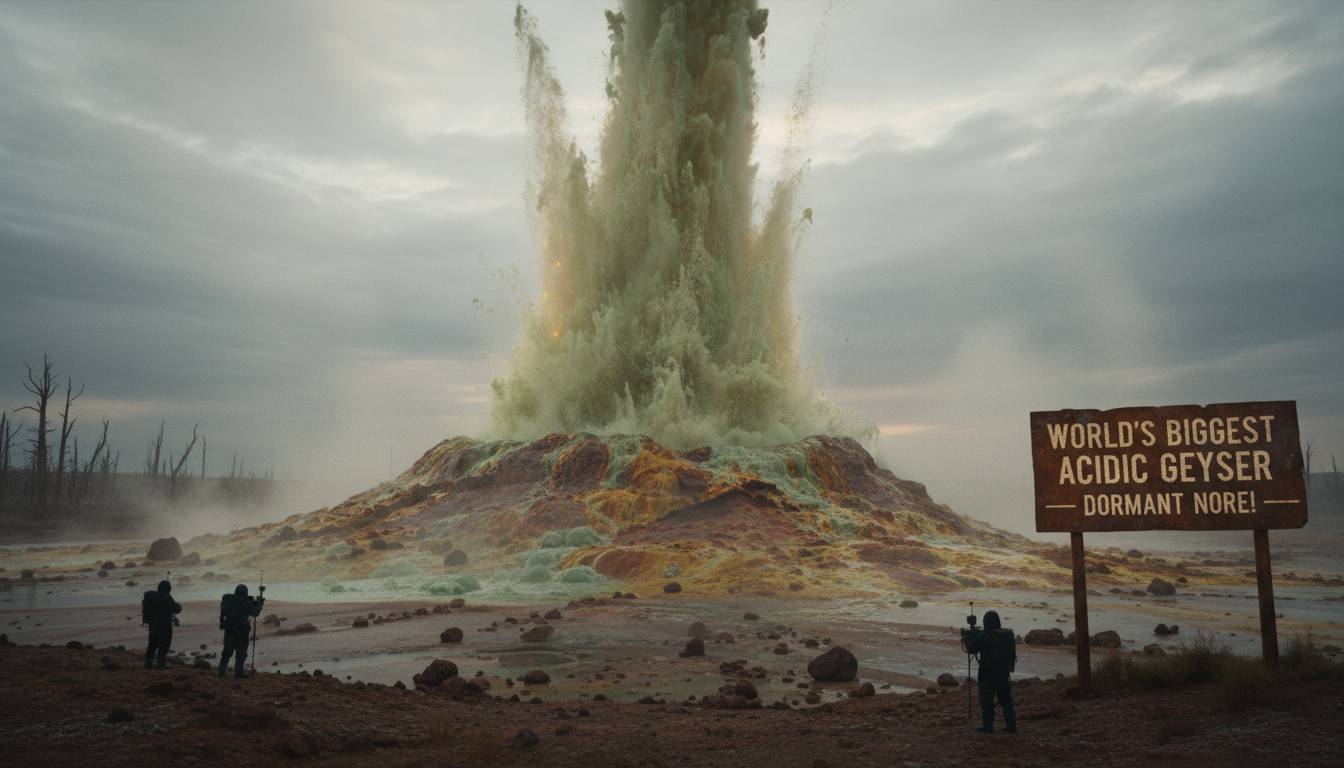
Yellowstone National Park’s Echinus Geyser, the world’s largest acidic geyser, has erupted for the first time since December 2020, ending nearly six years of dormancy. This rare geological event began on February 7, 2026, and has since captured the attention of scientists and visitors alike.
Echinus Geyser Reawakens
Echinus Geyser, located in the Back Basin of Yellowstone’s Norris Geyser Basin, resumed activity on February 7, 2026, marking its first eruption since late 2020 . Following that initial burst, eruptions occurred on February 9, 12, and 15 . By February 16, the geyser entered a more active phase, erupting every two to five hours .
Each eruption lasts approximately two to three minutes, with water jets reaching heights of 20 to 30 feet . After an eruption, the pool drains rapidly and takes about an hour to refill . In its more active decades, Echinus has produced eruptions up to 75 feet high .
What Makes Echinus Unique
Echinus Geyser stands out as the largest acidic geyser on Earth, with water acidity levels (pH 3.3–3.6) comparable to vinegar or orange juice . Acidic geysers are rare because their acidic water can erode the rock plumbing systems that feed them . However, Echinus remains intact due to a unique balance: its acidity results from a mix of acidic gases and neutral waters, which is not strong enough to corrode its internal structure .
The geyser’s name comes from the spiny, silica-coated rocks surrounding its cone, resembling sea urchins . A vivid red border of iron, aluminum, and arsenic deposits frames the pool, adding to its striking visual appeal .
Scientific and Public Significance
Geological Insights
According to Michael Poland, Scientist-in-Charge of the Yellowstone Volcano Observatory, the reactivation of Echinus offers a rare opportunity to study the behavior of acidic geysers and their plumbing systems . The geyser’s return to activity after years of dormancy provides valuable data on the dynamics of Yellowstone’s geothermal systems.
Visitor Experience
For park visitors, the reawakening of Echinus presents a unique spectacle. The geyser’s eruptions—though brief—offer a vivid display of nature’s power and beauty. However, whether this activity will continue into the summer remains uncertain .
Environmental Monitoring
The U.S. Geological Survey emphasizes that while Echinus has a history of short active phases (typically one to two months), the shifting geology of the Norris Basin means future eruptions remain possible . Continued monitoring will help scientists better understand the triggers and patterns of geyser activity.
Broader Context: Yellowstone’s Dynamic Geyser Landscape
Yellowstone hosts over 500 geysers and more than 10,000 geothermal features, making it one of the most dynamic hydrothermal regions on Earth . While Echinus is unique for its acidity, other geysers like Steamboat (the world’s tallest active geyser) and Valentine Geyser have also shown unpredictable behavior in recent years .
Analysis and Future Outlook
Echinus Geyser’s reawakening underscores the dynamic and unpredictable nature of geothermal systems. Its return after nearly six years of dormancy highlights the importance of continuous monitoring and research. Scientists will be closely watching whether this active phase extends into the warmer months or fades as previous ones have.
From a tourism perspective, the geyser’s activity may draw increased visitor interest, but park officials must balance access with safety and preservation. The acidic nature of Echinus’s water, while not destructive to its structure, still requires caution around the feature.
Looking ahead, researchers hope to gather more data on the triggers behind Echinus’s eruptions. Understanding whether shifts in underground water sources, gas emissions, or seismic activity play a role could inform broader geothermal studies and hazard assessments.
Conclusion
Echinus Geyser’s dramatic return to activity after nearly six years of dormancy marks a rare and scientifically significant event. As the world’s largest acidic geyser, its eruptions offer both a visual spectacle and a window into the complex dynamics of Yellowstone’s geothermal systems. While its future behavior remains uncertain, the reawakening of Echinus reminds us of the ever-changing forces beneath our feet and the value of vigilant scientific observation.
Frequently Asked Questions
What is the world’s biggest acidic geyser?
Echinus Geyser in Yellowstone National Park is the largest acidic geyser on Earth, with water acidity levels (pH 3.3–3.6) similar to vinegar.
When did Echinus Geyser last erupt before 2026?
Its previous eruption occurred in December 2020.
How often is Echinus erupting now?
As of mid-February 2026, Echinus has been erupting every two to five hours.
How high do the eruptions reach?
Recent eruptions reach heights of 20 to 30 feet, though past eruptions have reached up to 75 feet.
Why doesn’t the acidic water erode the geyser’s structure?
The acidity results from a mix of acidic gases and neutral waters, which is not strong enough to corrode the geyser’s plumbing system.
Will Echinus remain active through summer?
It’s uncertain. Historically, Echinus’s active phases last one to two months, and its future behavior depends on shifting geothermal conditions.

View 0 comments